

L’articolo è stato aggiunto alla lista dei desideri










EBOOK IN LINGUA STRANIERA
 E-mail
 Facebook
 LinkedIn
 Twitter
 WhatsApp
Asteroids and Distant Minor Planets: Time Capsules of the Early Solar System
(0)
Cliccando su “Conferma” dichiari che il contenuto da te inserito è conforme alle Condizioni Generali d’Uso del Sito ed alle Linee Guida sui Contenuti Vietati. Puoi rileggere e modificare e successivamente confermare il tuo contenuto. Tra poche ore lo troverai online (in caso contrario verifica la conformità del contenuto alle policy del Sito).
Grazie per la tua recensione!
Tra poche ore la vedrai online (in caso contrario verifica la conformità del testo alle nostre linee guida). Dopo la pubblicazione per te +4 punti 
2,99 €
+30
punti 
Venditore: IBS

Acquista online
Scaricabile subito
Articolo acquistabile con Carta del Docente

Articolo acquistabile con Carta Cultura Giovani e Carta del Merito

Articolo acquistabile con Carta della Cultura

Abbonati a Kobo plus per avere accesso illimitato a questo contenuto

Dati e Statistiche
 Salvato in 0 liste dei desideri
Salvato in 0 liste dei desideri
Asteroids and Distant Minor Planets: Time Capsules of the Early Solar System
Scaricabile subito
2,99 €
2,99 €
Scaricabile subito
Altre offerte vendute e spedite dai nostri venditori

Ebook in lingua straniera
Asteroids and Distant Minor Planets: Time Capsules of the Early Solar System
Altri venditori
Prezzo e spese di spedizione
EBOOK INGLESE
EPUB3 con DRMFREE
Scaricabile subito

Venduto e spedito da
IBS
Spedizione Gratis
2,99 €
Altri venditori
Prezzo e spese di spedizione
EBOOK INGLESE
EPUB3 con DRMFREE
Scaricabile subito
Venduto e spedito da
IBS
Spedizione Gratis
2,99 €
Altri venditori
Prezzo e spese di spedizione

Tutti i formati ed edizioni
Promo attive (0)
Asteroids and Distant Minor Planets: Time Capsules of the Early Solar System
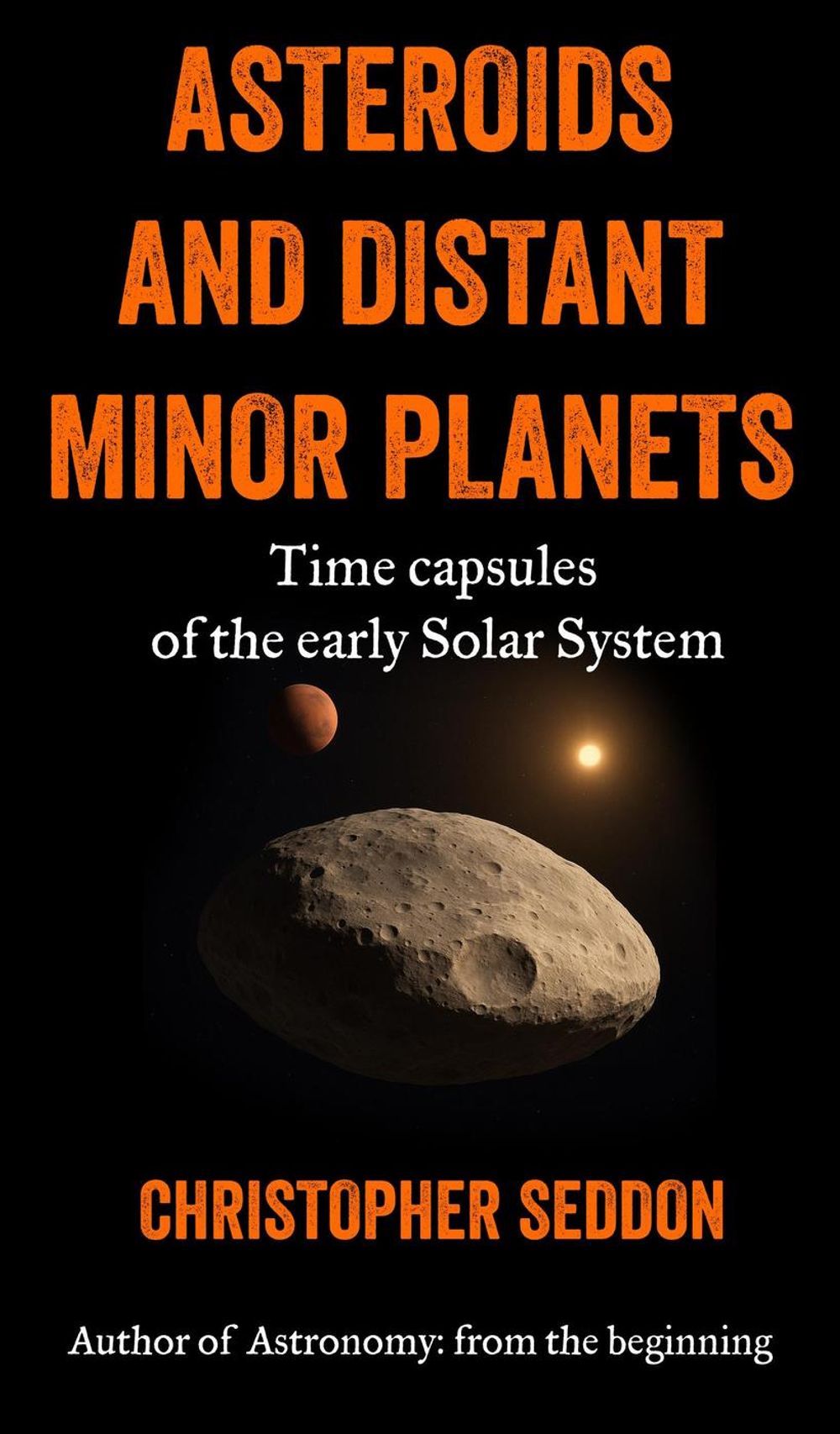
A 12,000-word short read eBook introduction to the Solar System's smaller members. The minor planets are the remnants left over from the formation of the Solar System. As their name implies, they are small. Even the dozen or so largest, some of which are now ranked as 'dwarf planets', are far smaller than the Moon – and these account for a thousandth of one per cent of the total known to astronomers. Most are far smaller. Once dismissed as "vermin of the skies" and "of very little interest to anybody", they are now of great interest. To astronomers and planetary scientists, minor planets offer tantalising clues about the early history of the Solar System. They may be likened to time capsules of the solar system because they preserve material from its earliest stages of formation. Insterest in minor planets extends well beyond that of science. Though we are understandably concerned about the dangers of near-Earth asteroids colliding with our planet, these bodies are also increasingly viewed as a potential source of materials critical for both space exploration and for use here on Earth. Carbonaceous (C-type) asteroids contain water, organics, and volatiles, all of which can be used to support operations in space and reduce dependency on launches from Earth. The minor planets are the remnants left over from the formation of the planets. When the Solar System formed around 4.57 billion years ago, the newborn Sun was surrounded by a rotating protoplanetary disk of gas and dust. Within this disk, microscopic grains gradually accreted into larger planetesimals. The composition of these planetesimals reflected their distance from the Sun: those closer to the Sun were predominantly silicaceous; those further out were carbonaceous, with traces of volatiles; further out still, ices, volatiles, and organics predominated. To astronomers, minor planets offer tantalising clues about the early history of the Solar System. They may be likened to time capsules of the solar system because they preserve material from its earliest stages of formation. Unlike planets, which have undergone extensive melting and geological processing, minor planets have often remained largely unchanged. Their compositions serve as a record of the chemical environment of the protoplanetary disk and the processes that operated within it. The sample return missions have provided pristine asteroid material for laboratory study. The material will give planetary scientists insight into how dust and gas condensed into solid bodies, how those bodies differentiated, how water and other volatiles were delivered to the inner planets, and other critical events in the early history of the Solar System.
Leggi di più
Leggi di meno
Autore:
Anno edizione:
2026
Editore:
Formato:
Lingua:
Inglese
Compatibilità:
Tutti i dispositivi (eccetto Kindle) Scopri di più
Layout:
Reflowable
EAN:
9781068274947
L'articolo è stato aggiunto al carrello
Formato:
Gli eBook venduti da IBS.it sono in formato ePub e possono essere protetti da Adobe DRM. In caso di download di un file protetto da DRM si otterrà un file in formato .acs, (Adobe Content Server Message), che dovrà essere aperto tramite Adobe Digital Editions e autorizzato tramite un account Adobe, prima di poter essere letto su pc o trasferito su dispositivi compatibili.
Cloud:
Gli eBook venduti da IBS.it sono sincronizzati automaticamente su tutti i client di lettura Kobo successivamente all’acquisto. Grazie al Cloud Kobo i progressi di lettura, le note, le evidenziazioni vengono salvati e sincronizzati automaticamente su tutti i dispositivi e le APP di lettura Kobo utilizzati per la lettura.
Clicca qui per sapere come scaricare gli ebook utilizzando un pc con sistema operativo Windows
L’articolo è stato aggiunto alla lista dei desideri
