

L’articolo è stato aggiunto alla lista dei desideri








EBOOK IN LINGUA STRANIERA
 E-mail
 Facebook
 LinkedIn
 Twitter
 WhatsApp
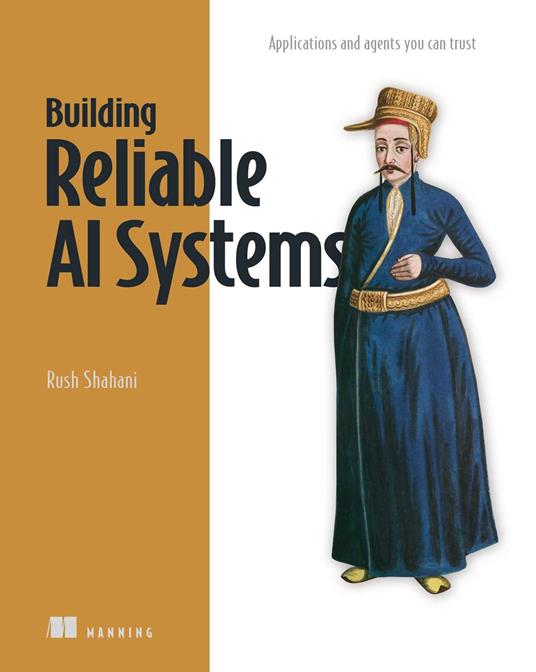
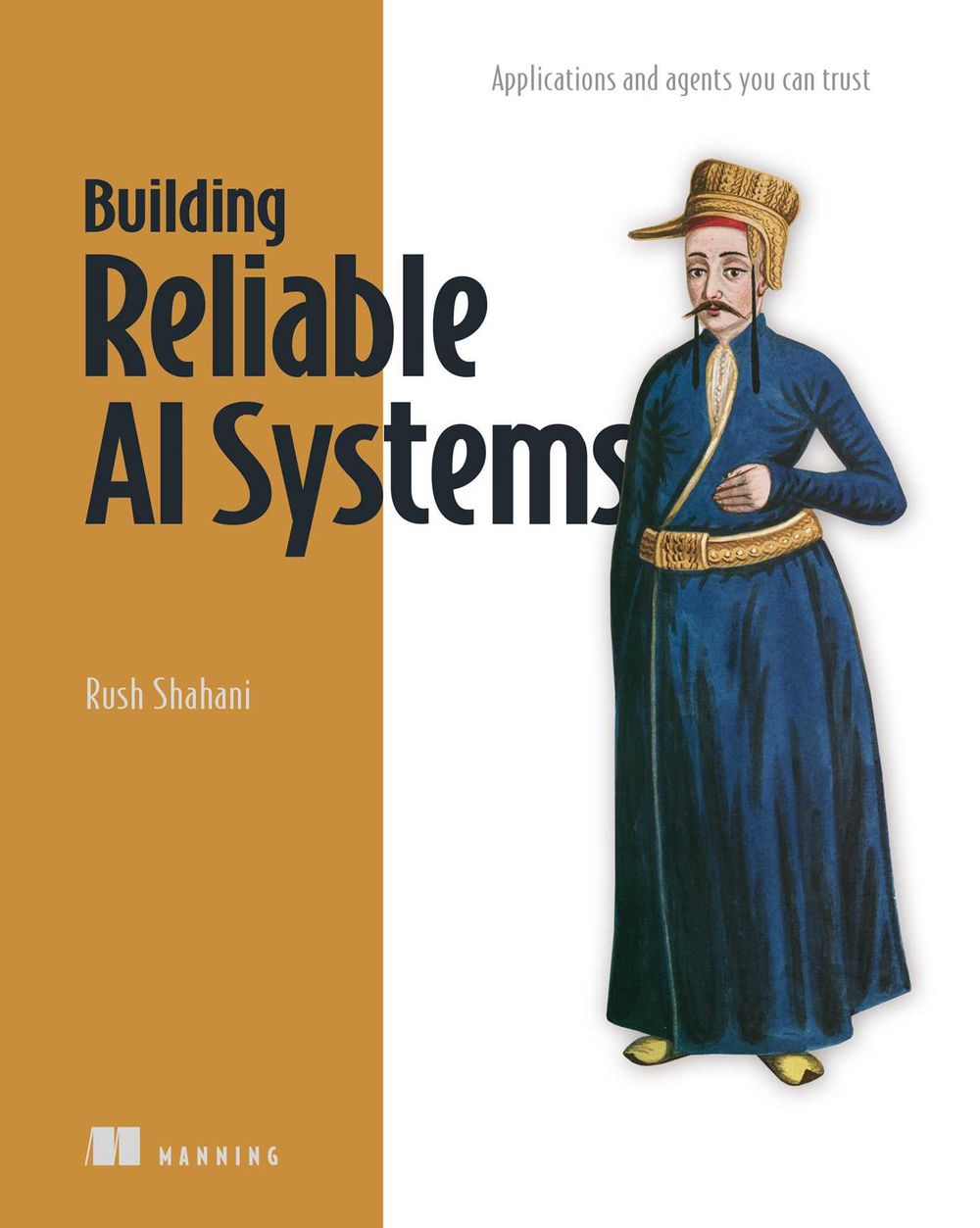
Building Reliable AI Systems
(0)
Cliccando su “Conferma” dichiari che il contenuto da te inserito è conforme alle Condizioni Generali d’Uso del Sito ed alle Linee Guida sui Contenuti Vietati. Puoi rileggere e modificare e successivamente confermare il tuo contenuto. Tra poche ore lo troverai online (in caso contrario verifica la conformità del contenuto alle policy del Sito).
Grazie per la tua recensione!
Tra poche ore la vedrai online (in caso contrario verifica la conformità del testo alle nostre linee guida). Dopo la pubblicazione per te +4 punti 
49,61 €
+500
punti 
Venditore: IBS
Articolo acquistabile con Carta del Docente

Articolo acquistabile con Carta Cultura Giovani e Carta del Merito

Articolo acquistabile con Carta della Cultura

Dati e Statistiche
 Salvato in 0 liste dei desideri
Salvato in 0 liste dei desideri
Building Reliable AI Systems
Disponibile dal 15 settembre 2026
49,61 €
49,61 €
Disponibile dal 15 settembre 2026
Altre offerte vendute e spedite dai nostri venditori
Ebook in lingua straniera
Building Reliable AI Systems
Altri venditori
Prezzo e spese di spedizione
EBOOK INGLESE
EPUB2 con Adobe DRM
Disponibile dal 15 settembre 2026

Venduto e spedito da
IBS
Spedizione Gratis
49,61 €
Altri venditori
Prezzo e spese di spedizione
EBOOK INGLESE
EPUB2 con Adobe DRM
Disponibile dal 15 settembre 2026
Venduto e spedito da
IBS
Spedizione Gratis
49,61 €
Altri venditori
Prezzo e spese di spedizione

Tutti i formati ed edizioni
Promo attive (0)
Get the eBook free when you register your print book at Manning. “Practical, comprehensive, and urgently needed.” —Samer Hamad, Amazon This book shows you how to grow a promising prototype into a production product you can deliver, maintain, and scale. In 11 sharply-focused chapters, it walks you through a unique reliability process that author Rush Shahani refined while building an AI-powered sales intelligence platform used by over 15,000 go-to-market teams. Timely and practical, this book provides concrete steps to eliminate costly hallucinations, streamline computational resources, and confidently deploy secure, trustworthy, and compliant AI solutions. You’ll immediately appreciate how Building Reliable AI Systems defines “AI reliability” along six critical dimensions—accuracy and grounding, safe agency, graceful failure, consistency, fairness, and operational efficiency—and provides a specific three-layer framework to achieve these goals. The first layer, with a focus on outputs, shows you how to get consistent and accurate responses using well-engineered prompts, RAG, and model customization. The second layer, about agents, establishes parameters for memory, tool usage, and orchestration in agentic systems. The book concludes with the third layer—Reliable Operations—covering deployment, monitoring, and responsible AI. The book’s reliability framework emphasizes the symbiotic relationship between evaluation and reliability, proving that you cannot improve what you do not measure. You’ll learn to measure your applications using fine-grained LLM-native evaluation rubrics like the Grounding Defect Rate, Hallucination Severity Score, and FActScore that audit everything from RAG outputs to the entire step-by-step reasoning trajectory of autonomous agents. Building Reliable AI Systems stays rooted in reality from start to finish. As you go, you will build several projects, including a multi-agent travel planner and a medical assistant, and use industry standard tools and specifications like LangGraph and MCP. In the helpful appendices you’ll find a handy reference architecture and decision-making checklists. Reviewer Mohamed Zohir Koufi, Lead AI Engineer at Capgemini, praises how the book “brings together architecture, tooling, evaluation, and governance in the way real systems are built.” By taking this comprehensive approach to LLMOps, the book delivers a reproducible process to ensure your applications stay cost-effective, fast, and compliant with enterprise standards like HIPAA and GDPR. What's inside • Ground outputs in real business data • Orchestrate safe, consistent multi-step agent workflows • Implement robust monitoring, semantic caching, and multi-model fallbacks About the reader For Python-fluent software engineers and data scientists ready to build production-grade, reliable AI applications. About the author Rush Shahani is an AI leader who has spent his career shipping machine learning systems that hold up under real-world conditions. He co-founded Persana AI, a Y Combinator-backed sales intelligence platform that has joined forces with Rox. Before Persana, Rush built AI and search systems at LinkedIn and Element AI (acquired by ServiceNow), and backend and payments infrastructure at Shopify. Table of Contents 1 AI reliability: Building LLMs for the real world Part 1 2 Generating trustworthy responses with prompt engineering 3 Grounding outputs with RAG 4 Embeddings and vector search 5 Fine-tuning LLMs for improved performance Part 2 6 Creating effective AI agents 7 Tool integration and MCP 8 Multi-agent systems Part 3 9 Evaluation and performance for LLMs and agents 10 Deploying and monitoring 11 Bias, privacy, and responsible AI
Leggi di più
Leggi di meno
Autore:
Anno edizione:
2026
Editore:
Formato:
Lingua:
Inglese
Compatibilità:
Tutti i dispositivi (eccetto Kindle) Scopri di più
Layout:
Reflowable
EAN:
9781638358435

L'articolo è stato aggiunto al carrello
Formato:
Gli eBook venduti da IBS.it sono in formato ePub e possono essere protetti da Adobe DRM. In caso di download di un file protetto da DRM si otterrà un file in formato .acs, (Adobe Content Server Message), che dovrà essere aperto tramite Adobe Digital Editions e autorizzato tramite un account Adobe, prima di poter essere letto su pc o trasferito su dispositivi compatibili.
Cloud:
Gli eBook venduti da IBS.it sono sincronizzati automaticamente su tutti i client di lettura Kobo successivamente all’acquisto. Grazie al Cloud Kobo i progressi di lettura, le note, le evidenziazioni vengono salvati e sincronizzati automaticamente su tutti i dispositivi e le APP di lettura Kobo utilizzati per la lettura.
Clicca qui per sapere come scaricare gli ebook utilizzando un pc con sistema operativo Windows
L’articolo è stato aggiunto alla lista dei desideri
