

L’articolo è stato aggiunto alla lista dei desideri









LIBRO INGLESE
 E-mail
 Facebook
 LinkedIn
 Twitter
 WhatsApp
Contact Dermatitis
(0)
Cliccando su “Conferma” dichiari che il contenuto da te inserito è conforme alle Condizioni Generali d’Uso del Sito ed alle Linee Guida sui Contenuti Vietati. Puoi rileggere e modificare e successivamente confermare il tuo contenuto. Tra poche ore lo troverai online (in caso contrario verifica la conformità del contenuto alle policy del Sito).
Grazie per la tua recensione!
Tra poche ore la vedrai online (in caso contrario verifica la conformità del testo alle nostre linee guida). Dopo la pubblicazione per te +4 punti 
116,37 €

-5%
122,49 €
+1160
punti
Venditore: IBS
Articolo acquistabile con Carta del Docente

Articolo acquistabile con Carta Cultura Giovani e Carta del Merito

Articolo acquistabile con Carta della Cultura

Paga con Klarna in 3 rate senza interessi per ordini superiori a 39 €

Dati e Statistiche
 Salvato in 0 liste dei desideri
Salvato in 0 liste dei desideri
Contact Dermatitis
Disponibile in 5 gg lavorativi
116,37 €
-5%
122,49 €
116,37 €
122,49 €
-5%
Disponibile in 5 gg lavorativi
Altre offerte vendute e spedite dai nostri venditori

Libri in Inglese
Contact Dermatitis
Altri venditori
Prezzo e spese di spedizione
LIBRO INGLESE
Disponibile in 5 gg lavorativi

Venduto e spedito da
IBS
Spedizione Gratis
-5%
122,49 €
116,37 €
Altri venditori
Prezzo e spese di spedizione
LIBRO INGLESE
Disponibile in 5 gg lavorativi
Venduto e spedito da
IBS
Spedizione Gratis
-5%
122,49 €
116,37 €
Altri venditori
Prezzo e spese di spedizione

Tutti i formati ed edizioni
Promo attive (0)
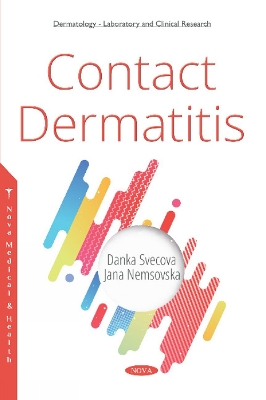
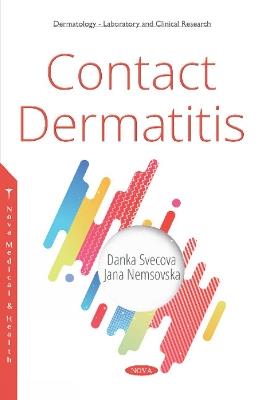
Contact dermatitis is a non-infectious inflammatory skin disease caused by an offending substance localized at the site of contact. The prevalence and incidence are increasing throughout the world, especially in Europe and North America. There are two main groups irritant contact dermatitis and allergic contact dermatitis with the former being more frequent. However, more than 4,000 contact allergens are known to cause allergic contact dermatitis in populations, of which nickel is the most common. Allergic contact dermatitis is a delayed IV type hypersensitivity resulting from cutaneous contact with a specific allergen. In pathogenesis, there is a significant difference between irritant and allergic dermatitis. Irritant contact dermatitis is a nonimmunologic, nonspecific inflammatory reaction to a wide range of chemical, physical or mechanical hazardous causes involving the innate immune system without prior sensitization. On the other hand, in a delayed type of hypersensitivity, concomitant activation of both the innate and adaptive immune systems is required. Recent studies disclose the role of TH17 in the pathogenesis of allergic contact dermatitis. Despite a distinct pathogenesis of both irritant and allergic contact dermatitis, there is no absolute visual distinction between both types of contact dermatitis. In general, irritant contact dermatitis tends to be milder than its allergic counterpart. Patch testing is a standardized diagnostic procedure used to confirm the causative allergen. The most common technique is an occlusive patch test, but in exceptional circumstances a modification of the patch test such as a photopatch test, open test, repeated open application test (ROAT), strip patch test or atopic patch test is used. Irritant contact dermatitis does not possess special testing. The diagnosis is therefore established by exclusion of negative test results in patch testing. Patch test may also be performed in infants and children, whereby the indications and testing technique are the same as in adults. In the management of contact dermatitis, the keystone is to cease causal exposure, meaning avoiding contact with the offending substance. In topical therapy, the choice of active substance is important, but a suitable vehicle disposes transportation to the site of inflammation. Selection of the vehicle depends on the clinical appearance and course of disease. The choice of an unsuitable vehicle may result in the drop-out of topical therapy. Topical corticosteroids are the mainstay therapy. Calcineurin inhibitors are employed in dermatology as an alternative therapy to topical corticosteroids with a better safety profile. Systemic treatments are used in severe cases and may provide temporary remission, but are not always suitable for prolonged use due to adverse effects. Alitretinoin is used to treat severe and refractory chronic hand dermatitis. After clinical clearance of contact dermatitis, the skin barrier requires restoration therapy provided by a moisturizing agent, which should be used for a prolonged period. The application of a moisturizing agent promotes epidermal barrier healing, prolongs the time to flare and reduces the number of flares. Most frequently, absolute avoidance of the triggering offending contact is very difficult, or even impossible. Therefore, protective measures to prevent renewed skin contact are indicated. Any type of symptomatic treatment cannot substitute this approach.
Leggi di più
Leggi di meno
Autore:
Editore:
Anno:
2018
Rilegatura:
Paperback / softback
Pagine:
140 p.
Testo in English
Dimensioni:
230 x 155 mm
Peso:
236 gr.
EAN:
9781536134858

L'articolo è stato aggiunto al carrello
Informazioni e Contatti sulla Sicurezza dei Prodotti
Le schede prodotto sono aggiornate in conformità al Regolamento UE 988/2023. Laddove ci fossero taluni dati non disponibili per ragioni indipendenti da IBS, vi informiamo che stiamo compiendo ogni ragionevole sforzo per inserirli. Vi invitiamo a controllare periodicamente il sito www.ibs.it per eventuali novità e aggiornamenti.
Per le vendite di prodotti da terze parti, ciascun venditore si assume la piena e diretta responsabilità per la commercializzazione del prodotto e per la sua conformità al Regolamento UE 988/2023, nonché alle normative nazionali ed europee vigenti.
Per informazioni sulla sicurezza dei prodotti, contattare productsafetyibs@feltrinelli.it
L’articolo è stato aggiunto alla lista dei desideri
