

L’articolo è stato aggiunto alla lista dei desideri










EBOOK IN LINGUA STRANIERA
 E-mail
 Facebook
 LinkedIn
 Twitter
 WhatsApp
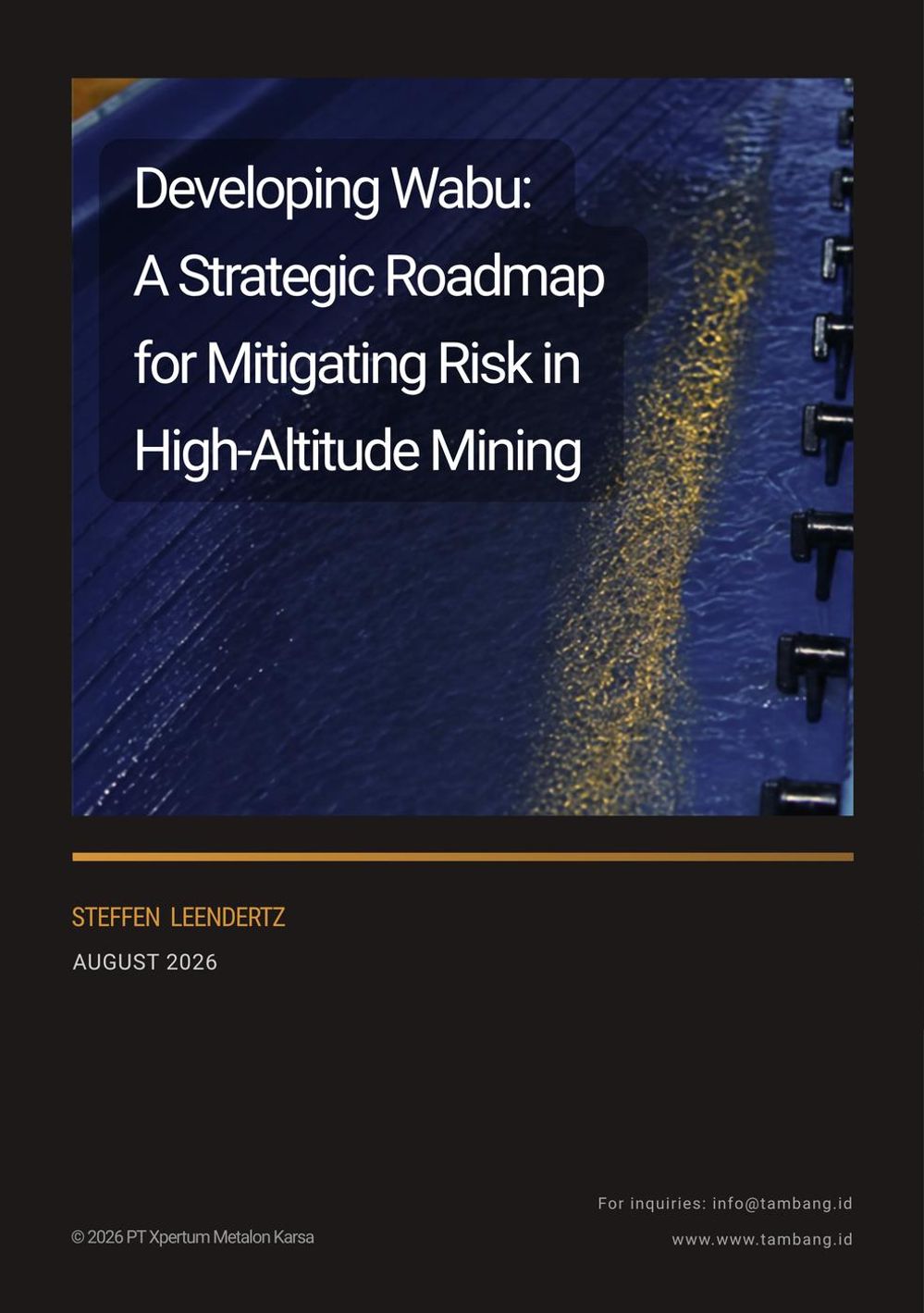
Developing Wabu: A Strategic Roadmap for Mitigating Risk in High-Altitude Mining
(0)
Cliccando su “Conferma” dichiari che il contenuto da te inserito è conforme alle Condizioni Generali d’Uso del Sito ed alle Linee Guida sui Contenuti Vietati. Puoi rileggere e modificare e successivamente confermare il tuo contenuto. Tra poche ore lo troverai online (in caso contrario verifica la conformità del contenuto alle policy del Sito).
Grazie per la tua recensione!
Tra poche ore la vedrai online (in caso contrario verifica la conformità del testo alle nostre linee guida). Dopo la pubblicazione per te +4 punti 
33,49 €
+330
punti 
Venditore: IBS

Acquista online
Scaricabile subito
Articolo acquistabile con Carta del Docente

Articolo acquistabile con Carta Cultura Giovani e Carta del Merito

Articolo acquistabile con Carta della Cultura

Abbonati a Kobo plus per avere accesso illimitato a questo contenuto

Dati e Statistiche
 Salvato in 0 liste dei desideri
Salvato in 0 liste dei desideri
Developing Wabu: A Strategic Roadmap for Mitigating Risk in High-Altitude Mining
Scaricabile subito
33,49 €
33,49 €
Scaricabile subito
Altre offerte vendute e spedite dai nostri venditori

Ebook in lingua straniera
Developing Wabu: A Strategic Roadmap for Mitigating Risk in High-Altitude Mining
Altri venditori
Prezzo e spese di spedizione
EBOOK INGLESE
EPUB2 con DRMFREE
Scaricabile subito

Venduto e spedito da
IBS
Spedizione Gratis
33,49 €
Altri venditori
Prezzo e spese di spedizione
EBOOK INGLESE
EPUB2 con DRMFREE
Scaricabile subito
Venduto e spedito da
IBS
Spedizione Gratis
33,49 €
Altri venditori
Prezzo e spese di spedizione

Tutti i formati ed edizioni

Promo attive (0)
Developing Wabu: A Strategic Roadmap for Mitigating Risk in High-Altitude Mining
This roadmap presents a practical pathway for transforming the Wabu Block from a major gold opportunity into a technically sound, scalable and potentially profitable mining operation. It gives the Project Owner a clear sequence of work and investment decisions. The objective is to build value progressively: confirm the geological potential, establish the best recovery route, begin production at a manageable scale and expand when results support further investment. The Wabu Block lies within an important mineralised region. Historical exploration and available literature indicate a substantial gold occurrence that warrants systematic development. The project can combine historical knowledge with modern geological modelling, resource methods, geometallurgy and processing technology. Validating existing drilling, assays, core, surveys and studies can accelerate new work and direct expenditure to where it adds the greatest value. Geological and metallurgical complexity can be addressed through intelligent design. Mineralogy, gold-deportment and variability testing can establish where the gold occurs, how it is liberated and which combination of gravity recovery, flotation, leaching or concentrate treatment produces the best result. Understanding weathered, transitional and sulphide-bearing materials will support mining and blending strategies that improve recovery, stabilise production and protect margins. Stage 1 establishes a fully equipped metallurgical testing plant with a capacity of approximately 1-2 t/h. It will process representative bulk samples under site conditions, generate operating data and refine the process before larger capital is committed. It will also support training. As the project advances, the facility can remain as its research and optimisation centre, supporting grade control, blending and adaptation to changing ore characteristics. After geological confirmation, satisfactory metallurgical performance and the necessary approvals, Stage 2 introduces an initial production plant of approximately 100 t/h. This combines capital discipline with meaningful production and revenue potential. It allows mining and processing to be demonstrated as an integrated operation while establishing reliable data on ore supply, availability, recovery, product quality and operating cost. The results will provide the practical basis for expansion. Stage 3 considers expansion to approximately 3,000 t/h after Stage 2 achieves its technical, operational and financial targets. At this scale, Wabu could become a major long-term mining operation supported by expanded resources, systematic mine planning, dedicated power and water, improved logistics, permanent infrastructure and engineered tailings facilities. Expansion is linked to demonstrated performance, allowing the project to grow from verified results. The roadmap integrates the work needed to support this progression. It covers mineral rights, historical data, exploration, resource development, geotechnical and hydrogeological studies, geometallurgy, process selection, mining, infrastructure, logistics, environmental and social development, tailings and arsenic management, permitting, engineering, organisation, schedules, costs, economics and decision gates. Conditions in Intan Jaya are incorporated so that access, terrain, transport, community relationships, workforce and security are considered from the beginning. All capacities, schedules and costs are preliminary, non-binding approximations prepared before access to the complete database. They establish an order of magnitude and development structure; they do not replace detailed studies, engineering or competitive quotations. Estimates will be refined as information becomes available and milestones are completed. The staged approach provides a credible route to early validation and production while preserving t
Leggi di più
Leggi di meno
Autore:
Anno edizione:
2026
Editore:
Formato:
Lingua:
Inglese
Compatibilità:
Tutti i dispositivi (eccetto Kindle) Scopri di più
Layout:
Reflowable
EAN:
9798235914179
L'articolo è stato aggiunto al carrello
Formato:
Gli eBook venduti da IBS.it sono in formato ePub e possono essere protetti da Adobe DRM. In caso di download di un file protetto da DRM si otterrà un file in formato .acs, (Adobe Content Server Message), che dovrà essere aperto tramite Adobe Digital Editions e autorizzato tramite un account Adobe, prima di poter essere letto su pc o trasferito su dispositivi compatibili.
Cloud:
Gli eBook venduti da IBS.it sono sincronizzati automaticamente su tutti i client di lettura Kobo successivamente all’acquisto. Grazie al Cloud Kobo i progressi di lettura, le note, le evidenziazioni vengono salvati e sincronizzati automaticamente su tutti i dispositivi e le APP di lettura Kobo utilizzati per la lettura.
Clicca qui per sapere come scaricare gli ebook utilizzando un pc con sistema operativo Windows
L’articolo è stato aggiunto alla lista dei desideri
