

L’articolo è stato aggiunto alla lista dei desideri








LIBRO INGLESE
 E-mail
 Facebook
 LinkedIn
 Twitter
 WhatsApp
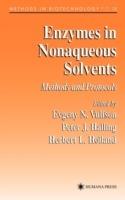
Enzymes in Nonaqueous Solvents: Methods and Protocols
(0)
Cliccando su “Conferma” dichiari che il contenuto da te inserito è conforme alle Condizioni Generali d’Uso del Sito ed alle Linee Guida sui Contenuti Vietati. Puoi rileggere e modificare e successivamente confermare il tuo contenuto. Tra poche ore lo troverai online (in caso contrario verifica la conformità del contenuto alle policy del Sito).
Grazie per la tua recensione!
Tra poche ore la vedrai online (in caso contrario verifica la conformità del testo alle nostre linee guida). Dopo la pubblicazione per te +4 punti 
204,70 €
+2050
punti 
Venditore: IBS
Articolo acquistabile con Carta del Docente

Articolo acquistabile con Carta Cultura Giovani e Carta del Merito

Articolo acquistabile con Carta della Cultura

Paga con Klarna in 3 rate senza interessi per ordini superiori a 39 €

Dati e Statistiche
 Salvato in 0 liste dei desideri
Salvato in 0 liste dei desideri
Enzymes in Nonaqueous Solvents: Methods and Protocols
Disponibilità in 2 settimane
204,70 €
204,70 €
Disponibilità in 2 settimane
Altre offerte vendute e spedite dai nostri venditori
Libri in Inglese
Enzymes in Nonaqueous Solvents: Methods and Protocols
Altri venditori
Prezzo e spese di spedizione
LIBRO INGLESE
Disponibilità in 2 settimane

Venduto e spedito da
IBS
Spedizione Gratis
204,70 €
Altri venditori
Prezzo e spese di spedizione
LIBRO INGLESE
Disponibilità in 2 settimane
Venduto e spedito da
IBS
Spedizione Gratis
204,70 €
Altri venditori
Prezzo e spese di spedizione

Tutti i formati ed edizioni
Promo attive (0)
Enzymatic catalysis has gained considerable attention in recent years as an efficient tool in the preparation of natural products, pharmaceuticals, fine chemicals, and food ingredients. The high selectivity and mild reaction con- tions associated with enzymatic transformations have made this approach an attractive alternative in the synthesis of complex bioactive compounds, which are often difficult to obtain by standard chemical routes. However, the maj- ity of organic compounds are not very soluble in water, which was traditi- ally perceived as the only suitable reaction medium for the application of biocatalysts. The realization that most enzymes can function perfectly well under nearly anhydrous conditions and, in addition, display a number of useful properties, e. g. , highly enhanced stability and different selectivity, has d- matically widened the scope of their application to the organic synthesis. Another great attraction of using organic solvents rather than water as a reaction solvent is the ability to perform synthetic transformations with re- tively inexpensive hydrolytic enzymes. It is worth reminding the reader that in vivo, the synthetic and hydrolytic pathways are catalyzed by different enzymes. However, elimination of water from the reaction mixture enables the “reversal” of hydrolytic enzymes and thus avoids the use of the expensive cofactors or activated substrates that are required for their synthetic count- parts.
Leggi di più
Leggi di meno
Curatore:
Editore:
Collana:
Methods in Biotechnology
Anno:
2001
Rilegatura:
Hardback
Pagine:
679 p.
Testo in English
Dimensioni:
235 x 155 mm
EAN:
9780896039292

L'articolo è stato aggiunto al carrello
Informazioni e Contatti sulla Sicurezza dei Prodotti
Le schede prodotto sono aggiornate in conformità al Regolamento UE 988/2023. Laddove ci fossero taluni dati non disponibili per ragioni indipendenti da IBS, vi informiamo che stiamo compiendo ogni ragionevole sforzo per inserirli. Vi invitiamo a controllare periodicamente il sito www.ibs.it per eventuali novità e aggiornamenti.
Per le vendite di prodotti da terze parti, ciascun venditore si assume la piena e diretta responsabilità per la commercializzazione del prodotto e per la sua conformità al Regolamento UE 988/2023, nonché alle normative nazionali ed europee vigenti.
Per informazioni sulla sicurezza dei prodotti, contattare productsafetyibs@feltrinelli.it
L’articolo è stato aggiunto alla lista dei desideri
