

L’articolo è stato aggiunto alla lista dei desideri







LIBRO INGLESE
 E-mail
 Facebook
 LinkedIn
 Twitter
 WhatsApp
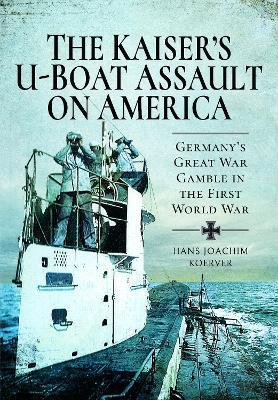
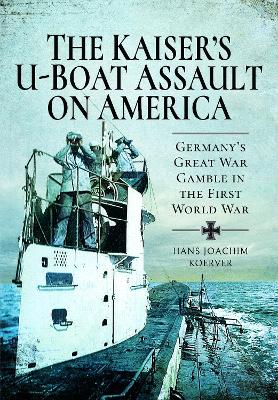
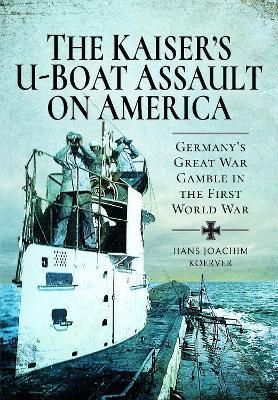
The Kaiser's U-Boat Assault on America: Germany's Great War Gamble in the First World War
(0)
Cliccando su “Conferma” dichiari che il contenuto da te inserito è conforme alle Condizioni Generali d’Uso del Sito ed alle Linee Guida sui Contenuti Vietati. Puoi rileggere e modificare e successivamente confermare il tuo contenuto. Tra poche ore lo troverai online (in caso contrario verifica la conformità del contenuto alle policy del Sito).
Grazie per la tua recensione!
Tra poche ore la vedrai online (in caso contrario verifica la conformità del testo alle nostre linee guida). Dopo la pubblicazione per te +4 punti 
17,80 €

-5%
18,74 €
+180
punti
Venditore: IBS
Articolo acquistabile con Carta del Docente
Articolo acquistabile con Carta Cultura Giovani e Carta del Merito

Articolo acquistabile con Carta della Cultura

Dati e Statistiche
 Salvato in 2 liste dei desideri
Salvato in 2 liste dei desideri
The Kaiser's U-Boat Assault on America: Germany's Great War Gamble in the First World War
Disponibile in 5 gg lavorativi
17,80 €
-5%
18,74 €
17,80 €
18,74 €
-5%
Disponibile in 5 gg lavorativi
Altre offerte vendute e spedite dai nostri venditori
Libri in Inglese
The Kaiser's U-Boat Assault on America: Germany's Great War Gamble in the First World War
Altri venditori
Prezzo e spese di spedizione
Disponibile in 5 gg lavorativi

Venduto e spedito da
IBS
Spedizione Gratis
-5%
18,74 €
17,80 €
Altri venditori
Prezzo e spese di spedizione
Disponibile in 5 gg lavorativi
Venduto e spedito da
IBS
Spedizione Gratis
-5%
18,74 €
17,80 €
Altri venditori
Prezzo e spese di spedizione

Tutti i formati ed edizioni
Promo attive (0)
Why did a long time reluctant US President Wilson finally enter World War I on the side of the Allies in April 1917? In retaliation of the British naval blockade of Germany since August 1914, the German Admirals determined at the beginning of 1915 to create a counter-blockade of the British Isles with their submarines. The U-boat commanders got – without knowledge of the government - a secret order to sink Allied passenger liners. The British Admiralty discovered the hunt for passenger liners by deciphering W/T messages to the U-boats. The sinking of the Lusitania on May, 6th, 1915, was no coincidence – the Royal Navy knew about the intentions of the U-boats and, after doing everything to protect the passenger liners in the beginning, they simply left the Lusitania alone in in the first week of May, to create frictions between America and the German Empire. A diplomatic quarrel between US President Wilson and Germany about U-boat warfare commenced. In spring of 1916 the German Navy acted again against the instructions of the Kaiser and ordered secretly the sinking of allied and neutral vessels in the British Channel, thereby opening an unrestricted U-boat war. When the channel ferry Sussex was attacked, Wilson threatened to break off of diplomatic relations with Germany. Under massive diplomatic pressure the German government had to give in. Further on, their U-boats only conducted a “soft”, restricted warfare, following the internationally agreed maritime rules and tolerated by Wilson. In Germany a heated debate set in after the Sussex case. The Navy promised the quick defeat of England by unrestricted U-boat war, and the Army joined this campaign end of 1916. The intention of the “war party” was to rule out any possibility of a negotiated peace and to set the German Empire on a – risky - course for definitive victory. But the government doubted the Navy’s capability for all-out U-boat warfare and argued that the only definitive result would be an America siding the Allies, leading to ultimate defeat. In the last months of 1916 it sent out peace feelers to Wilson, warning him, that in the case of a failure of his peace mediation they would get under unbearable pressure of the “military opposition” to begin unrestricted U-boat war again. At this time Britain was – like Germany – economically with its back against the wall: it suffered terribly by the sinking of its merchant ships, the moral of its Admiralty in Anti-Submarine-Warfare had completely broken down. Collapse was threatening. But the British government got wind of the conflicts inside Germany by the deciphering of the diplomatic cables between Wilson and the Germans. The new Prime Minster, David Lloyd George, chose a risky strategy – by rebuffing all American peace efforts he wanted to encourage the radical party in Germany to enforce total U-boat war. Finally this British strategy payed out: German Navy and Army pressed the Kaiser to declare unrestricted U-boat war from 1st of February 1917 on, and Wilson broke off diplomatic relations. But he still bristled to enter the war on Allied side – as long as American ships would be treated correctly by the Germans, he wouldn’t come in, not even after the publication of the Zimmermann-telegram. The tipping point came in the middle of March, when U-boats torpedoed American vessels without warning. This forced the American Declaration of War against the German Empire on April 6, 1917.
Leggi di più
Leggi di meno
Autore:
Editore:
Anno:
2026
Rilegatura:
Paperback / softback
Pagine:
360 p.
Testo in English
Dimensioni:
234 x 156 mm
EAN:
9781399021524

L'articolo è stato aggiunto al carrello
Informazioni e Contatti sulla Sicurezza dei Prodotti
Le schede prodotto sono aggiornate in conformità al Regolamento UE 988/2023. Laddove ci fossero taluni dati non disponibili per ragioni indipendenti da IBS, vi informiamo che stiamo compiendo ogni ragionevole sforzo per inserirli. Vi invitiamo a controllare periodicamente il sito www.ibs.it per eventuali novità e aggiornamenti.
Per le vendite di prodotti da terze parti, ciascun venditore si assume la piena e diretta responsabilità per la commercializzazione del prodotto e per la sua conformità al Regolamento UE 988/2023, nonché alle normative nazionali ed europee vigenti.
Per informazioni sulla sicurezza dei prodotti, contattare productsafetyibs@feltrinelli.it
L’articolo è stato aggiunto alla lista dei desideri
