

L’articolo è stato aggiunto alla lista dei desideri








LIBRO INGLESE
 E-mail
 Facebook
 LinkedIn
 Twitter
 WhatsApp
Kite-Flying and Other Irrational Acts: Conversations with Twelve Southern Writers
(0)
Cliccando su “Conferma” dichiari che il contenuto da te inserito è conforme alle Condizioni Generali d’Uso del Sito ed alle Linee Guida sui Contenuti Vietati. Puoi rileggere e modificare e successivamente confermare il tuo contenuto. Tra poche ore lo troverai online (in caso contrario verifica la conformità del contenuto alle policy del Sito).
Grazie per la tua recensione!
Tra poche ore la vedrai online (in caso contrario verifica la conformità del testo alle nostre linee guida). Dopo la pubblicazione per te +4 punti 

52,30 €
+520
punti 
Venditore: IBS
Articolo acquistabile con Carta del Docente

Articolo acquistabile con Carta Cultura Giovani e Carta del Merito

Articolo acquistabile con Carta della Cultura

Paga con Klarna in 3 rate senza interessi per ordini superiori a 39 €

Dati e Statistiche
 Salvato in 0 liste dei desideri
Salvato in 0 liste dei desideri
Kite-Flying and Other Irrational Acts: Conversations with Twelve Southern Writers
Disponibilità in 2 settimane
52,30 €
52,30 €
Disponibilità in 2 settimane
Altre offerte vendute e spedite dai nostri venditori
Libri in Inglese
Kite-Flying and Other Irrational Acts: Conversations with Twelve Southern Writers
Altri venditori
Prezzo e spese di spedizione
LIBRO INGLESE
Disponibilità in 2 settimane

Venduto e spedito da
IBS
Spedizione Gratis
52,30 €
Altri venditori
Prezzo e spese di spedizione
LIBRO INGLESE
Disponibilità in 2 settimane
Venduto e spedito da
IBS
Spedizione Gratis
52,30 €
Altri venditori
Prezzo e spese di spedizione

Tutti i formati ed edizioni
Promo attive (1)
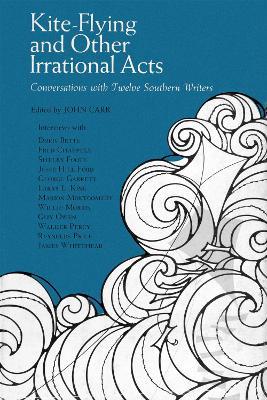
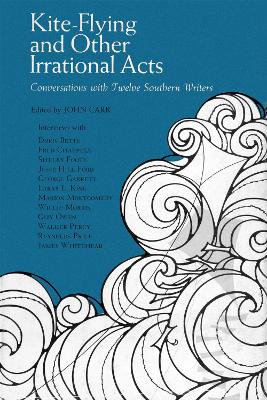
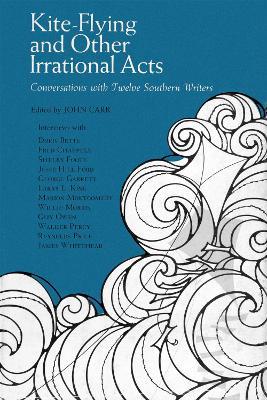
Interviews with: Doris Betts Fred Chappell Shelby Foote Jesse Hill Ford George Garrett Larry L. King Marion Montgomery Willie Morris Guy Owen Walker Percy Reynolds Price James Whitehead What does it mean to be a Southern writer in the 1970s? What is the nature of today's South and what prospects does it offer a writer? These twelve interviews with writers of fiction, poetry, and nonfiction elicit some thoughtful and revealing answers. Because the interviews were taped, there is a spontaneity that brings forth the personality of each writer and provides a text that is interesting and entertaining as well as instructive. In the first interview with Shelby Foote to appear since the early 1950s, the Mississippi novelist discusses his fiction and extensive writing on Civil War history. A thoughtful conversation with Walker Percy ranges over his three novels and reveals their philosophical roots. Marion Montgomery speaks perceptively about his fiction and poetry as ceremonial efforts ""to reconcile the private act with the public act."" A two-part interview with Reynolds Price suggests the nature of one novelist's mind as he chronicles a world beneath the one other people perceive, ""that world which seems to impinge upon, to color, to shape, the daily world we inhabit."" Willie Morris tells about growing up in Mississippi, about going home to Yazoo, and about the effect of New York on his Southernness, while Larry L. King speaks of race relations, literature, and Texas and talks frankly about how he and Morris came to resign from Harper's. The short story is Doris Betts' forte, and she comments significantly on the form which allows her to ""speak briefly on long subjects."" The business of writing is as irrational as kite-flying, observes George Garrett in a candid discussion of the publishing world, his own ups and downs as a writer, and his latest novel, The Death of the Fox. Jesse Hill Ford, talking about his fiction and his writing career, speaks up proudly for the South: ""Nest to a bulldozer blade a magnolia is probably the hardest damned thing in the world."" Both the mountain country of North Carolina and the fantastic landscapes of his imagination have influenced Fred Chappell, who remarks on the grotesque in his novels and poetry. Guy Owen tells about his interacting roles as fiction writer, poet, editor, and teacher; his compelling interest in the Lumbee Indians of North Carolina; and his experience with Hollywood. Poetry, the novel, football, and a passion for teaching are the subjects of a provocative and free-wheeling conversation with James Whitehead. ""Have you ever stopped to think that for the first time there have been no rational rewards for writing in the way that there were in the past. . . Nowadays, it's about as rational as saying, 'What do you do for a living?' 'Well, I'm a kite-flyer.' I mean there's not a great demand for kite-flyers around. There may be a few who draw a little money. Therefore, today, writing appeals to a different mentality. A Shakespeare today might be doing something else that's more rational. Now the other thing is that because this is true, fundamentally writing doesn't matter in the world of commerce. It has a certain kind of- I wouldn't say purity, but freedom that is never had.""- George Garrett
Leggi di più
Leggi di meno
Autore:
Editore:
Anno:
1999
Rilegatura:
Paperback / softback
Pagine:
304 p.
Testo in English
Dimensioni:
228 x 152 mm
Peso:
440 gr.
EAN:
9780807125236


L'articolo è stato aggiunto al carrello
Informazioni e Contatti sulla Sicurezza dei Prodotti
Le schede prodotto sono aggiornate in conformità al Regolamento UE 988/2023. Laddove ci fossero taluni dati non disponibili per ragioni indipendenti da IBS, vi informiamo che stiamo compiendo ogni ragionevole sforzo per inserirli. Vi invitiamo a controllare periodicamente il sito www.ibs.it per eventuali novità e aggiornamenti.
Per le vendite di prodotti da terze parti, ciascun venditore si assume la piena e diretta responsabilità per la commercializzazione del prodotto e per la sua conformità al Regolamento UE 988/2023, nonché alle normative nazionali ed europee vigenti.
Per informazioni sulla sicurezza dei prodotti, contattare productsafetyibs@feltrinelli.it
L’articolo è stato aggiunto alla lista dei desideri
