

L’articolo è stato aggiunto alla lista dei desideri










EBOOK IN LINGUA STRANIERA
 E-mail
 Facebook
 LinkedIn
 Twitter
 WhatsApp
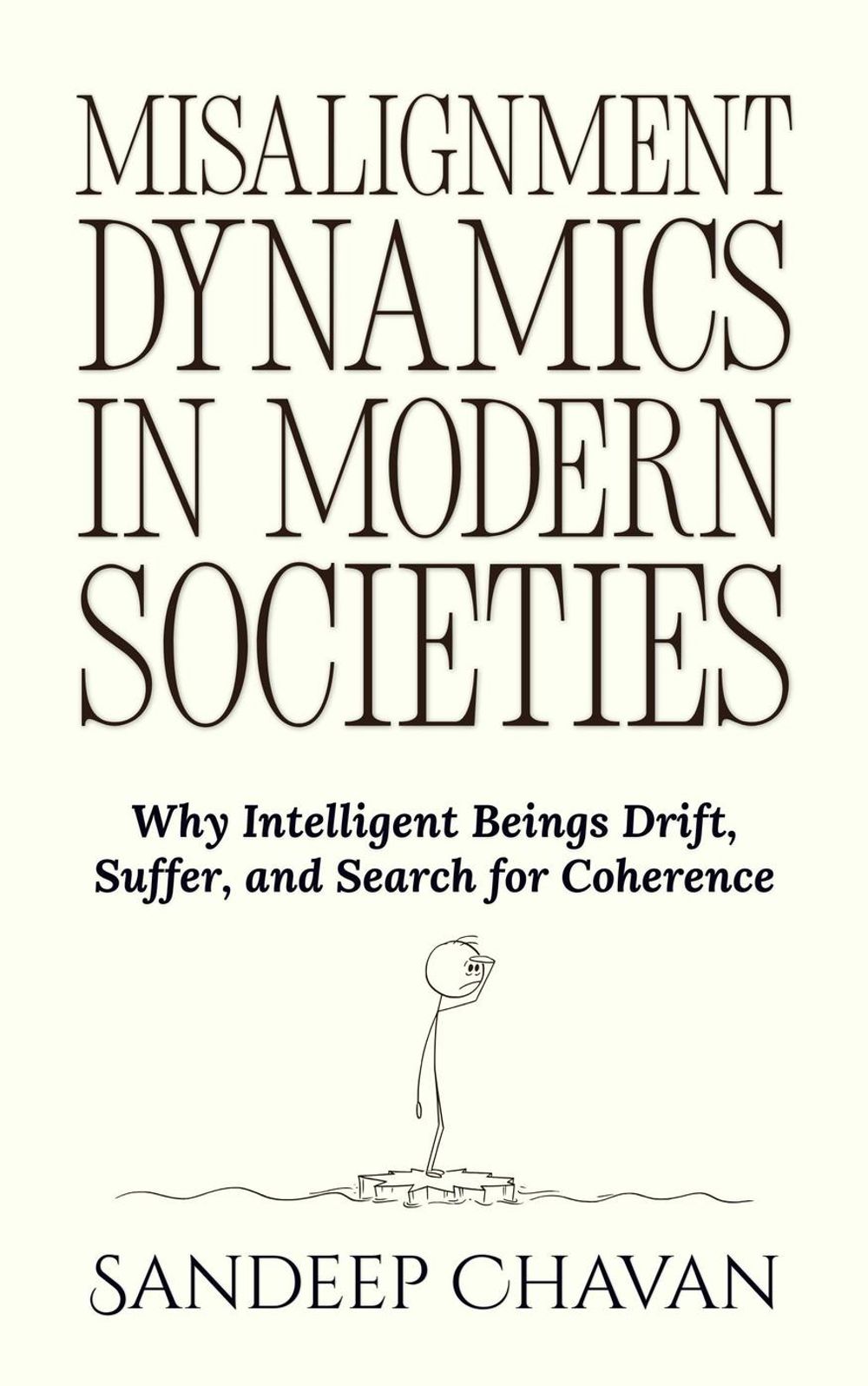
Misalignment Dynamics in Modern Societies
(0)
Cliccando su “Conferma” dichiari che il contenuto da te inserito è conforme alle Condizioni Generali d’Uso del Sito ed alle Linee Guida sui Contenuti Vietati. Puoi rileggere e modificare e successivamente confermare il tuo contenuto. Tra poche ore lo troverai online (in caso contrario verifica la conformità del contenuto alle policy del Sito).
Grazie per la tua recensione!
Tra poche ore la vedrai online (in caso contrario verifica la conformità del testo alle nostre linee guida). Dopo la pubblicazione per te +4 punti 
35,49 €
+350
punti 
Venditore: IBS

Acquista online
Scaricabile subito
Articolo acquistabile con Carta del Docente

Articolo acquistabile con Carta Cultura Giovani e Carta del Merito

Articolo acquistabile con Carta della Cultura

Abbonati a Kobo plus per avere accesso illimitato a questo contenuto

Dati e Statistiche
 Salvato in 0 liste dei desideri
Salvato in 0 liste dei desideri
Misalignment Dynamics in Modern Societies
Scaricabile subito
35,49 €
35,49 €
Scaricabile subito
Altre offerte vendute e spedite dai nostri venditori

Ebook in lingua straniera
Misalignment Dynamics in Modern Societies
Altri venditori
Prezzo e spese di spedizione
EBOOK INGLESE
EPUB2 con DRMFREE
Scaricabile subito

Venduto e spedito da
IBS
Spedizione Gratis
35,49 €
Altri venditori
Prezzo e spese di spedizione
EBOOK INGLESE
EPUB2 con DRMFREE
Scaricabile subito
Venduto e spedito da
IBS
Spedizione Gratis
35,49 €
Altri venditori
Prezzo e spese di spedizione

Tutti i formati ed edizioni

Promo attive (0)
Misalignment Dynamics in Modern Societies
Why do so many people feel anxious, exhausted, lonely, distracted, pressured, and uncertain despite living in societies with greater knowledge, technology, opportunity, and material capacity than ever before? Misalignment Dynamics in Modern Societies explores the hidden relationship between personal suffering and the wider structures of modern life. Human beings are not born into an empty world. We enter families, cultures, educational systems, markets, technologies, religions, political narratives, and inherited ideas of success already in motion. Before we can consciously question them, these structures begin shaping how we understand belonging, responsibility, achievement, security, identity, and worth. The family becomes the first place where society turns personal. Economic uncertainty appears as parental fear. Educational competition becomes pressure around marks and careers. Social status enters through comparison and reputation. Technology changes attention, connection, and visibility. Work becomes more than livelihood and begins organising identity. Over time, useful structures can expand beyond their original purpose. Education becomes performance. Work becomes the whole self. Protection becomes control. Responsibility becomes exhaustion. Belonging becomes conformity. Visibility replaces connection. Consumption becomes identity. And Good intentions begin producing harmful consequences. The result is often experienced privately—as anxiety, overthinking, burnout, loneliness, resentment, comparison, scattered attention, family conflict, or loss of direction. Yet the architecture behind these experiences may be relational, institutional, economic, technological, and collective. This book does not argue that every problem is caused by society. Biology, mental health, trauma, physical conditions, personal history, habits, and individual decisions remain important. Nor does it remove personal responsibility by blaming systems. Instead, it develops a layered view. The individual is both receiver and transmitter. We inherit stories, roles, fears, and expectations. We also pass them forward through parenting, teaching, leadership, work, relationships, and public participation. Through twenty chapters, reflective interludes, practical appendices, and self-observation questions, the book examines: how inherited stories become identity, why intelligence creates possibilities of psychological and social drift, how schools, workplaces, markets, technology, politics, and religion amplify partial truths, why modern people feel lost despite having more choices, how family pressure moves across generations, why thoughts continue when responsibility and uncertainty remain unresolved, how burnout and loneliness can reflect shared structural conditions, why misalignment does not always require villains, and how coherent participation can replace both escape and blind adaptation. The goal is not perfect alignment. Human beings will continue to make mistakes, act from fear, repeat old patterns, and participate in imperfect systems. The practical aim is reduced drift: to notice earlier, correct sooner, set clearer boundaries, return responsibility to the proper person, remain open to feedback, and transmit less unconscious pressure to the next generation. Misalignment Dynamics in Modern Societies is for readers of social psychology, sociology, philosophy, family systems, modern anxiety, workplace burnout, education, technology, identity, and human behaviour. It asks one central question: How can we remain human inside the structures we have created—and prevent our unexamined participation from becoming the inheritance of those who come after us?
Leggi di più
Leggi di meno
Autore:
Anno edizione:
2026
Editore:
Formato:
Lingua:
Inglese
Compatibilità:
Tutti i dispositivi (eccetto Kindle) Scopri di più
Layout:
Reflowable
EAN:
9798235164925
L'articolo è stato aggiunto al carrello
Formato:
Gli eBook venduti da IBS.it sono in formato ePub e possono essere protetti da Adobe DRM. In caso di download di un file protetto da DRM si otterrà un file in formato .acs, (Adobe Content Server Message), che dovrà essere aperto tramite Adobe Digital Editions e autorizzato tramite un account Adobe, prima di poter essere letto su pc o trasferito su dispositivi compatibili.
Cloud:
Gli eBook venduti da IBS.it sono sincronizzati automaticamente su tutti i client di lettura Kobo successivamente all’acquisto. Grazie al Cloud Kobo i progressi di lettura, le note, le evidenziazioni vengono salvati e sincronizzati automaticamente su tutti i dispositivi e le APP di lettura Kobo utilizzati per la lettura.
Clicca qui per sapere come scaricare gli ebook utilizzando un pc con sistema operativo Windows
L’articolo è stato aggiunto alla lista dei desideri
