

L’articolo è stato aggiunto alla lista dei desideri









LIBRO INGLESE
 E-mail
 Facebook
 LinkedIn
 Twitter
 WhatsApp
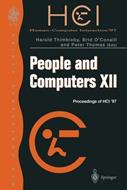
People and Computers XII: Proceedings of HCI ’97
(0)
Cliccando su “Conferma” dichiari che il contenuto da te inserito è conforme alle Condizioni Generali d’Uso del Sito ed alle Linee Guida sui Contenuti Vietati. Puoi rileggere e modificare e successivamente confermare il tuo contenuto. Tra poche ore lo troverai online (in caso contrario verifica la conformità del contenuto alle policy del Sito).
Grazie per la tua recensione!
Tra poche ore la vedrai online (in caso contrario verifica la conformità del testo alle nostre linee guida). Dopo la pubblicazione per te +4 punti 
67,20 €
+670
punti 
Venditore: IBS
Articolo acquistabile con Carta del Docente

Articolo acquistabile con Carta Cultura Giovani e Carta del Merito

Articolo acquistabile con Carta della Cultura

Paga con Klarna in 3 rate senza interessi per ordini superiori a 39 €

Dati e Statistiche
 Salvato in 0 liste dei desideri
Salvato in 0 liste dei desideri
People and Computers XII: Proceedings of HCI ’97
Disponibilità in 2 settimane
67,20 €
67,20 €
Disponibilità in 2 settimane
Altre offerte vendute e spedite dai nostri venditori
Libri in Inglese
People and Computers XII: Proceedings of HCI ’97
Altri venditori
Prezzo e spese di spedizione

LIBRO INGLESE
Disponibilità in 2 settimane

Venduto e spedito da
IBS
Spedizione Gratis
67,20 €
Altri venditori
Prezzo e spese di spedizione
LIBRO INGLESE
Disponibilità in 2 settimane
Venduto e spedito da
IBS
Spedizione Gratis
67,20 €
Altri venditori
Prezzo e spese di spedizione

Tutti i formati ed edizioni

Promo attive (0)
Most organisations try to protect their systems from unauthorised access, usually through passwords. Considerable resources are spent designing secure authentication mechanisms, but the number of security breaches and problems is still increasing (DeAlvare, 1990; Gordon, 1995; Hitchings, 1995). Unauthorised access to systems, and resulting theft of information or misuse of the system, is usually due to hackers "cracking" user passwords, or obtaining them through social engineering. System security, unlike other fields of system development, has to date been regarded as an entirely technical issue - little research has been done on usability or human factors related to use of security mechanisms. Hitchings (1995) concludes that this narrow perspective has produced security mechanisms which are much less effective than they are generally thought to be. Davis & Price (1987) point out that, since security is designed, implemented, used and breached by people, human factors should be considered in the design of security mechanism. It seems that currently hackers pay more attention to human factors than security designers do. The technique of social engineering, for instanc- obtaining passwords by deception and persuasion- exploits users' lack of security awareness. Hitchings (1995) also suggests that organisational factors ought to be considered when assessing security systems. The aim of the study described in this paper was to identify usability and organisational factors which affect the use of passwords. The following section provides a brief overview of authentication systems along with usability and organisational issues which have been identified to date. 1.
Leggi di più
Leggi di meno
Curatore:
Anno:
1997
Rilegatura:
Paperback / softback
Pagine:
420 p.
Testo in English
Dimensioni:
235 x 155 mm
EAN:
9783540761723

L'articolo è stato aggiunto al carrello
Informazioni e Contatti sulla Sicurezza dei Prodotti
Le schede prodotto sono aggiornate in conformità al Regolamento UE 988/2023. Laddove ci fossero taluni dati non disponibili per ragioni indipendenti da IBS, vi informiamo che stiamo compiendo ogni ragionevole sforzo per inserirli. Vi invitiamo a controllare periodicamente il sito www.ibs.it per eventuali novità e aggiornamenti.
Per le vendite di prodotti da terze parti, ciascun venditore si assume la piena e diretta responsabilità per la commercializzazione del prodotto e per la sua conformità al Regolamento UE 988/2023, nonché alle normative nazionali ed europee vigenti.
Per informazioni sulla sicurezza dei prodotti, contattare productsafetyibs@feltrinelli.it
L’articolo è stato aggiunto alla lista dei desideri
