

L’articolo è stato aggiunto alla lista dei desideri










EBOOK IN LINGUA STRANIERA
 E-mail
 Facebook
 LinkedIn
 Twitter
 WhatsApp
Professional Trap Baiting Techniques
(0)
Cliccando su “Conferma” dichiari che il contenuto da te inserito è conforme alle Condizioni Generali d’Uso del Sito ed alle Linee Guida sui Contenuti Vietati. Puoi rileggere e modificare e successivamente confermare il tuo contenuto. Tra poche ore lo troverai online (in caso contrario verifica la conformità del contenuto alle policy del Sito).
Grazie per la tua recensione!
Tra poche ore la vedrai online (in caso contrario verifica la conformità del testo alle nostre linee guida). Dopo la pubblicazione per te +4 punti 
2,99 €
+30
punti 
Venditore: IBS

Acquista online
Scaricabile subito
Articolo acquistabile con Carta del Docente

Articolo acquistabile con Carta Cultura Giovani e Carta del Merito

Articolo acquistabile con Carta della Cultura

Abbonati a Kobo plus per avere accesso illimitato a questo contenuto

Dati e Statistiche
 Salvato in 0 liste dei desideri
Salvato in 0 liste dei desideri
Professional Trap Baiting Techniques
Scaricabile subito
2,99 €
2,99 €
Scaricabile subito
Altre offerte vendute e spedite dai nostri venditori

Ebook in lingua straniera
Professional Trap Baiting Techniques
Altri venditori
Prezzo e spese di spedizione
EBOOK INGLESE
EPUB2 con DRMFREE
Scaricabile subito

Venduto e spedito da
IBS
Spedizione Gratis
2,99 €
Altri venditori
Prezzo e spese di spedizione
EBOOK INGLESE
EPUB2 con DRMFREE
Scaricabile subito
Venduto e spedito da
IBS
Spedizione Gratis
2,99 €
Altri venditori
Prezzo e spese di spedizione

Tutti i formati ed edizioni
Promo attive (0)
Professional Trap Baiting Techniques
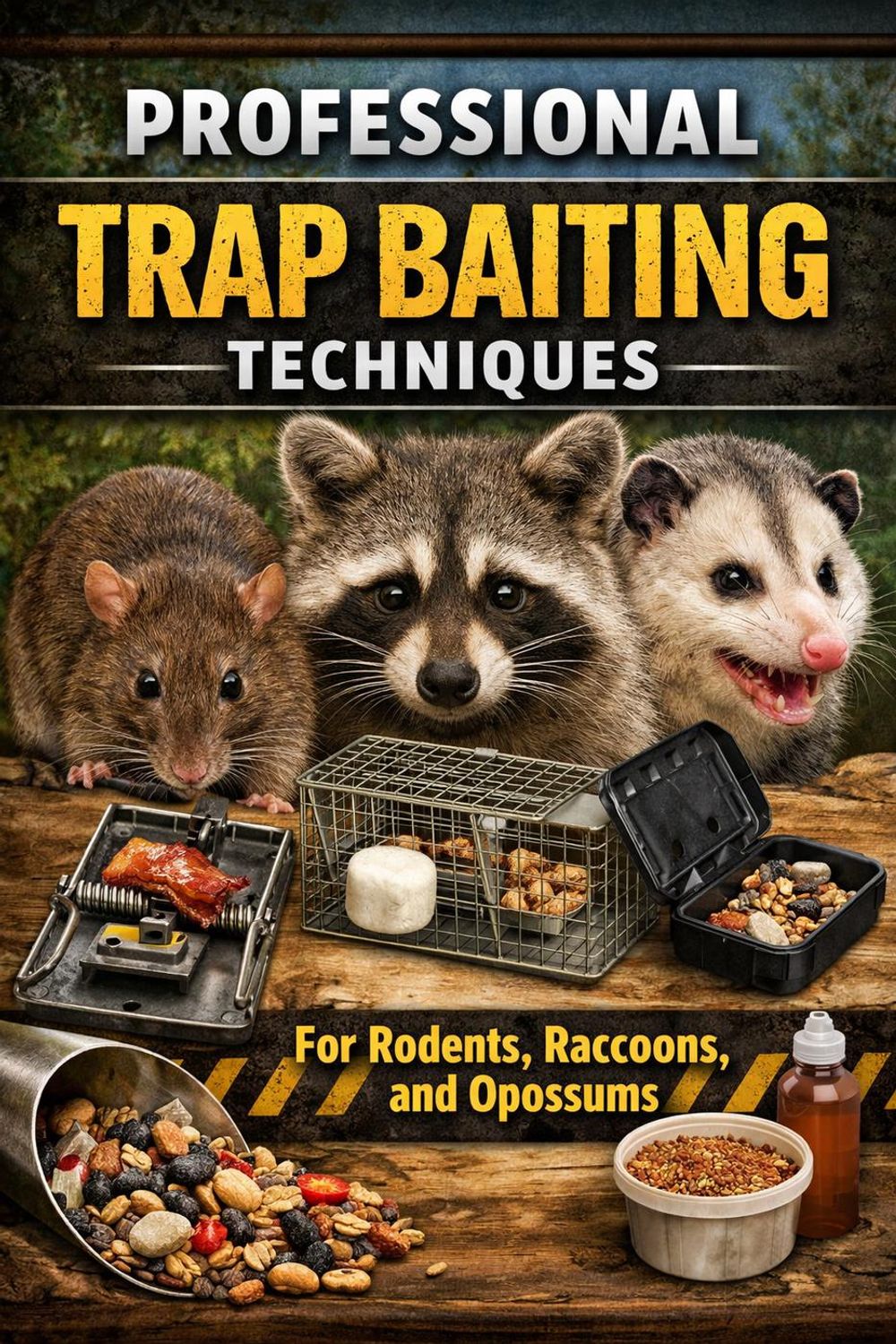
Successful trapping is rarely about the trap itself. It is about understanding behavior, pressure, scent, and opportunity. Professional Trap Baiting Techniques: Rodents, Raccoons, Opossums, and Structural Wildlife was written to address the single most overlooked factor in trapping success—how and why animals commit to bait. This is not a photo guide book this is all text explained. After nearly forty years in the pest control and nuisance wildlife control industry, the author has seen the same mistakes repeated across residential, commercial, and institutional settings: poorly chosen bait, incorrect placement, failure to adapt to food pressure, and reliance on tradition rather than observation. This guide was created to correct those problems using methods that have been tested in attics, crawlspaces, wall voids, kitchens, warehouses, and occupied buildings. The book focuses on animals most commonly encountered inside structures, including mice, rats, raccoons, and opossums. Rather than promoting gimmicks or brand loyalty, it explains why certain baits work, when they fail, and how to adapt when animals become trap-shy or food-selective. Readers are guided through rodent baiting fundamentals, including the differences between mice and rats, how suspicion affects feeding behavior, and why matching bait to existing food sources often outperforms popular attractants. Practical techniques such as securing bait to prevent theft, rotating bait types, reducing foreign scent, and prioritizing placement over trap quantity are explained in clear, field-ready language. The guide also addresses wildlife-specific strategies. Raccoon baiting sections explain how curiosity, scent trails, and timing influence capture success, while opossum baiting focuses on scavenger behavior and the role of strong odors. Throughout the book, professional placement tips are emphasized to ensure proper trigger engagement and reduce non-target risks. One of the most valuable sections explores grease-based baiting, a method often overlooked despite its effectiveness. Readers learn why fats are powerful attractants, how to prepare grease-based baits safely, and how to use them effectively in structural environments. Special attention is given to situational baiting, where technicians adapt bait choices based on what animals are already consuming. Real-world examples demonstrate how observation and flexibility can dramatically increase capture rates when standard approaches fail. The guide also covers structural trap placement and safety, including best practices for attics, crawlspaces, and live traps. These sections address common problems such as trap removal, odor issues, moisture exposure, and reach-through bait theft. Recognizing modern liability concerns, the book includes an in-depth discussion on allergen-safe baiting, with a strong focus on suet as a professional alternative to peanut butter. This section explains why suet is highly effective, how to prepare and secure it, and why it is increasingly preferred in schools, healthcare facilities, food service environments, and multi-family housing. Throughout the book, the emphasis remains on professionalism: documentation, safety, regulatory awareness, and ethical application. This is not a beginner's pamphlet or a marketing piece—it is a working reference designed for technicians, supervisors, and business owners who expect traps to perform reliably. Professional Trap Baiting Techniques is built on decades of real-world application and written for those who understand that animals do not follow instructions—they follow opportunity. The professionals who succeed are the ones who observe, adapt, and apply knowledge with intention. This book exists to help them do exactly that.
Leggi di più
Leggi di meno
Autore:
Anno edizione:
2026
Editore:
Formato:
Lingua:
Inglese
Compatibilità:
Tutti i dispositivi (eccetto Kindle) Scopri di più
Layout:
Reflowable
EAN:
9798233402494
L'articolo è stato aggiunto al carrello
Formato:
Gli eBook venduti da IBS.it sono in formato ePub e possono essere protetti da Adobe DRM. In caso di download di un file protetto da DRM si otterrà un file in formato .acs, (Adobe Content Server Message), che dovrà essere aperto tramite Adobe Digital Editions e autorizzato tramite un account Adobe, prima di poter essere letto su pc o trasferito su dispositivi compatibili.
Cloud:
Gli eBook venduti da IBS.it sono sincronizzati automaticamente su tutti i client di lettura Kobo successivamente all’acquisto. Grazie al Cloud Kobo i progressi di lettura, le note, le evidenziazioni vengono salvati e sincronizzati automaticamente su tutti i dispositivi e le APP di lettura Kobo utilizzati per la lettura.
Clicca qui per sapere come scaricare gli ebook utilizzando un pc con sistema operativo Windows
L’articolo è stato aggiunto alla lista dei desideri
