

L’articolo è stato aggiunto alla lista dei desideri










EBOOK IN LINGUA STRANIERA
 E-mail
 Facebook
 LinkedIn
 Twitter
 WhatsApp
The Seventh Millennium
(0)
Cliccando su “Conferma” dichiari che il contenuto da te inserito è conforme alle Condizioni Generali d’Uso del Sito ed alle Linee Guida sui Contenuti Vietati. Puoi rileggere e modificare e successivamente confermare il tuo contenuto. Tra poche ore lo troverai online (in caso contrario verifica la conformità del contenuto alle policy del Sito).
Grazie per la tua recensione!
Tra poche ore la vedrai online (in caso contrario verifica la conformità del testo alle nostre linee guida). Dopo la pubblicazione per te +4 punti 
1,99 €
+20
punti 
Venditore: IBS

Acquista online
Scaricabile subito
Articolo acquistabile con Carta del Docente

Articolo acquistabile con Carta Cultura Giovani e Carta del Merito

Articolo acquistabile con Carta della Cultura

Abbonati a Kobo plus per avere accesso illimitato a questo contenuto

Dati e Statistiche
 Salvato in 0 liste dei desideri
Salvato in 0 liste dei desideri
The Seventh Millennium
Scaricabile subito
1,99 €
1,99 €
Scaricabile subito
Altre offerte vendute e spedite dai nostri venditori
Ebook in lingua straniera
The Seventh Millennium
Altri venditori
Prezzo e spese di spedizione
EBOOK INGLESE
EPUB2 con DRMFREE
Scaricabile subito

Venduto e spedito da
IBS
Spedizione Gratis
1,99 €
Altri venditori
Prezzo e spese di spedizione
EBOOK INGLESE
EPUB2 con DRMFREE
Scaricabile subito
Venduto e spedito da
IBS
Spedizione Gratis
1,99 €
Altri venditori
Prezzo e spese di spedizione

Tutti i formati ed edizioni
Promo attive (0)
The Seventh Millennium
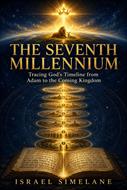
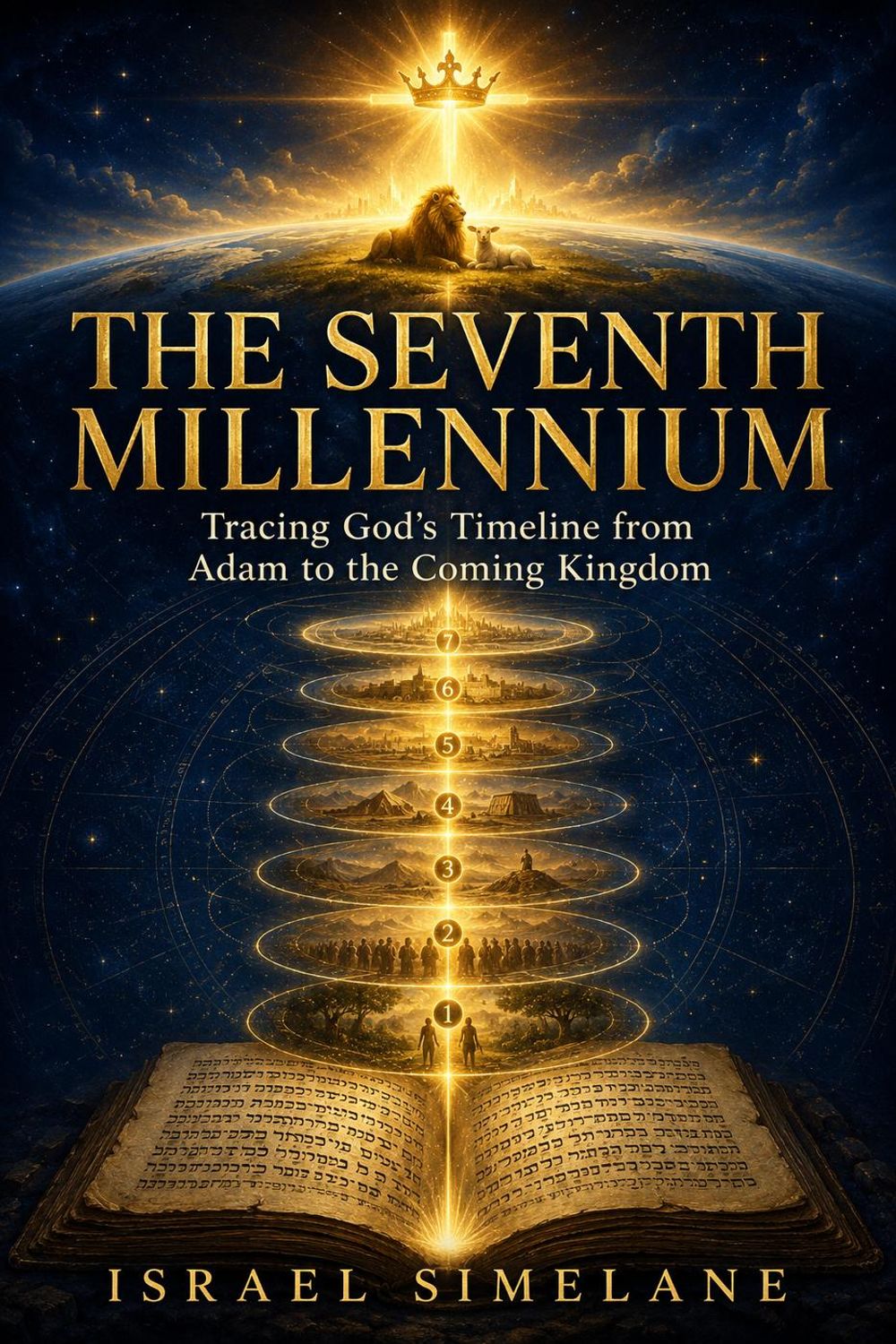
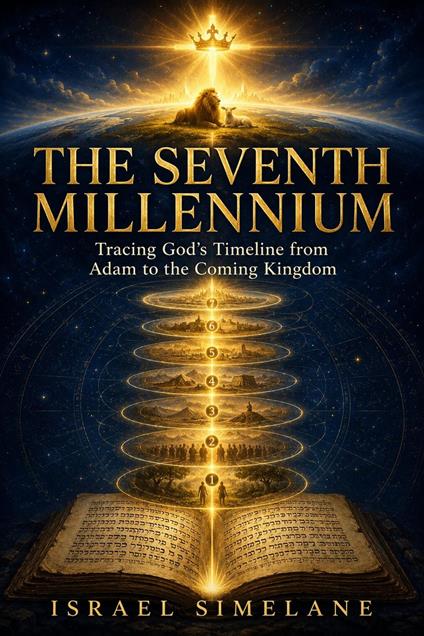
THE SEVENTH MILLENNIUM Tracing God's Timeline from Adam to the Coming Kingdom What if the seven days of creation reveal more than the beginning of the world? Could the six days of work followed by the seventh day of rest provide a pattern pointing toward the larger movement of human history? The Seventh Millennium is an investigative biblical journey through time—from Adam and the genealogies of Genesis to Israel, the coming of Jesus Christ, and the thousand-year reign revealed in Revelation. Beginning with a simple question about the present Jewish year, Israel Simelane follows the chronological witnesses scattered throughout Scripture. The investigation examines patriarchal ages, generations, the Flood, Abraham, Israel's years in Egypt, the Exodus, the wilderness journey, judges and kings, the Temple, captivity and restoration, the genealogies of Matthew and Luke, and historical evidence surrounding the coming of Christ. At the centre of the investigation is one remarkable biblical pattern: six periods of labour followed by a seventh associated with rest, release and restoration. Creation itself begins with six days of divine work followed by the seventh day of rest. Israel worked six days and rested on the seventh. The land was cultivated for six years and rested in the seventh. Hebrew servants moved toward release after six years of service. Seven sabbatical cycles led toward Jubilee and its proclamation of liberty. Scripture also declares that a thousand years are as yesterday before God and that "one day is with the Lord as a thousand years, and a thousand years as one day." Could these biblical witnesses permit us to investigate a larger pattern—approximately six millenniums of human history followed by a seventh millennium characterized by divine rest? The book does not treat this possibility as a mathematical formula or claim to reveal the exact date of Christ's return. Instead, it carefully distinguishes between what Scripture explicitly states, what can be calculated from biblical figures, what can be historically correlated, and what remains investigative interpretation. The journey also explores why the Jewish calendar provides an important living connection to biblical time while acknowledging that no human calendar should be treated as infallible. Ancient chronological differences, genealogical questions, overlapping reigns and competing historical reconstructions are examined without forcing the evidence to fit a predetermined conclusion. Most importantly, this is not merely a book about dates. It is a book about Jesus Christ and the direction of history. Christ is not a late arrival in the biblical timeline. He is the eternal Word through whom all things were made, the Redeemer who entered the world He created, and the King toward whose righteous government history is moving. Hebrews declares that there remains a rest for the people of God. Isaiah describes righteous government under the Branch from Jesse, when the earth will be filled with the knowledge of the Lord. Revelation reveals Satan bound and Christ reigning with His saints for one thousand years. Could this coming Kingdom be the great historical Sabbath toward which the biblical pattern has been pointing? The Seventh Millennium invites readers to open their Bibles, examine the evidence, follow the chronology and consider the question for themselves. This is not an attempt to set dates. It is an invitation to recognise that time belongs to God, history remains under His authority, and creation is moving toward the appointed Kingdom of Jesus Christ.
Leggi di più
Leggi di meno
Autore:
Anno edizione:
2026
Editore:
Formato:
Lingua:
Inglese
Compatibilità:
Tutti i dispositivi (eccetto Kindle) Scopri di più
Layout:
Reflowable
EAN:
9798235755420
L'articolo è stato aggiunto al carrello
Formato:
Gli eBook venduti da IBS.it sono in formato ePub e possono essere protetti da Adobe DRM. In caso di download di un file protetto da DRM si otterrà un file in formato .acs, (Adobe Content Server Message), che dovrà essere aperto tramite Adobe Digital Editions e autorizzato tramite un account Adobe, prima di poter essere letto su pc o trasferito su dispositivi compatibili.
Cloud:
Gli eBook venduti da IBS.it sono sincronizzati automaticamente su tutti i client di lettura Kobo successivamente all’acquisto. Grazie al Cloud Kobo i progressi di lettura, le note, le evidenziazioni vengono salvati e sincronizzati automaticamente su tutti i dispositivi e le APP di lettura Kobo utilizzati per la lettura.
Clicca qui per sapere come scaricare gli ebook utilizzando un pc con sistema operativo Windows
L’articolo è stato aggiunto alla lista dei desideri
