

L’articolo è stato aggiunto alla lista dei desideri









LIBRO INGLESE
 E-mail
 Facebook
 LinkedIn
 Twitter
 WhatsApp
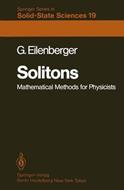
Solitons: Mathematical Methods for Physicists
(0)
Cliccando su “Conferma” dichiari che il contenuto da te inserito è conforme alle Condizioni Generali d’Uso del Sito ed alle Linee Guida sui Contenuti Vietati. Puoi rileggere e modificare e successivamente confermare il tuo contenuto. Tra poche ore lo troverai online (in caso contrario verifica la conformità del contenuto alle policy del Sito).
Grazie per la tua recensione!
Tra poche ore la vedrai online (in caso contrario verifica la conformità del testo alle nostre linee guida). Dopo la pubblicazione per te +4 punti 

137,70 €
+1380
punti 
Venditore: IBS
Articolo acquistabile con Carta del Docente

Articolo acquistabile con Carta Cultura Giovani e Carta del Merito

Articolo acquistabile con Carta della Cultura

Paga con Klarna in 3 rate senza interessi per ordini superiori a 39 €

Dati e Statistiche
 Salvato in 0 liste dei desideri
Salvato in 0 liste dei desideri
Solitons: Mathematical Methods for Physicists
Disponibilità in 2 settimane
137,70 €
137,70 €
Disponibilità in 2 settimane
Altre offerte vendute e spedite dai nostri venditori
Libri in Inglese
Solitons: Mathematical Methods for Physicists
Altri venditori
Prezzo e spese di spedizione

LIBRO INGLESE
Disponibilità in 2 settimane

Venduto e spedito da
IBS
Spedizione Gratis
137,70 €
Altri venditori
Prezzo e spese di spedizione
LIBRO INGLESE
Disponibilità in 2 settimane
Venduto e spedito da
IBS
Spedizione Gratis
137,70 €
Altri venditori
Prezzo e spese di spedizione

Tutti i formati ed edizioni

Promo attive (1)
1.1 Why Study Solitons? The last century of physics, which was initiated by Maxwell's completion of the theory of electromagnetism, can, with some justification, be called the era of linear physi cs. ~Jith few excepti ons, the methods of theoreti ca 1 phys- ics have been dominated by linear equations (Maxwell, Schrodinger), linear mathematical objects (vector spaces, in particular Hilbert spaces), and linear methods (Fourier transforms, perturbation theory, linear response theory) . Naturally the importance of nonlinearity, beginning with the Navier-Stokes equations and continuing to gravitation theory and the interactions of par- ticles in solids, nuclei, and quantized fields, was recognized. However, it was hardly possible to treat the effects of nonlinearity, except as a per- turbation to the basis solutions of the linearized theory. During the last decade, it has become more widely recognized in many areas of "field physics" that nonlinearity can result in qualitatively new phenom- ena which cannot be constructed via perturbation theory starting from linear- ized equations. By "field physics" we mean all those areas of theoretical physics for which the description of physical phenomena leads one to consider field equations, or partial differential equations of the form (1.1.1) ~t or ~tt = F(~, ~x ...) for one- or many-component "fields" Ht,x,y, ...) (or their quantum analogs).
Leggi di più
Leggi di meno
Autore:
Collana:
Springer Series in Solid-State Sciences
Anno:
1981
Rilegatura:
Paperback / softback
Pagine:
194 p.
Testo in English
Dimensioni:
235 x 155 mm
EAN:
9783540102236

L'articolo è stato aggiunto al carrello
Informazioni e Contatti sulla Sicurezza dei Prodotti
Le schede prodotto sono aggiornate in conformità al Regolamento UE 988/2023. Laddove ci fossero taluni dati non disponibili per ragioni indipendenti da IBS, vi informiamo che stiamo compiendo ogni ragionevole sforzo per inserirli. Vi invitiamo a controllare periodicamente il sito www.ibs.it per eventuali novità e aggiornamenti.
Per le vendite di prodotti da terze parti, ciascun venditore si assume la piena e diretta responsabilità per la commercializzazione del prodotto e per la sua conformità al Regolamento UE 988/2023, nonché alle normative nazionali ed europee vigenti.
Per informazioni sulla sicurezza dei prodotti, contattare productsafetyibs@feltrinelli.it
L’articolo è stato aggiunto alla lista dei desideri
