

L’articolo è stato aggiunto alla lista dei desideri








LIBRO INGLESE
 E-mail
 Facebook
 LinkedIn
 Twitter
 WhatsApp
When Sovereigns Go Bankrupt: A Study on Sovereign Risk
(0)
Cliccando su “Conferma” dichiari che il contenuto da te inserito è conforme alle Condizioni Generali d’Uso del Sito ed alle Linee Guida sui Contenuti Vietati. Puoi rileggere e modificare e successivamente confermare il tuo contenuto. Tra poche ore lo troverai online (in caso contrario verifica la conformità del contenuto alle policy del Sito).
Grazie per la tua recensione!
Tra poche ore la vedrai online (in caso contrario verifica la conformità del testo alle nostre linee guida). Dopo la pubblicazione per te +4 punti 
69,20 €
+690
punti 
Venditore: IBS
Articolo acquistabile con Carta del Docente

Articolo acquistabile con Carta Cultura Giovani e Carta del Merito

Articolo acquistabile con Carta della Cultura

Paga con Klarna in 3 rate senza interessi per ordini superiori a 39 €

Dati e Statistiche
 Salvato in 0 liste dei desideri
Salvato in 0 liste dei desideri
When Sovereigns Go Bankrupt: A Study on Sovereign Risk
Disponibilità in 2 settimane
69,20 €
69,20 €
Disponibilità in 2 settimane
Altre offerte vendute e spedite dai nostri venditori

Libri in Inglese
When Sovereigns Go Bankrupt: A Study on Sovereign Risk
Altri venditori
Prezzo e spese di spedizione

LIBRO INGLESE
Disponibilità in 2 settimane

Venduto e spedito da
IBS
Spedizione Gratis
69,20 €
Altri venditori
Prezzo e spese di spedizione
LIBRO INGLESE
Disponibilità in 2 settimane
Venduto e spedito da
IBS
Spedizione Gratis
69,20 €
Altri venditori
Prezzo e spese di spedizione

Tutti i formati ed edizioni
Promo attive (0)
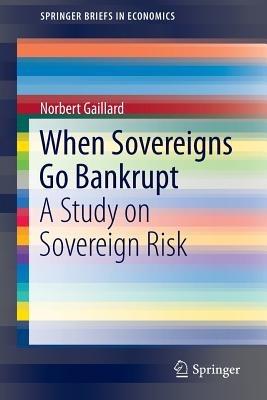
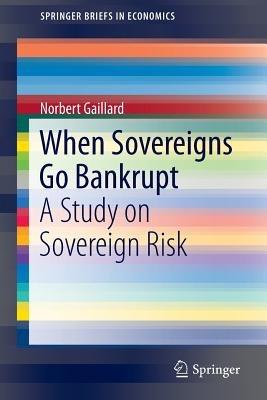
The public debt crisis that Eurozone countries have experienced since 2010 has been accompanied by a resurgence of sovereign risk. Greece was obliged to restructure its debt in 2012. The credit position of even the wealthy countries is shakier than at any time since the Great Depression. Now more than ever it is essential to understand sovereign risk because the default of a country, or even its lack of credibility, is bound to jeopardize political stability and weaken the credit standing of all other economic actors. This book reviews and analyzes the different means used to forestall and protect against sovereign defaults. In light of the Eurozone’s 2010-2012 sovereign debt crisis, this book also emphasizes the roots of sovereign creditworthiness. Chapter 1 establishes a typology of sovereign defaults. A sovereign “bankruptcy” may take many forms (debt repudiation, moratorium, restructuring, etc.). Chapter 2 presents the different contractual and legal tools used to protect against sovereign defaults. Chapter 3 investigates how some investors have been able to interfere with the debtor’s economic policy by insisting that measures be taken to reduce the risk of default in the short and medium term. Such interference can be direct or may be more subtle. There is a specific focus on the conditionality imposed by the International Monetary Fund. Chapter 4 studies the various tools that investors can use to discriminate among borrowers and forecast debt crises (bond yields and spreads as well as ratings provided by Fitch, Moody’s, Standard & Poor’s, and Euromoney Country Risk). Chapter 4 also demonstrates that sovereign debtors must overcome seven types of risk in order to preserve their creditworthiness: natural disaster, geopolitical risk, institutional and political risk, economic risk, monetary and exchange rate risk, fiscal and tax-system risk, and debt-related risk.
Leggi di più
Leggi di meno
Autore:
Editore:
Collana:
SpringerBriefs in Economics
Anno:
2014
Rilegatura:
Paperback / softback
Pagine:
70 p.
Testo in English
Dimensioni:
235 x 155 mm
EAN:
9783319089874

L'articolo è stato aggiunto al carrello
Informazioni e Contatti sulla Sicurezza dei Prodotti
Le schede prodotto sono aggiornate in conformità al Regolamento UE 988/2023. Laddove ci fossero taluni dati non disponibili per ragioni indipendenti da IBS, vi informiamo che stiamo compiendo ogni ragionevole sforzo per inserirli. Vi invitiamo a controllare periodicamente il sito www.ibs.it per eventuali novità e aggiornamenti.
Per le vendite di prodotti da terze parti, ciascun venditore si assume la piena e diretta responsabilità per la commercializzazione del prodotto e per la sua conformità al Regolamento UE 988/2023, nonché alle normative nazionali ed europee vigenti.
Per informazioni sulla sicurezza dei prodotti, contattare productsafetyibs@feltrinelli.it
L’articolo è stato aggiunto alla lista dei desideri
