

L’articolo è stato aggiunto alla lista dei desideri










EBOOK IN LINGUA STRANIERA
 E-mail
 Facebook
 LinkedIn
 Twitter
 WhatsApp
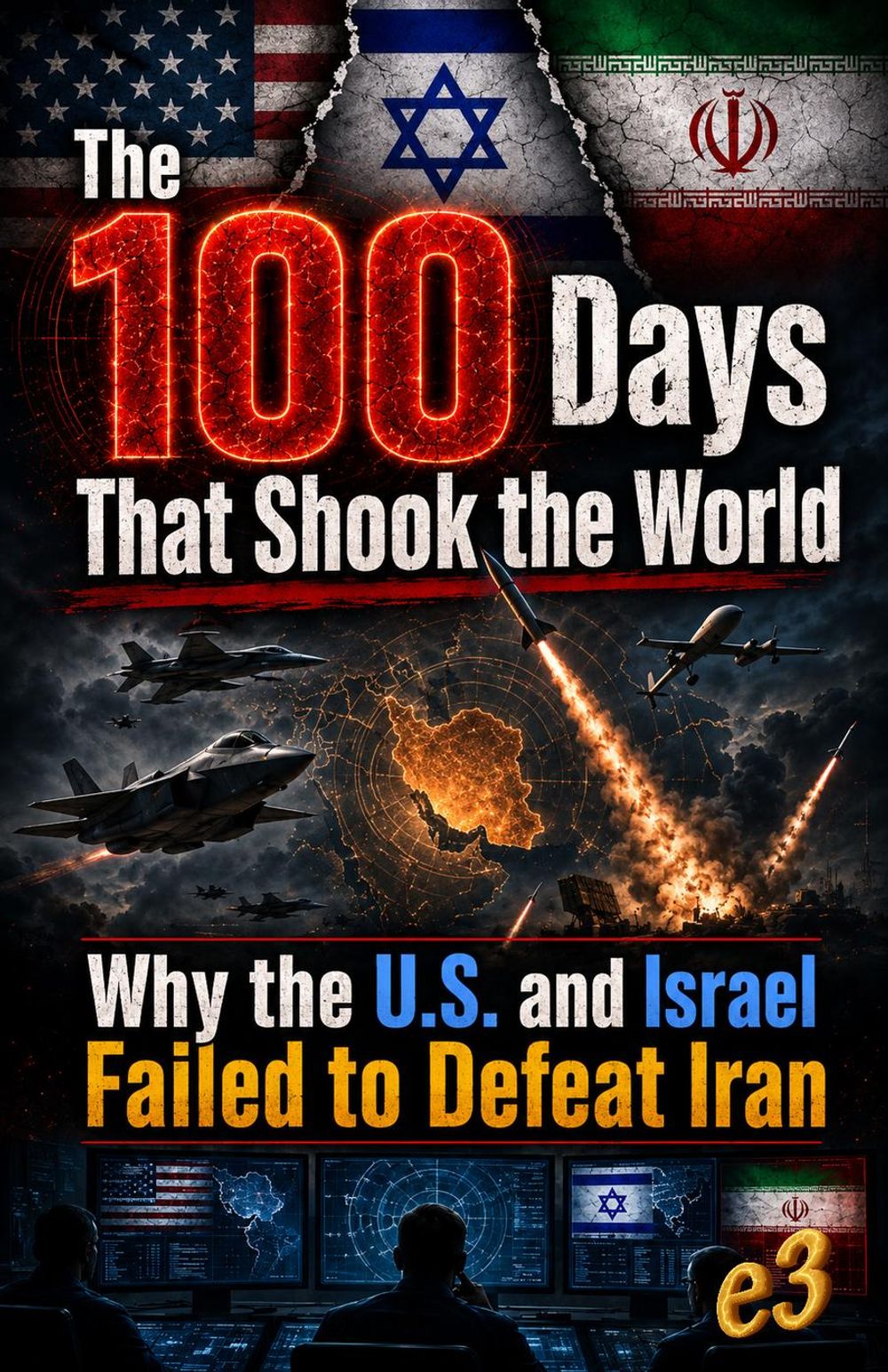
The 100 Days That Shook the World: Why the U.S. and Israel Failed to Defeat Iran
(0)
Cliccando su “Conferma” dichiari che il contenuto da te inserito è conforme alle Condizioni Generali d’Uso del Sito ed alle Linee Guida sui Contenuti Vietati. Puoi rileggere e modificare e successivamente confermare il tuo contenuto. Tra poche ore lo troverai online (in caso contrario verifica la conformità del contenuto alle policy del Sito).
Grazie per la tua recensione!
Tra poche ore la vedrai online (in caso contrario verifica la conformità del testo alle nostre linee guida). Dopo la pubblicazione per te +4 punti 
34,99 €
+350
punti 
Venditore: IBS

Acquista online
Scaricabile subito
Articolo acquistabile con Carta del Docente

Articolo acquistabile con Carta Cultura Giovani e Carta del Merito

Articolo acquistabile con Carta della Cultura

Abbonati a Kobo plus per avere accesso illimitato a questo contenuto

Dati e Statistiche
 Salvato in 0 liste dei desideri
Salvato in 0 liste dei desideri
The 100 Days That Shook the World: Why the U.S. and Israel Failed to Defeat Iran
Scaricabile subito
34,99 €
34,99 €
Scaricabile subito
Altre offerte vendute e spedite dai nostri venditori

Ebook in lingua straniera
The 100 Days That Shook the World: Why the U.S. and Israel Failed to Defeat Iran
Altri venditori
Prezzo e spese di spedizione
Nuovo
Scaricabile subito

Venduto e spedito da
IBS
Spedizione Gratis
34,99 €
Altri venditori
Prezzo e spese di spedizione
Nuovo
Scaricabile subito
Venduto e spedito da
IBS
Spedizione Gratis
34,99 €
Altri venditori
Prezzo e spese di spedizione

Tutti i formati ed edizioni
Promo attive (0)
The 100 Days That Shook the World: Why the U.S. and Israel Failed to Defeat Iran
The 100 Days That Shook the World Why Military Superiority Failed to Produce Decisive Victory For 100 days, the Middle East stood at the center of a confrontation that threatened to reshape the global balance of power. The United States and Israel entered the conflict with overwhelming advantages in air power, precision weapons, missile defense, intelligence, cyber capabilities, global logistics, and diplomatic influence. Iran could not match them conventionally. Yet superior military power did not produce decisive victory. *The 100 Days That Shook the World* explains why. Iran relied on a different form of strength: ballistic missiles, kamikaze drones, mobile launchers, underground facilities, strategic geography, the Zagros Mountains, the Strait of Hormuz, and a regional network extending through Lebanon, Yemen, Iraq, and Syria. These capabilities transformed what was expected to be a limited military campaign into a prolonged, multi-front struggle. Drawing on Modern War, deterrence theory, asymmetric warfare, and modern strategic thought, this book examines the crucial difference between destroying military targets and achieving lasting political results. It explores the intelligence failures and miscalculations that drove escalation, Israel's preventive-strike doctrine, the strain placed on expensive air-defense systems by low-cost drones and missile saturation, the strategic value of Iran's underground infrastructure, and the role of Hezbollah, the Houthis, and Iran-aligned armed groups. The book also analyzes the global consequences of the conflict: pressure on oil and LNG markets, disruption of maritime trade, rising insurance and shipping costs, threats to the Strait of Hormuz and the Red Sea, and the competing interests of the United States, Russia, China, Türkiye, the Gulf states, and Europe. This is not a celebration of Iran, nor a dismissal of the security concerns of Israel and the United States. Iran suffered major military, economic, and infrastructural damage. However, its political system survived, its missile and drone capabilities were not completely eliminated, its nuclear ambiguity remained unresolved, and its regional networks continued to influence the battlefield. The result was neither a clear Iranian victory nor a conventional American-Israeli defeat. It was a demonstration of the limits of military power. Written for readers of geopolitics, military history, international relations, security studies, and contemporary Middle Eastern affairs, this book asks one central question: **Why can the strongest military dominate the battlefield and still fail to control the political ending of a war?** In an age of drones, proxy networks, underground facilities, cyber warfare, strategic chokepoints, and globally connected markets, the ability to strike an enemy is no longer the same as the ability to defeat it.
Leggi di più
Leggi di meno
Compatibilità:
Tutti i dispositivi (eccetto Kindle) Scopri di più
Layout:
Reflowable
EAN:
9798235763531

L'articolo è stato aggiunto al carrello
Formato:
Gli eBook venduti da IBS.it sono in formato ePub e possono essere protetti da Adobe DRM. In caso di download di un file protetto da DRM si otterrà un file in formato .acs, (Adobe Content Server Message), che dovrà essere aperto tramite Adobe Digital Editions e autorizzato tramite un account Adobe, prima di poter essere letto su pc o trasferito su dispositivi compatibili.
Cloud:
Gli eBook venduti da IBS.it sono sincronizzati automaticamente su tutti i client di lettura Kobo successivamente all’acquisto. Grazie al Cloud Kobo i progressi di lettura, le note, le evidenziazioni vengono salvati e sincronizzati automaticamente su tutti i dispositivi e le APP di lettura Kobo utilizzati per la lettura.
Clicca qui per sapere come scaricare gli ebook utilizzando un pc con sistema operativo Windows
L’articolo è stato aggiunto alla lista dei desideri
