

L’articolo è stato aggiunto alla lista dei desideri









LIBRO INGLESE
 E-mail
 Facebook
 LinkedIn
 Twitter
 WhatsApp
Chronoi – Topoi: Concepts of Time and Space as Literary Devices in Second Temple Judaism
(0)
Cliccando su “Conferma” dichiari che il contenuto da te inserito è conforme alle Condizioni Generali d’Uso del Sito ed alle Linee Guida sui Contenuti Vietati. Puoi rileggere e modificare e successivamente confermare il tuo contenuto. Tra poche ore lo troverai online (in caso contrario verifica la conformità del contenuto alle policy del Sito).
Grazie per la tua recensione!
Tra poche ore la vedrai online (in caso contrario verifica la conformità del testo alle nostre linee guida). Dopo la pubblicazione per te +4 punti 
43,32 €

-5%
45,60 €
+430
punti
Venditore: IBS
Articolo acquistabile con Carta del Docente

Articolo acquistabile con Carta Cultura Giovani e Carta del Merito

Articolo acquistabile con Carta della Cultura

Paga con Klarna in 3 rate senza interessi per ordini superiori a 39 €

Dati e Statistiche
 Salvato in 0 liste dei desideri
Salvato in 0 liste dei desideri
Chronoi – Topoi: Concepts of Time and Space as Literary Devices in Second Temple Judaism
Disponibilità in 3 settimane
43,32 €
-5%
45,60 €
43,32 €
45,60 €
-5%
Disponibilità in 3 settimane
Altre offerte vendute e spedite dai nostri venditori

Libri in Inglese
Chronoi – Topoi: Concepts of Time and Space as Literary Devices in Second Temple Judaism
Altri venditori
Prezzo e spese di spedizione
LIBRO INGLESE
Disponibilità in 3 settimane

Venduto e spedito da
IBS
Spedizione Gratis
-5%
45,60 €
43,32 €
Altri venditori
Prezzo e spese di spedizione
LIBRO INGLESE
Disponibilità in 3 settimane
Venduto e spedito da
IBS
Spedizione Gratis
-5%
45,60 €
43,32 €
Altri venditori
Prezzo e spese di spedizione

Tutti i formati ed edizioni

Promo attive (0)
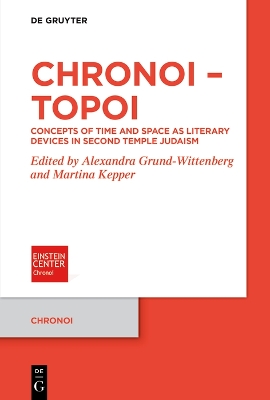
Jewish authoritative writings of the Second temple Period had to adopt to total different religious as well as political circumstances their adressees had to face. Inspired by the idea of Paul Kosmin, that the imposture of a total new imperial time regime by the Seleucid rulers provoked autochthonous reorientations in means of time and space, the contributions of this volume examine if this holds true to the writings that circulated during the contemporary Second Temple Period. The methodological approach for the examination is the concept of space-time, or chronotope, already developed by Michail Bakthin for 20th century literature. Focusing on Judaism of the Second Temple turned out to be very fruitful, as we can distinguish between distinct religious-sociologically formed Jewish groups under different spatial conditions (for example “diaspora” vs. core land). They all produced literature in order to cope with the traumatizing experiences of the loss of sacred spaces as well as the transformation processes that, due to the loss of “Jerusalem” as the spatial anchor point, endangered their religious and national identity. Documents of so-called Hellenistic Judaism in the form of the Septuagint as well as of Palestinian Judaism, which becomes tangible in the texts of Qumran, or in the texts of Elephantine all show signs of increased interest in temporal and spatial orientation, remembering or adopting the already known, as well as inventing new anchor points as their special “chronotope”. In sum, by establishing their own chronotopes, Judaism in Persian and Hellenistic-Roman times gained resilience and developed strategies to redefine its own identity.
Leggi di più
Leggi di meno
Curatore:
Editore:
Collana:
Chronoi
Anno:
2026
Rilegatura:
Paperback / softback
Pagine:
200 p.
Testo in English
Dimensioni:
230 x 155 mm
EAN:
9783112240359

L'articolo è stato aggiunto al carrello
Informazioni e Contatti sulla Sicurezza dei Prodotti
Le schede prodotto sono aggiornate in conformità al Regolamento UE 988/2023. Laddove ci fossero taluni dati non disponibili per ragioni indipendenti da IBS, vi informiamo che stiamo compiendo ogni ragionevole sforzo per inserirli. Vi invitiamo a controllare periodicamente il sito www.ibs.it per eventuali novità e aggiornamenti.
Per le vendite di prodotti da terze parti, ciascun venditore si assume la piena e diretta responsabilità per la commercializzazione del prodotto e per la sua conformità al Regolamento UE 988/2023, nonché alle normative nazionali ed europee vigenti.
Per informazioni sulla sicurezza dei prodotti, contattare productsafetyibs@feltrinelli.it
L’articolo è stato aggiunto alla lista dei desideri
