

L’articolo è stato aggiunto alla lista dei desideri









EBOOK IN LINGUA STRANIERA
 E-mail
 Facebook
 LinkedIn
 Twitter
 WhatsApp
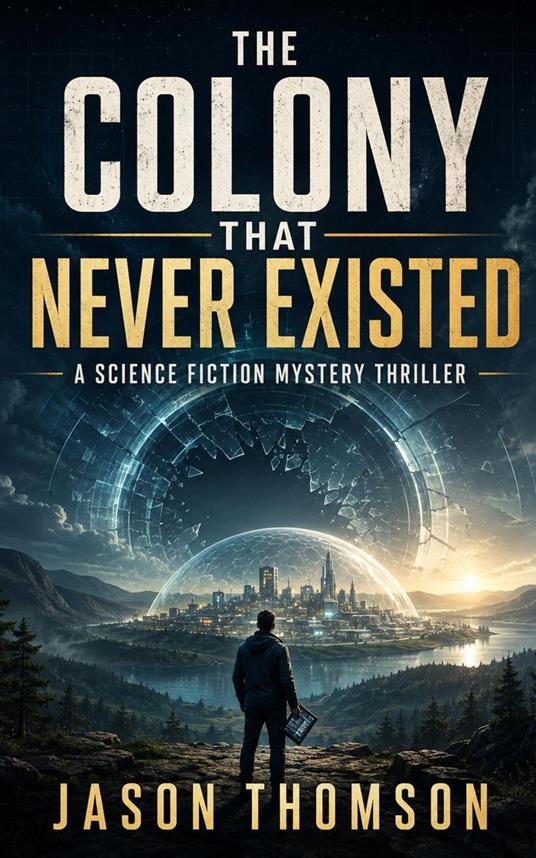
The Colony That Never Existed: A Science Fiction Mystery Thriller
(0)
Cliccando su “Conferma” dichiari che il contenuto da te inserito è conforme alle Condizioni Generali d’Uso del Sito ed alle Linee Guida sui Contenuti Vietati. Puoi rileggere e modificare e successivamente confermare il tuo contenuto. Tra poche ore lo troverai online (in caso contrario verifica la conformità del contenuto alle policy del Sito).
Grazie per la tua recensione!
Tra poche ore la vedrai online (in caso contrario verifica la conformità del testo alle nostre linee guida). Dopo la pubblicazione per te +4 punti 
4,49 €
+40
punti 
Venditore: IBS

Acquista online
Scaricabile subito
Articolo acquistabile con Carta del Docente

Articolo acquistabile con Carta Cultura Giovani e Carta del Merito

Articolo acquistabile con Carta della Cultura

Abbonati a Kobo plus per avere accesso illimitato a questo contenuto

Dati e Statistiche
 Salvato in 0 liste dei desideri
Salvato in 0 liste dei desideri
The Colony That Never Existed: A Science Fiction Mystery Thriller
Scaricabile subito
4,49 €
4,49 €
Scaricabile subito
Altre offerte vendute e spedite dai nostri venditori
Ebook in lingua straniera
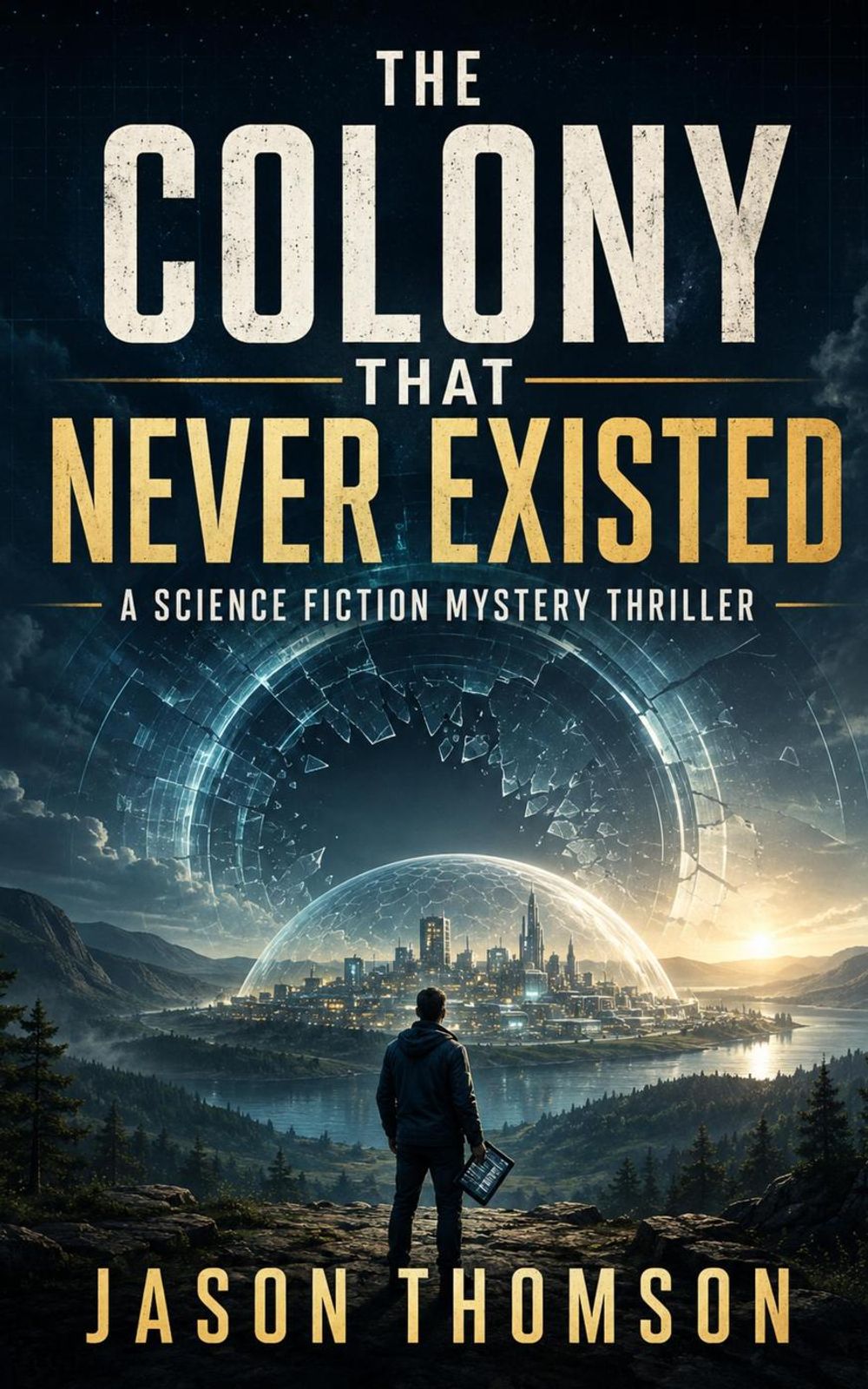
The Colony That Never Existed: A Science Fiction Mystery Thriller
Altri venditori
Prezzo e spese di spedizione
EBOOK INGLESE
EPUB3 con DRMFREE
Scaricabile subito

Venduto e spedito da
IBS
Spedizione Gratis
4,49 €
Altri venditori
Prezzo e spese di spedizione
EBOOK INGLESE
EPUB3 con DRMFREE
Scaricabile subito
Venduto e spedito da
IBS
Spedizione Gratis
4,49 €
Altri venditori
Prezzo e spese di spedizione

Tutti i formati ed edizioni
Promo attive (0)
The Colony That Never Existed: A Science Fiction Mystery Thriller
Erin Doyle died in Duluth, Minnesota, in 2225. She was twelve years old. The municipal record carries a photograph of her headstone. She is also thirty-four, raising two children, and running a hydroponics house on a colony forty-one light years from Earth. Evan Rourke came out to Kepler-186f-2 to prove a fraud, and he wrote his finding before he arrived. Nineteen days on a cutter with nothing to read but his own assignment order, and by the time he came down the ramp he had already committed to the word forgery. He is a provenance investigator. He has spent nineteen years proving that documents are lies, he is very good at it, and he has never once been wrong about a thing this size. Then he ran the dental plates. The dead girl in Duluth and the living woman on the terrace have the same teeth. Both records are complete. Neither is a copy. Nothing has been taken out of either one, no gap, no seam, no forger's hand anywhere on it. And when he goes looking for another, he doesn't find one. He finds four hundred and six. Rosalind Ellison has been the colony's registrar for eighteen years and has known something was wrong with her own register for most of them. She is the woman who writes the death certificates, rules the columns, and enters the newborns, and she has spent half her working life looking at entries that should not be there and filing them correctly, because filing them correctly was the only thing she could do. What she has never had is a name for it. Or a witness. Or a reason to say it out loud in front of eleven thousand people who have nowhere on this planet to go. Now she has all three, and there is an investigator in her archive who wants to publish. The count was forty-one in March. It was two hundred and eighty in May. Fifty-one meters under Sector Four there is a settlement nobody built. In a sealed room there are nine thousand documents in a hand that stops mid-page. And out on the apron there is a courteous man in a gray coat named Redding who never asks a question, never raises his voice, and never threatens anybody, because he does not have to. He arrived with a standing authority in his pocket and the power to close the corridor to Earth for good. An eighty-nine-year-old modeler with a bad chest and twelve borrowed processors has run it ten times and gotten the same date every time. The twenty-eighth of November. On that day the thing that has been happening to this planet for two hundred years stops being a process and becomes a result. One account of this place goes on being the case. The others do not. Nobody will be able to say which was which, and nobody will remember there was ever a difference. Unless somebody chooses first. A resolution has to be measured from something. It needs one history with a clean edge, one life that touches nothing else in the record, and there is exactly one person on Kepler-186f-2 who qualifies. She has two children, a shift to finish, and thirteen years in the second hydroponics house. Nobody has told her yet. THE COLONY THAT NEVER EXISTED is a standalone hard science fiction mystery about paperwork. About what a record is for. About eleven thousand people finding out that the distance between existing and not existing is a line in a book, and that somebody has to be willing to write it by hand. No cliffhanger. The ending is on the page. For readers who like their science fiction quiet, procedural and exact. If you finished Blake Crouch's Dark Matter, Adrian Tchaikovsky's Children of Time or Emily St. John Mandel's Sea of Tranquility and wanted more of the part where somebody sits down and works it out, this one is for you. Forty-one light years from home, four hundred and six people are living two complete lives. Both of them are true. Only one of them gets to stay that way.
Leggi di più
Leggi di meno
Autore:
Anno edizione:
2026
Editore:
Formato:
Lingua:
Inglese
Compatibilità:
Tutti i dispositivi (eccetto Kindle) Scopri di più
Layout:
Reflowable
EAN:
9798235673502

L'articolo è stato aggiunto al carrello
Formato:
Gli eBook venduti da IBS.it sono in formato ePub e possono essere protetti da Adobe DRM. In caso di download di un file protetto da DRM si otterrà un file in formato .acs, (Adobe Content Server Message), che dovrà essere aperto tramite Adobe Digital Editions e autorizzato tramite un account Adobe, prima di poter essere letto su pc o trasferito su dispositivi compatibili.
Cloud:
Gli eBook venduti da IBS.it sono sincronizzati automaticamente su tutti i client di lettura Kobo successivamente all’acquisto. Grazie al Cloud Kobo i progressi di lettura, le note, le evidenziazioni vengono salvati e sincronizzati automaticamente su tutti i dispositivi e le APP di lettura Kobo utilizzati per la lettura.
Clicca qui per sapere come scaricare gli ebook utilizzando un pc con sistema operativo Windows
L’articolo è stato aggiunto alla lista dei desideri
