

L’articolo è stato aggiunto alla lista dei desideri








LIBRO INGLESE
 E-mail
 Facebook
 LinkedIn
 Twitter
 WhatsApp
Quantum Machine Learning in Industrial Automation
(0)
Cliccando su “Conferma” dichiari che il contenuto da te inserito è conforme alle Condizioni Generali d’Uso del Sito ed alle Linee Guida sui Contenuti Vietati. Puoi rileggere e modificare e successivamente confermare il tuo contenuto. Tra poche ore lo troverai online (in caso contrario verifica la conformità del contenuto alle policy del Sito).
Grazie per la tua recensione!
Tra poche ore la vedrai online (in caso contrario verifica la conformità del testo alle nostre linee guida). Dopo la pubblicazione per te +4 punti 
284,70 €
+2850
punti 
Venditore: IBS
Articolo acquistabile con Carta del Docente

Articolo acquistabile con Carta Cultura Giovani e Carta del Merito

Articolo acquistabile con Carta della Cultura

Paga con Klarna in 3 rate senza interessi per ordini superiori a 39 €

Dati e Statistiche
 Salvato in 0 liste dei desideri
Salvato in 0 liste dei desideri
Quantum Machine Learning in Industrial Automation
Disponibilità in 2 settimane
284,70 €
284,70 €
Disponibilità in 2 settimane
Altre offerte vendute e spedite dai nostri venditori
Libri in Inglese
Quantum Machine Learning in Industrial Automation
Altri venditori
Prezzo e spese di spedizione
Nuovo
Disponibilità in 2 settimane

Venduto e spedito da
IBS
Spedizione Gratis
284,70 €
Altri venditori
Prezzo e spese di spedizione
Nuovo
Disponibilità in 2 settimane
Venduto e spedito da
IBS
Spedizione Gratis
284,70 €
Altri venditori
Prezzo e spese di spedizione

Tutti i formati ed edizioni
Promo attive (0)
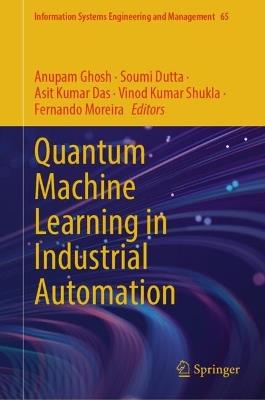
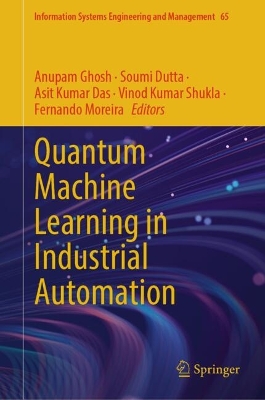
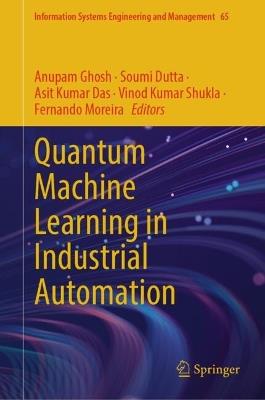
This book focuses on quantum machine learning that harnesses the collective properties of quantum states, such as superposition, interference, and entanglement, uses algorithms run on quantum devices, such as quantum computers, to supplement, expedite, or support the work performed by a classical machine learning program. The devices that perform quantum computations are known as quantum computers. Quantum computers have the potential to revolutionize computation by making certain types of classically intractable problems solvable. A few large companies and small start-ups now have functioning non-error-corrected quantum computers composed of several tens of qubits, and some of these are even accessible to the public through the cloud. Additionally, quantum simulators are making strides in fields varying from molecular energetics to many-body physics. Most known use cases fit into four archetypes: quantum simulation, quantum linear algebra for AI and machine learning, quantum optimization and search, and quantum factorization. Advantages of quantum computing are many and to list a few, first, they’re fast. Ultimately, quantum computers have the potential to provide computational power on a scale that traditional computers cannot ever match. In 2019, for example, Google claimed to carry out a calculation in about 200 seconds that would take a classical supercomputer around 10,000 years. Second, they can solve complex problems. The more complex a problem, the harder it is for even a supercomputer to solve. When a classical computer fails, it’s usually because of a huge degree of complexity and many interacting variables. However, due to the concepts of superposition and entanglement, quantum computers can account for all these variables and complexities to reach a solution. Last but not the least, they can run complex simulations. The speed and complexity that quantum computing can achieve means that, in theory, a quantum computer could simulate many intricate systems.
Leggi di più
Leggi di meno
Curatore:
Editore:
Collana:
Information Systems Engineering and Management
Anno:
2025
Rilegatura:
Hardback
Pagine:
456 p.
Testo in English
Dimensioni:
235 x 155 mm
EAN:
9783031997853

L'articolo è stato aggiunto al carrello
Informazioni e Contatti sulla Sicurezza dei Prodotti
Le schede prodotto sono aggiornate in conformità al Regolamento UE 988/2023. Laddove ci fossero taluni dati non disponibili per ragioni indipendenti da IBS, vi informiamo che stiamo compiendo ogni ragionevole sforzo per inserirli. Vi invitiamo a controllare periodicamente il sito www.ibs.it per eventuali novità e aggiornamenti.
Per le vendite di prodotti da terze parti, ciascun venditore si assume la piena e diretta responsabilità per la commercializzazione del prodotto e per la sua conformità al Regolamento UE 988/2023, nonché alle normative nazionali ed europee vigenti.
Per informazioni sulla sicurezza dei prodotti, contattare productsafetyibs@feltrinelli.it
L’articolo è stato aggiunto alla lista dei desideri
