

L’articolo è stato aggiunto alla lista dei desideri








LIBRO INGLESE
 E-mail
 Facebook
 LinkedIn
 Twitter
 WhatsApp
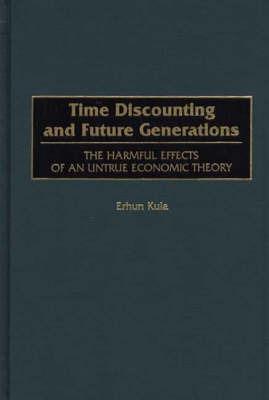
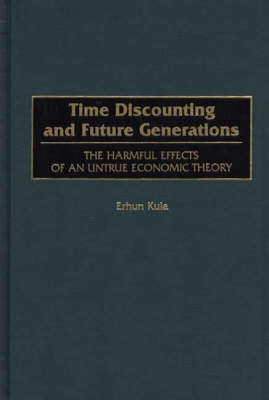
Time Discounting and Future Generations: The Harmful Effects of an Untrue Economic Theory
(0)
Cliccando su “Conferma” dichiari che il contenuto da te inserito è conforme alle Condizioni Generali d’Uso del Sito ed alle Linee Guida sui Contenuti Vietati. Puoi rileggere e modificare e successivamente confermare il tuo contenuto. Tra poche ore lo troverai online (in caso contrario verifica la conformità del contenuto alle policy del Sito).
Grazie per la tua recensione!
Tra poche ore la vedrai online (in caso contrario verifica la conformità del testo alle nostre linee guida). Dopo la pubblicazione per te +4 punti 

121,60 €
+1220
punti 
Venditore: IBS
Articolo acquistabile con Carta del Docente

Articolo acquistabile con Carta Cultura Giovani e Carta del Merito

Articolo acquistabile con Carta della Cultura

Paga con Klarna in 3 rate senza interessi per ordini superiori a 39 €

Dati e Statistiche
 Salvato in 0 liste dei desideri
Salvato in 0 liste dei desideri
Time Discounting and Future Generations: The Harmful Effects of an Untrue Economic Theory
Disponibilità in 2 settimane
121,60 €
121,60 €
Disponibilità in 2 settimane
Altre offerte vendute e spedite dai nostri venditori
Libri in Inglese
Time Discounting and Future Generations: The Harmful Effects of an Untrue Economic Theory
Altri venditori
Prezzo e spese di spedizione
Nuovo
Disponibilità in 2 settimane

Venduto e spedito da
IBS
Spedizione Gratis
121,60 €
Altri venditori
Prezzo e spese di spedizione
Nuovo
Disponibilità in 2 settimane
Venduto e spedito da
IBS
Spedizione Gratis
121,60 €
Altri venditori
Prezzo e spese di spedizione

Tutti i formati ed edizioni
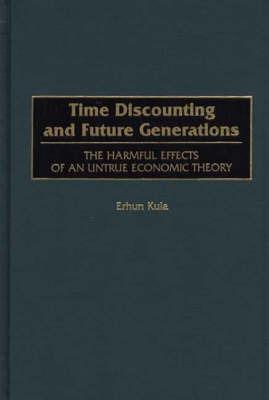
Kula contends that conventional time-dependent theories in welfare economics are based on the unwarranted assumption that people live forever, an assumption that underpins the criteria for many decision-making activities and one that leads public sector policy makers to discriminate against future generations. It is seen in its most extreme in decision making on such long-term projects as nuclear power facilities, whose effects will be visited upon many future generations. How did this assumption gain currency and influence? Kula says, this oddity has been imposed by mathematical economists who now dominate the scene. Kula aggressively challenges these theories, which he alleges are untrue and unjust, provides an alternative method for discounting, and shows how its application can yield dramatically positive results. His book is thus a unique, important contribution to the theory and practice of decision making in public endeavors, intended not only for academics but equally for their practitioner colleagues in all parts of the world. Kula corrects the conventional theory by assuming societal models in which individuals are mortal and generations overlap. From this emerges a new discounting theory which leads to outcomes that are dramatically different from the old ones. The new criterion is called modified discounting, and can be readily applied to real-life projects. In Part I, Kula lays out his theory and constructs the new decision-making method, in which public policy makers accept the proposition that all generations ought to be treated equitably. Then, in Part II, he provides five case studies to illustrate his theory, each devoted to major public activities such as nuclear waste disposal, forestry, agriculture, and urban transport, and based on experiences in the United States, the United Kingdom, and Ireland.
Leggi di più
Leggi di meno
Pagine:
216 p.
Testo in English
EAN:
9781567200904

L'articolo è stato aggiunto al carrello
Informazioni e Contatti sulla Sicurezza dei Prodotti
Le schede prodotto sono aggiornate in conformità al Regolamento UE 988/2023. Laddove ci fossero taluni dati non disponibili per ragioni indipendenti da IBS, vi informiamo che stiamo compiendo ogni ragionevole sforzo per inserirli. Vi invitiamo a controllare periodicamente il sito www.ibs.it per eventuali novità e aggiornamenti.
Per le vendite di prodotti da terze parti, ciascun venditore si assume la piena e diretta responsabilità per la commercializzazione del prodotto e per la sua conformità al Regolamento UE 988/2023, nonché alle normative nazionali ed europee vigenti.
Per informazioni sulla sicurezza dei prodotti, contattare productsafetyibs@feltrinelli.it
L’articolo è stato aggiunto alla lista dei desideri
