

L’articolo è stato aggiunto alla lista dei desideri









LIBRO INGLESE
 E-mail
 Facebook
 LinkedIn
 Twitter
 WhatsApp
Ableist Rhetoric: How We Know, Value, and See Disability
(0)
Cliccando su “Conferma” dichiari che il contenuto da te inserito è conforme alle Condizioni Generali d’Uso del Sito ed alle Linee Guida sui Contenuti Vietati. Puoi rileggere e modificare e successivamente confermare il tuo contenuto. Tra poche ore lo troverai online (in caso contrario verifica la conformità del contenuto alle policy del Sito).
Grazie per la tua recensione!
Tra poche ore la vedrai online (in caso contrario verifica la conformità del testo alle nostre linee guida). Dopo la pubblicazione per te +4 punti 
44,70 €
+450
punti 
Venditore: IBS
Articolo acquistabile con Carta del Docente

Articolo acquistabile con Carta Cultura Giovani e Carta del Merito

Articolo acquistabile con Carta della Cultura

Paga con Klarna in 3 rate senza interessi per ordini superiori a 39 €

Dati e Statistiche
 Salvato in 0 liste dei desideri
Salvato in 0 liste dei desideri
Ableist Rhetoric: How We Know, Value, and See Disability
Disponibilità in 2 settimane
44,70 €
44,70 €
Disponibilità in 2 settimane
Altre offerte vendute e spedite dai nostri venditori

Libri in Inglese
Ableist Rhetoric: How We Know, Value, and See Disability
Altri venditori
Prezzo e spese di spedizione
LIBRO INGLESE
Disponibilità in 2 settimane

Venduto e spedito da
IBS
Spedizione Gratis
44,70 €
Altri venditori
Prezzo e spese di spedizione
LIBRO INGLESE
Disponibilità in 2 settimane
Venduto e spedito da
IBS
Spedizione Gratis
44,70 €
Altri venditori
Prezzo e spese di spedizione

Tutti i formati ed edizioni
Promo attive (0)
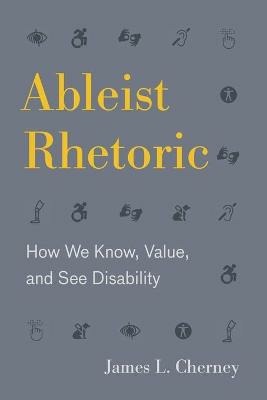
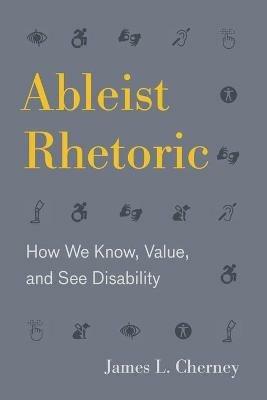
Ableism, a form of discrimination that elevates "able" bodies over those perceived as less capable, remains one of the most widespread areas of systematic and explicit discrimination in Western culture. Yet in contrast to the substantial body of scholarly work on racism, sexism, classism, and heterosexism, ableism remains undertheorized and underexposed. In this book, James L. Cherney takes a rhetorical approach to the study of ableism to reveal how it has worked its way into our everyday understanding of disability. Ableist Rhetoric argues that ableism is learned and transmitted through the ways we speak about those with disabilities. Through a series of textual case studies, Cherney identifies three rhetorical norms that help illustrate the widespread influence of ableist ideas in society. He explores the notion that "deviance is evil" by analyzing the possession narratives of Cotton Mather and the modern horror touchstone The Exorcist. He then considers whether "normal is natural" in Aristotle's Generation of Animals and in the cultural debate over cochlear implants. Finally, he shows how the norm "body is able" operates in Alexander Graham Bell's writings on eugenics and in the legal cases brought by disabled athletes Casey Martin and Oscar Pistorius. These three simple equivalencies play complex roles within the social institutions of religion, medicine, law, and sport. Cherney concludes by calling for a rhetorical model of disability, which, he argues, will provide a shift in orientation to challenge ableism's epistemic, ideological, and visual components. Accessible and compelling, this groundbreaking book will appeal to scholars of rhetoric and of disability studies as well as to disability rights advocates.
Leggi di più
Leggi di meno
Autore:
Editore:
Collana:
RSA Series in Transdisciplinary Rhetoric
Anno:
2020
Rilegatura:
Paperback / softback
Pagine:
200 p.
Testo in English
Dimensioni:
229 x 152 mm
Peso:
348 gr.
EAN:
9780271084695

L'articolo è stato aggiunto al carrello
Informazioni e Contatti sulla Sicurezza dei Prodotti
Le schede prodotto sono aggiornate in conformità al Regolamento UE 988/2023. Laddove ci fossero taluni dati non disponibili per ragioni indipendenti da IBS, vi informiamo che stiamo compiendo ogni ragionevole sforzo per inserirli. Vi invitiamo a controllare periodicamente il sito www.ibs.it per eventuali novità e aggiornamenti.
Per le vendite di prodotti da terze parti, ciascun venditore si assume la piena e diretta responsabilità per la commercializzazione del prodotto e per la sua conformità al Regolamento UE 988/2023, nonché alle normative nazionali ed europee vigenti.
Per informazioni sulla sicurezza dei prodotti, contattare productsafetyibs@feltrinelli.it
L’articolo è stato aggiunto alla lista dei desideri
