

L’articolo è stato aggiunto alla lista dei desideri










EBOOK IN LINGUA STRANIERA
 E-mail
 Facebook
 LinkedIn
 Twitter
 WhatsApp
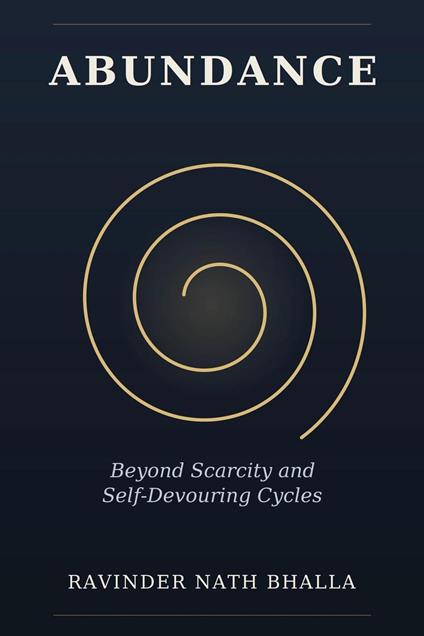
Abundance: Beyond Scarcity and Self-Devouring Cycles
(0)
Cliccando su “Conferma” dichiari che il contenuto da te inserito è conforme alle Condizioni Generali d’Uso del Sito ed alle Linee Guida sui Contenuti Vietati. Puoi rileggere e modificare e successivamente confermare il tuo contenuto. Tra poche ore lo troverai online (in caso contrario verifica la conformità del contenuto alle policy del Sito).
Grazie per la tua recensione!
Tra poche ore la vedrai online (in caso contrario verifica la conformità del testo alle nostre linee guida). Dopo la pubblicazione per te +4 punti 
8,99 €
+90
punti 
Venditore: IBS

Acquista online
Scaricabile subito
Articolo acquistabile con Carta del Docente

Articolo acquistabile con Carta Cultura Giovani e Carta del Merito

Articolo acquistabile con Carta della Cultura

Abbonati a Kobo plus per avere accesso illimitato a questo contenuto

Dati e Statistiche
 Salvato in 0 liste dei desideri
Salvato in 0 liste dei desideri
Abundance: Beyond Scarcity and Self-Devouring Cycles
Scaricabile subito
8,99 €
8,99 €
Scaricabile subito
Altre offerte vendute e spedite dai nostri venditori

Ebook in lingua straniera
Abundance: Beyond Scarcity and Self-Devouring Cycles
Altri venditori
Prezzo e spese di spedizione

EBOOK INGLESE
EPUB3 con DRMFREE
Scaricabile subito

Venduto e spedito da
IBS
Spedizione Gratis
8,99 €
Altri venditori
Prezzo e spese di spedizione
EBOOK INGLESE
EPUB3 con DRMFREE
Scaricabile subito
Venduto e spedito da
IBS
Spedizione Gratis
8,99 €
Altri venditori
Prezzo e spese di spedizione

Tutti i formati ed edizioni
Promo attive (0)
Abundance: Beyond Scarcity and Self-Devouring Cycles
Why do the most powerful institutions repeatedly make decisions that produce less security, not more? Why do we build systems that cost more and work worse than alternatives we know about? Why does extraordinary intelligence so often serve self-defeating cycles? For forty years, psychiatrist Ravinder Bhalla has watched individuals and institutions repeat patterns that harm them despite overwhelming evidence of better alternatives. In ABUNDANCE, he reveals that our major crises—climate change, mass incarceration, perpetual war, extreme inequality, political polarization—are not separate problems but manifestations of one pattern: scarcity thinking creating self-devouring cycles. The evidence is clear: punishment creates more crime, not less. Extraction accelerates climate instability. Accumulation compounds inequality. Walls manufacture the threats they claim to prevent. Each "solution" perpetuates the problem it claims to solve, consuming everyone it touches—including those who think they benefit. The abundance alternative exists and works. The Marshall Plan turned enemies into partners. Norway's rehabilitation-based justice achieves 20% recidivism versus America's 60%. Portugal's drug decriminalization reduced addiction and death. The Montreal Protocol healed the ozone layer. In each case, investing in root causes cost less and produced better outcomes than managing symptoms indefinitely. Yet we rarely choose abundance. Drawing on Nietzsche, clinical observation, and systems analysis, Bhalla shows why: leaders who haven't genuinely faced their own mortality cannot think in generations. They optimize for quarterly returns, electoral cycles, and personal accumulation—even when those choices destroy the foundations they depend on. Written at the exact moment when AI deployment decisions will determine whether technology amplifies human capacity or eliminates human agency, ABUNDANCE offers both rigorous diagnosis and practical framework. The book examines the hardest test case—Israeli-Palestinian conflict—proving that if abundance thinking can work there, objections elsewhere are exposed as insufficient. It then addresses AI as the ultimate fork: the same capability that could enable surveillance and mass unemployment could instead strengthen democracy and address the "lowest- hanging fruit"—Haiti, extreme poverty, water scarcity—that we've abandoned despite having resources to transform conditions for hundreds of millions. The scarcity trajectory is the path of least resistance. The abundance trajectory requires psychological work most leaders haven't done: facing mortality, examining inherited values, recognizing wholeness, channeling will to power toward creation rather than domination. This is not idealism. It is arithmetic backed by historical precedent. The question is whether enough people with enough power will choose it before the window closes. For readers of Yuval Noah Harari, Atul Gawande, and Daniel Kahneman who want to understand why we're trapped—and what psychological transformation would make different choices possible. ABUNDANCE is an invitation to remember what we've forgotten: that we were born into abundance, life itself is abundance, and the cycles consuming us are not the price of being human but the cost of forgetting what we are.
Leggi di più
Leggi di meno
Anno edizione:
2026
Editore:
Formato:
Lingua:
Inglese
Compatibilità:
Tutti i dispositivi (eccetto Kindle) Scopri di più
Layout:
Reflowable
EAN:
9781971562179
L'articolo è stato aggiunto al carrello
Formato:
Gli eBook venduti da IBS.it sono in formato ePub e possono essere protetti da Adobe DRM. In caso di download di un file protetto da DRM si otterrà un file in formato .acs, (Adobe Content Server Message), che dovrà essere aperto tramite Adobe Digital Editions e autorizzato tramite un account Adobe, prima di poter essere letto su pc o trasferito su dispositivi compatibili.
Cloud:
Gli eBook venduti da IBS.it sono sincronizzati automaticamente su tutti i client di lettura Kobo successivamente all’acquisto. Grazie al Cloud Kobo i progressi di lettura, le note, le evidenziazioni vengono salvati e sincronizzati automaticamente su tutti i dispositivi e le APP di lettura Kobo utilizzati per la lettura.
Clicca qui per sapere come scaricare gli ebook utilizzando un pc con sistema operativo Windows
L’articolo è stato aggiunto alla lista dei desideri
