

L’articolo è stato aggiunto alla lista dei desideri










EBOOK IN LINGUA STRANIERA
 E-mail
 Facebook
 LinkedIn
 Twitter
 WhatsApp
Abyssal Architect: Remembering Forward
(0)
Cliccando su “Conferma” dichiari che il contenuto da te inserito è conforme alle Condizioni Generali d’Uso del Sito ed alle Linee Guida sui Contenuti Vietati. Puoi rileggere e modificare e successivamente confermare il tuo contenuto. Tra poche ore lo troverai online (in caso contrario verifica la conformità del contenuto alle policy del Sito).
Grazie per la tua recensione!
Tra poche ore la vedrai online (in caso contrario verifica la conformità del testo alle nostre linee guida). Dopo la pubblicazione per te +4 punti 
3,49 €
+30
punti 
Venditore: IBS

Acquista online
Scaricabile subito
Articolo acquistabile con Carta del Docente

Articolo acquistabile con Carta Cultura Giovani e Carta del Merito

Articolo acquistabile con Carta della Cultura

Abbonati a Kobo plus per avere accesso illimitato a questo contenuto

Dati e Statistiche
 Salvato in 0 liste dei desideri
Salvato in 0 liste dei desideri
Abyssal Architect: Remembering Forward
Scaricabile subito
3,49 €
3,49 €
Scaricabile subito
Altre offerte vendute e spedite dai nostri venditori
Ebook in lingua straniera
Abyssal Architect: Remembering Forward
Altri venditori
Prezzo e spese di spedizione
Nuovo
Scaricabile subito

Venduto e spedito da
IBS
Spedizione Gratis
3,49 €
Altri venditori
Prezzo e spese di spedizione
Nuovo
Scaricabile subito
Venduto e spedito da
IBS
Spedizione Gratis
3,49 €
Altri venditori
Prezzo e spese di spedizione

Tutti i formati ed edizioni
Promo attive (0)
Abyssal Architect: Remembering Forward
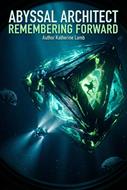
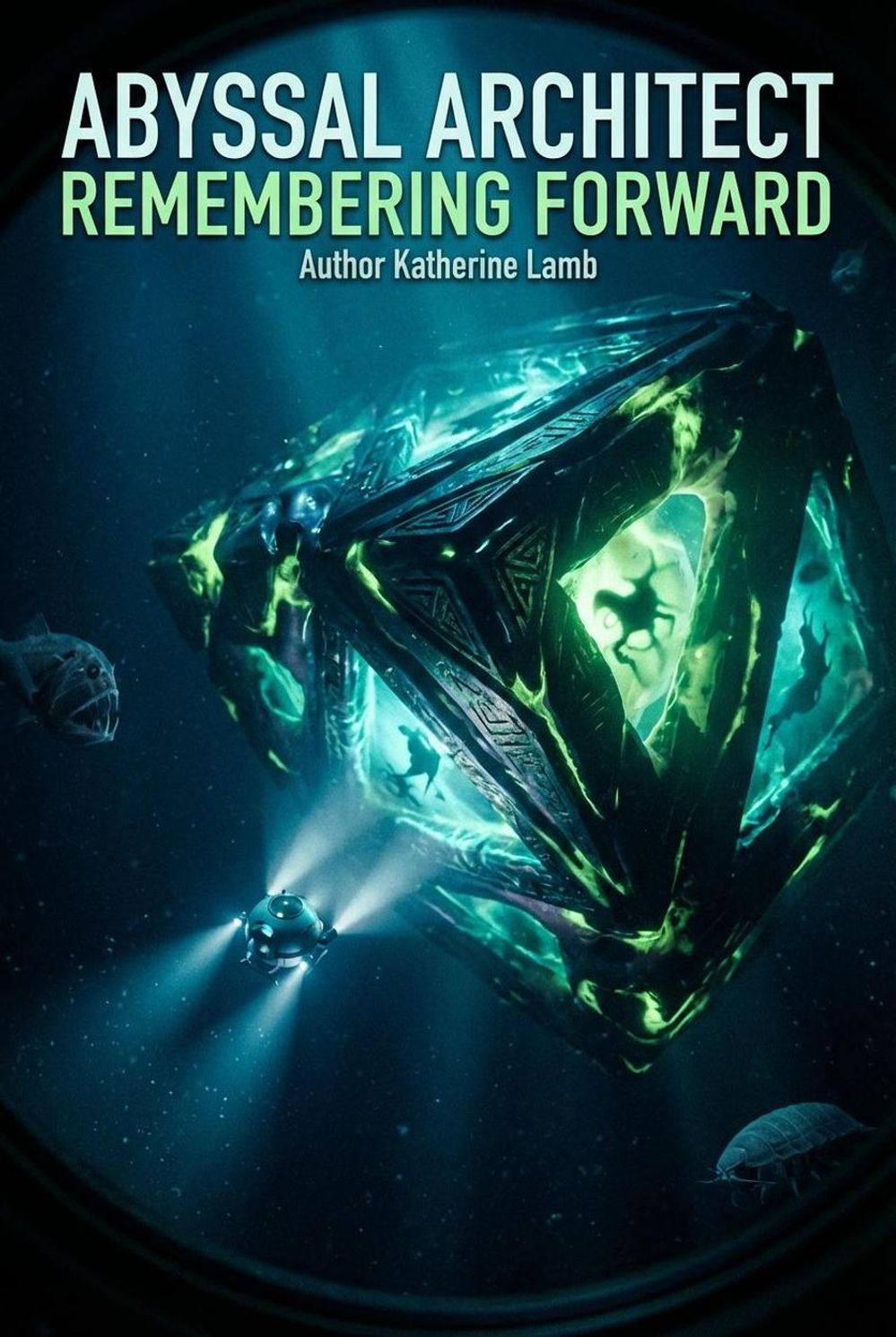
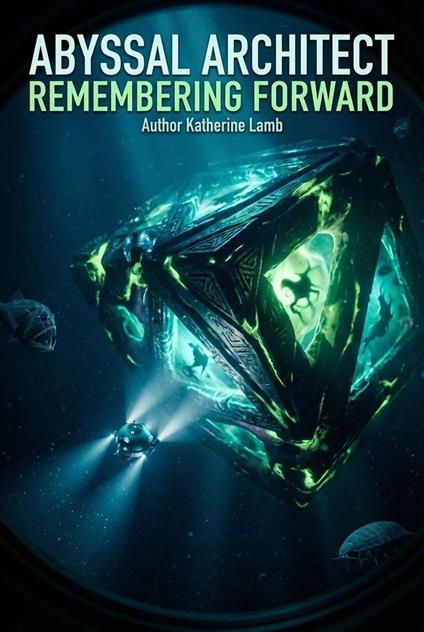
Seven miles beneath the Pacific Ocean, Dr. Mira Chen discovers something that should not exist — a massive structure of perfect geometric angles on the lightless floor of the Mariana Trench. But when she compares the sonar data to surveys taken just five years earlier, the ocean floor was empty. The structure appeared from nowhere, as if it materialized between observations. Leading a team of scientists and submersible pilots into the abyss aboard the research vessel Persephone, Mira expects to find answers about an ancient civilization or unknown geological phenomenon. Instead, she and her crew begin experiencing memories of events that have not yet occurred. The deeper they descend, the more reality fractures around them. Equipment fails in patterns that seem deliberate. Team members recall conversations that never happened. Time itself becomes negotiable in the crushing darkness. The structure is not a ruin. It is being constructed in reverse — built backwards through time by something that exists outside normal causality. And every memory, every choice, every descent brings it closer to completion. Mira realizes with growing horror that they did not discover the structure by accident. They were always meant to find it. Their expedition was engineered across decades, perhaps centuries, by an intelligence that experiences time as architecture and builds with human decisions as its raw material. As her crew fractures under the psychological strain and her own memories become unreliable, Mira must confront an impossible question: How do you escape something that has already remembered your future? Perfect for fans of cerebral science thrillers and cosmic horror, Abyssal Architect: Remembering Forward takes readers on a descent into darkness where the greatest terror is not what waits below, but what has already been decided above. --- SAMPLE EXTRACT --- The sonar image resolved slowly on the monitor, pixel by pixel, a ghost assembling itself from noise. Dr. Mira Chen leaned forward in her chair, close enough that her breath fogged the screen. "Run it again," she said. Behind her, Torres didn't move. "I've run it six times." "Run it again." The ping swept outward in its familiar arc, bounced off the seafloor seven miles below, and returned. The image rebuilt itself. The same impossible angles. The same perfect geometry where there should have been nothing but sediment and darkness and the slow geological patience of the deep. "It wasn't there in 2019," Torres said. "I pulled the archive survey. Clean floor. Nothing." Mira stared at the structure taking shape on the screen. Her mind kept trying to find a natural explanation — volcanic uplift, methane hydrate formations, a sensor malfunction — and kept failing. The angles were too precise. The repetition too deliberate. "When did you first notice it?" "Tuesday. But here's the thing, Dr. Chen." Torres hesitated. "I have a memory of seeing it last week. Clear as anything. Except the logs show I wasn't even running sonar last week. I was calibrating the CTD array." Mira turned to look at him. His face in the monitor glow was pale and genuinely frightened, which was not something she had ever seen from Torres before. "You're sure?" "I'm sure about both things," he said. "That's the problem. I'm completely sure about both things at once." Below them, in the dark, the structure waited. And somewhere in the sediment of Mira's own memory, something stirred — a recollection she couldn't place, of standing at the edge of a hatch she hadn't opened yet, looking down into a light that shouldn't exist. She had been here before. She was certain of it. And she had never been here at all.
Leggi di più
Leggi di meno
Autore:
Anno edizione:
2026
Editore:
Formato:
Lingua:
Inglese
Compatibilità:
Tutti i dispositivi (eccetto Kindle) Scopri di più
Layout:
Reflowable
EAN:
9798233228728

L'articolo è stato aggiunto al carrello
Formato:
Gli eBook venduti da IBS.it sono in formato ePub e possono essere protetti da Adobe DRM. In caso di download di un file protetto da DRM si otterrà un file in formato .acs, (Adobe Content Server Message), che dovrà essere aperto tramite Adobe Digital Editions e autorizzato tramite un account Adobe, prima di poter essere letto su pc o trasferito su dispositivi compatibili.
Cloud:
Gli eBook venduti da IBS.it sono sincronizzati automaticamente su tutti i client di lettura Kobo successivamente all’acquisto. Grazie al Cloud Kobo i progressi di lettura, le note, le evidenziazioni vengono salvati e sincronizzati automaticamente su tutti i dispositivi e le APP di lettura Kobo utilizzati per la lettura.
Clicca qui per sapere come scaricare gli ebook utilizzando un pc con sistema operativo Windows
L’articolo è stato aggiunto alla lista dei desideri
