

L’articolo è stato aggiunto alla lista dei desideri










EBOOK IN LINGUA STRANIERA
 E-mail
 Facebook
 LinkedIn
 Twitter
 WhatsApp
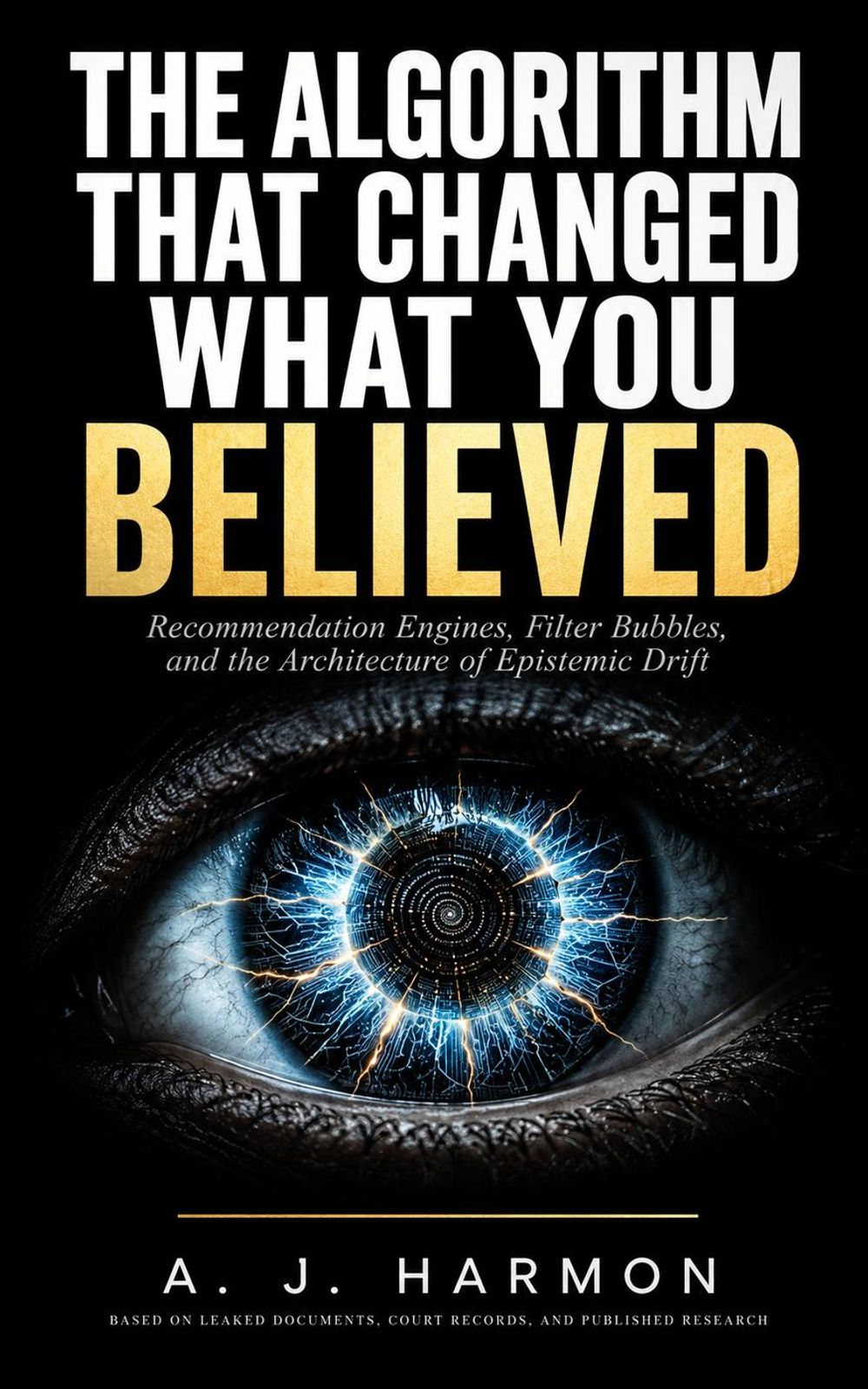
The Algorithm That Changed What You Believed: Recommendation Engines, Filter Bubbles, and the Architecture of Epistemic Drift
(0)
Cliccando su “Conferma” dichiari che il contenuto da te inserito è conforme alle Condizioni Generali d’Uso del Sito ed alle Linee Guida sui Contenuti Vietati. Puoi rileggere e modificare e successivamente confermare il tuo contenuto. Tra poche ore lo troverai online (in caso contrario verifica la conformità del contenuto alle policy del Sito).
Grazie per la tua recensione!
Tra poche ore la vedrai online (in caso contrario verifica la conformità del testo alle nostre linee guida). Dopo la pubblicazione per te +4 punti 
8,99 €
+90
punti 
Venditore: IBS

Acquista online
Scaricabile subito
Articolo acquistabile con Carta del Docente

Articolo acquistabile con Carta Cultura Giovani e Carta del Merito

Articolo acquistabile con Carta della Cultura

Abbonati a Kobo plus per avere accesso illimitato a questo contenuto

Dati e Statistiche
 Salvato in 0 liste dei desideri
Salvato in 0 liste dei desideri
The Algorithm That Changed What You Believed: Recommendation Engines, Filter Bubbles, and the Architecture of Epistemic Drift
Scaricabile subito
8,99 €
8,99 €
Scaricabile subito
Altre offerte vendute e spedite dai nostri venditori

Ebook in lingua straniera
The Algorithm That Changed What You Believed: Recommendation Engines, Filter Bubbles, and the Architecture of Epistemic Drift
Altri venditori
Prezzo e spese di spedizione
EBOOK INGLESE
EPUB2 con DRMFREE
Scaricabile subito

Venduto e spedito da
IBS
Spedizione Gratis
8,99 €
Altri venditori
Prezzo e spese di spedizione
EBOOK INGLESE
EPUB2 con DRMFREE
Scaricabile subito
Venduto e spedito da
IBS
Spedizione Gratis
8,99 €
Altri venditori
Prezzo e spese di spedizione

Tutti i formati ed edizioni

Promo attive (0)
The Algorithm That Changed What You Believed: Recommendation Engines, Filter Bubbles, and the Architecture of Epistemic Drift
Right now, without your awareness, a piece of software is deciding what version of the world you see next. It is not a coincidence that your feed always seems to know exactly what will hold your attention. It is not luck that certain ideas feel more plausible than they did a year ago, or that the people who disagree with you seem increasingly unreasonable. These are the predictable outcomes of systems built to do one thing with extraordinary precision: keep you engaged, at any epistemic cost. THE ALGORITHM THAT CHANGED WHAT YOU BELIEVED is the definitive account of how recommendation engines, built to serve movies and shopping suggestions, became the most consequential shapers of human belief in modern history. Drawing on published academic research, leaked internal documents from major platforms, congressional testimony, and the rapidly evolving regulatory battles on three continents, A. J. Harmon takes readers inside the actual mechanics of how these systems work, and why their effects on what we believe are so difficult to detect from the inside. This is not a book about social media addiction. It is a book about architecture: the specific technical and commercial architecture that determines what billions of people encounter as information every day, and how that architecture, optimized for engagement rather than truth, creates the conditions for what the author calls epistemic drift, the slow, cumulative reshaping of belief through selection bias operating below the threshold of conscious awareness. You will learn how YouTube's recommendation system became the subject of the most contested scientific debate in the history of platform research. You will follow the evidence trail from Facebook's internal studies on teenage mental health to the landmark whistleblower testimony that changed global regulation. You will understand why false information spreads seventy percent faster than true information on social media, and why correction rarely undoes the damage. You will see how filter bubbles, echo chambers, and motivated reasoning interact with algorithmic feedback loops to produce a certainty that feels like insight but functions like a closed circuit. And you will find, in the book's final chapters, what the best current evidence suggests actually works: the platform design changes, regulatory interventions, and individual habits that can, with sustained effort, begin to open the circuit. Authoritative, rigorously sourced, and written with the urgency of a subject that is reshaping democracy in real time, this is essential reading for anyone who has ever wondered why the world seems more divided, more certain, and more impervious to evidence than it did a decade ago. The algorithm did not change the world on purpose. But it changed it nonetheless.
Leggi di più
Leggi di meno
Autore:
Anno edizione:
2026
Editore:
Formato:
Lingua:
Inglese
Compatibilità:
Tutti i dispositivi (eccetto Kindle) Scopri di più
Layout:
Reflowable
EAN:
9798235121942
L'articolo è stato aggiunto al carrello
Formato:
Gli eBook venduti da IBS.it sono in formato ePub e possono essere protetti da Adobe DRM. In caso di download di un file protetto da DRM si otterrà un file in formato .acs, (Adobe Content Server Message), che dovrà essere aperto tramite Adobe Digital Editions e autorizzato tramite un account Adobe, prima di poter essere letto su pc o trasferito su dispositivi compatibili.
Cloud:
Gli eBook venduti da IBS.it sono sincronizzati automaticamente su tutti i client di lettura Kobo successivamente all’acquisto. Grazie al Cloud Kobo i progressi di lettura, le note, le evidenziazioni vengono salvati e sincronizzati automaticamente su tutti i dispositivi e le APP di lettura Kobo utilizzati per la lettura.
Clicca qui per sapere come scaricare gli ebook utilizzando un pc con sistema operativo Windows
L’articolo è stato aggiunto alla lista dei desideri
