

L’articolo è stato aggiunto alla lista dei desideri









EBOOK IN LINGUA STRANIERA
 E-mail
 Facebook
 LinkedIn
 Twitter
 WhatsApp
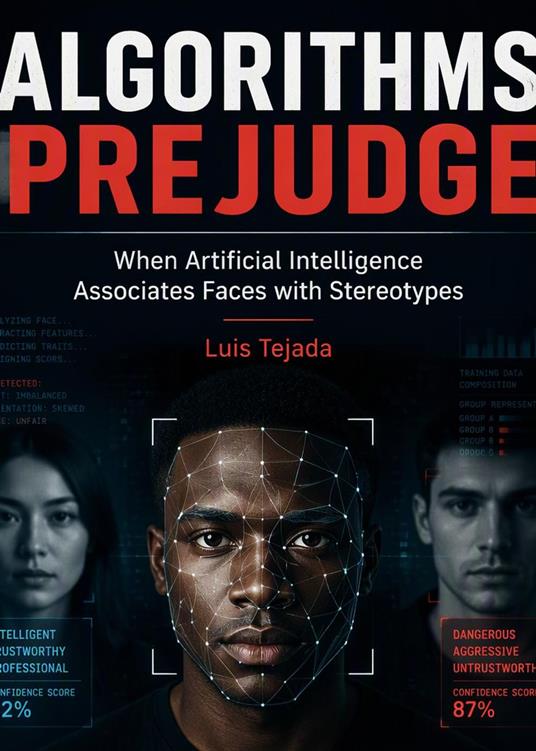
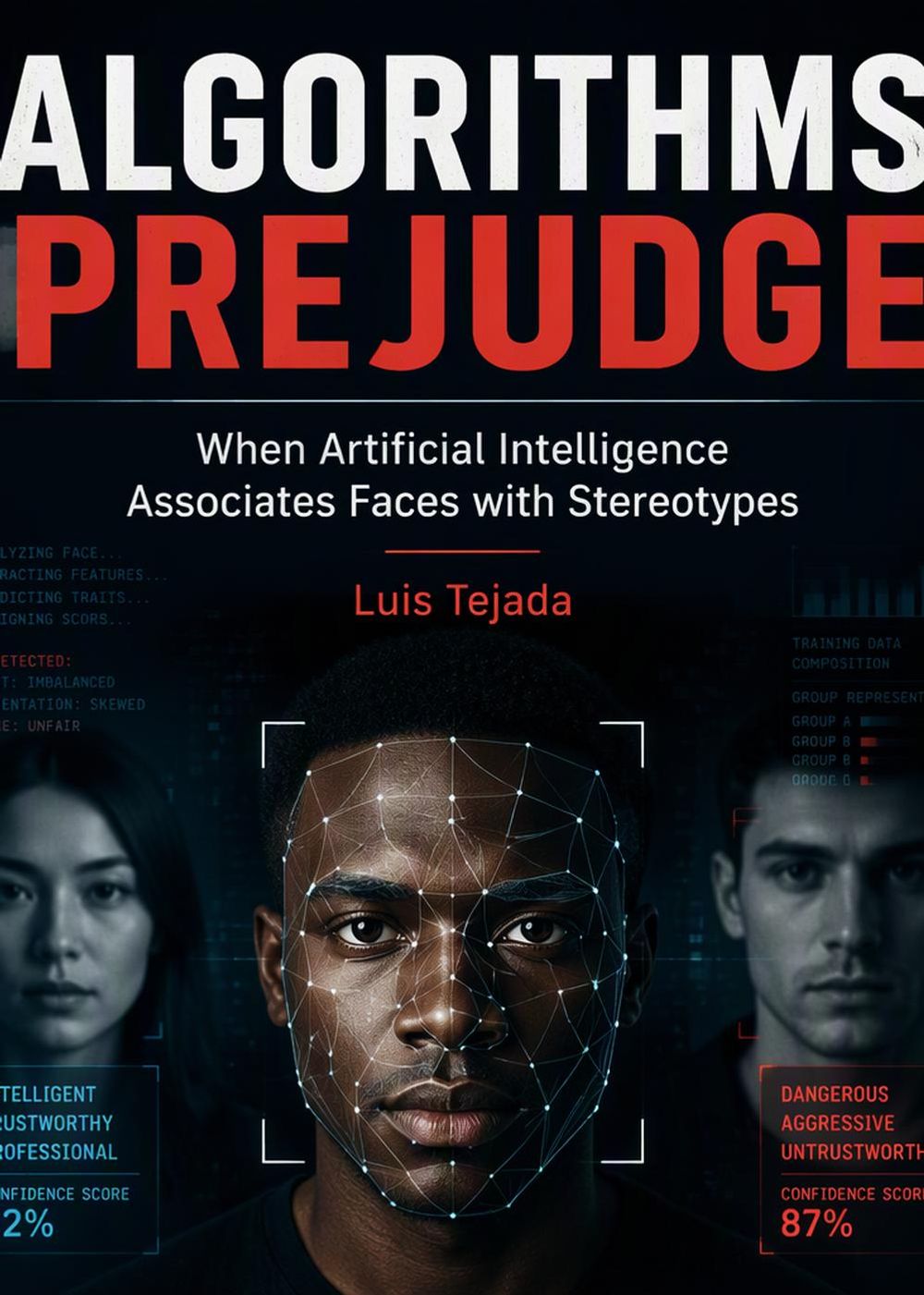
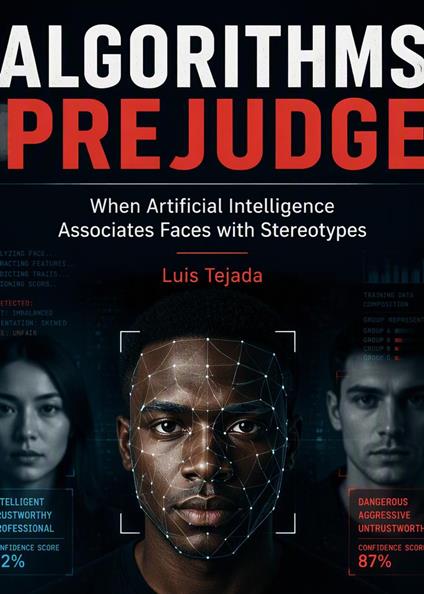
ALGORITHMS PREJUDGE When Artificial Intelligence Associates Faces with Stereotypes
(0)
Cliccando su “Conferma” dichiari che il contenuto da te inserito è conforme alle Condizioni Generali d’Uso del Sito ed alle Linee Guida sui Contenuti Vietati. Puoi rileggere e modificare e successivamente confermare il tuo contenuto. Tra poche ore lo troverai online (in caso contrario verifica la conformità del contenuto alle policy del Sito).
Grazie per la tua recensione!
Tra poche ore la vedrai online (in caso contrario verifica la conformità del testo alle nostre linee guida). Dopo la pubblicazione per te +4 punti 
6,49 €
+60
punti 
Venditore: IBS

Acquista online
Scaricabile subito
Articolo acquistabile con Carta del Docente
Articolo acquistabile con Carta Cultura Giovani e Carta del Merito

Articolo acquistabile con Carta della Cultura

Abbonati a Kobo plus per avere accesso illimitato a questo contenuto

Dati e Statistiche
 Salvato in 0 liste dei desideri
Salvato in 0 liste dei desideri
ALGORITHMS PREJUDGE When Artificial Intelligence Associates Faces with Stereotypes
Scaricabile subito
6,49 €
6,49 €
Scaricabile subito
Altre offerte vendute e spedite dai nostri venditori
Ebook in lingua straniera
ALGORITHMS PREJUDGE When Artificial Intelligence Associates Faces with Stereotypes
Altri venditori
Prezzo e spese di spedizione
EBOOK INGLESE
EPUB2 con DRMFREE
Scaricabile subito

Venduto e spedito da
IBS
Spedizione Gratis
6,49 €
Altri venditori
Prezzo e spese di spedizione
EBOOK INGLESE
EPUB2 con DRMFREE
Scaricabile subito
Venduto e spedito da
IBS
Spedizione Gratis
6,49 €
Altri venditori
Prezzo e spese di spedizione

Tutti i formati ed edizioni
Promo attive (0)
ALGORITHMS PREJUDGE When Artificial Intelligence Associates Faces with Stereotypes
For centuries, human beings have looked at faces and tried to understand the people behind them. We recognize friends and strangers, infer emotions, estimate age, identify social roles, and unconsciously associate physical characteristics with ideas about personality, behavior, intelligence, or trustworthiness. Artificial intelligence has now begun to do something remarkably similar—but on an unprecedented scale. Facial recognition systems can identify individuals in fractions of a second. Algorithms can classify faces, detect patterns, estimate characteristics, and connect images with enormous databases. What once required human observation can now be performed automatically, continuously, and across millions of people. But there is a fundamental problem: machines learn from human data. And human data contains human history. It contains our categories, stereotypes, assumptions, exclusions, inequalities, and prejudices. When these patterns enter artificial intelligence systems, they can become embedded in technologies that appear objective precisely because they are mathematical. This book explores one of the most important questions surrounding artificial intelligence: What happens when machines learn not only to see us, but also to interpret us? The problem is not simply whether a machine can recognize a face accurately. The deeper question is what happens when recognition becomes classification, and classification becomes judgment. A machine may identify a face correctly while interpreting the person incorrectly. It may reproduce a historical pattern without understanding its origins. It may transform an old human prejudice into a new technological decision. The consequences extend far beyond facial recognition. Similar mechanisms can appear in hiring systems, predictive policing, advertising, insurance, education, financial services, surveillance, biometric identification, and other forms of automated decision-making. The book examines the psychology of prejudice, the history of classification, the development of computer vision, algorithmic bias, biometric surveillance, artificial intelligence ethics, privacy, and the growing relationship between human identity and digital representation. It also examines a paradox: if we want machines not to prejudge us, we must teach them using data produced by a species that has spent thousands of years prejudging one another. Can we build systems that recognize without reducing? Can an algorithm learn to remain uncertain? Can technology distinguish between what a face reveals and what we merely assume it reveals? Perhaps the greatest challenge is not teaching machines to see better. It is teaching them not to confuse seeing with understanding. The future of artificial intelligence will not be determined only by how intelligent machines become. It will also depend on what kind of human knowledge we choose to place inside them—and what kinds of prejudice we refuse to pass on. When Machines Learn to Look at Us is an exploration of technology, identity, bias, and the human desire to understand one another. Above all, it is a reflection on a simple but increasingly urgent idea: A face may be data. A person is much more than the data.
Leggi di più
Leggi di meno
Autore:
Anno edizione:
2026
Editore:
Formato:
Lingua:
Inglese
Compatibilità:
Tutti i dispositivi (eccetto Kindle) Scopri di più
Layout:
Reflowable
EAN:
9798237242140
L'articolo è stato aggiunto al carrello
Formato:
Gli eBook venduti da IBS.it sono in formato ePub e possono essere protetti da Adobe DRM. In caso di download di un file protetto da DRM si otterrà un file in formato .acs, (Adobe Content Server Message), che dovrà essere aperto tramite Adobe Digital Editions e autorizzato tramite un account Adobe, prima di poter essere letto su pc o trasferito su dispositivi compatibili.
Cloud:
Gli eBook venduti da IBS.it sono sincronizzati automaticamente su tutti i client di lettura Kobo successivamente all’acquisto. Grazie al Cloud Kobo i progressi di lettura, le note, le evidenziazioni vengono salvati e sincronizzati automaticamente su tutti i dispositivi e le APP di lettura Kobo utilizzati per la lettura.
Clicca qui per sapere come scaricare gli ebook utilizzando un pc con sistema operativo Windows
L’articolo è stato aggiunto alla lista dei desideri
