

L’articolo è stato aggiunto alla lista dei desideri








LIBRO INGLESE
 E-mail
 Facebook
 LinkedIn
 Twitter
 WhatsApp
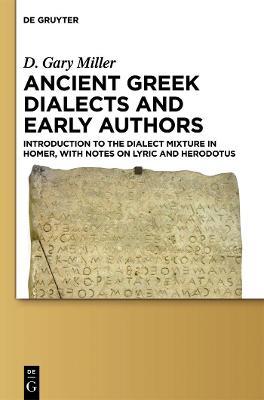
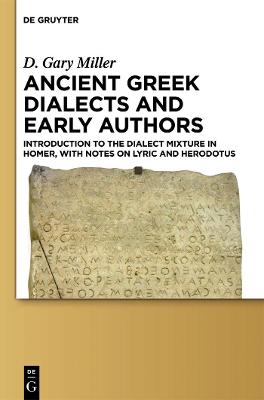
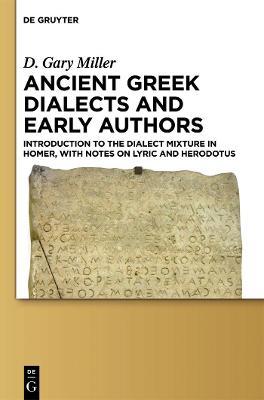
Ancient Greek Dialects and Early Authors: Introduction to the Dialect Mixture in Homer, with Notes on Lyric and Herodotus
(0)
Cliccando su “Conferma” dichiari che il contenuto da te inserito è conforme alle Condizioni Generali d’Uso del Sito ed alle Linee Guida sui Contenuti Vietati. Puoi rileggere e modificare e successivamente confermare il tuo contenuto. Tra poche ore lo troverai online (in caso contrario verifica la conformità del contenuto alle policy del Sito).
Grazie per la tua recensione!
Tra poche ore la vedrai online (in caso contrario verifica la conformità del testo alle nostre linee guida). Dopo la pubblicazione per te +4 punti 
124,88 €

-5%
131,45 €
+1250
punti
Venditore: IBS
Articolo acquistabile con Carta del Docente

Articolo acquistabile con Carta Cultura Giovani e Carta del Merito

Articolo acquistabile con Carta della Cultura

Paga con Klarna in 3 rate senza interessi per ordini superiori a 39 €

Dati e Statistiche
 Salvato in 0 liste dei desideri
Salvato in 0 liste dei desideri
Ancient Greek Dialects and Early Authors: Introduction to the Dialect Mixture in Homer, with Notes on Lyric and Herodotus
Attualmente non disponibile
124,88 €
-5%
131,45 €
124,88 €
131,45 €
-5%
Attualmente non disponibile
Altre offerte vendute e spedite dai nostri venditori
Libri in Inglese
Ancient Greek Dialects and Early Authors: Introduction to the Dialect Mixture in Homer, with Notes on Lyric and Herodotus
Altri venditori
Prezzo e spese di spedizione
LIBRO INGLESE
Attualmente non disponibile

Venduto e spedito da
IBS
Spedizione Gratis
-5%
131,45 €
124,88 €
Altri venditori
Prezzo e spese di spedizione
LIBRO INGLESE
Attualmente non disponibile
Venduto e spedito da
IBS
Spedizione Gratis
-5%
131,45 €
124,88 €
Altri venditori
Prezzo e spese di spedizione

Tutti i formati ed edizioni
Promo attive (0)
Epic is dialectally mixed but Ionic at its core. The proper dialect for elegy was Ionic, even when composed by Tyrtaeus in Sparta or Theognis in Megara, both Doric areas. Choral lyric poets represent the major dialect areas: Aeolic (Sappho, Alcaeus), Ionic (Anacreon, Archilochus, Simonides), and Doric (Alcman, Ibycus, Stesichorus, Pindar). Most distinctive are the Aeolic poets. The rest may have a preference for their own dialect (some more than others) but in their Lesbian veneer and mixture of Doric and Ionic forms are to some extent dialectally indistinguishable. All of the ancient authors use a literary language that is artificial from the point of view of any individual dialect. Homer has the most forms that occur in no actual dialect. In this volume, by means of dialectally and chronologically arranged illustrative texts, translated and provided with running commentary, some of the early Greek authors are compared against epigraphic records, where available, from the same period and locality in order to provide an appreciation of: the internal history of the Ancient Greek language and its dialects; the evolution of the multilectal, artificial poetic language that characterizes the main genres of the most ancient Greek literature, especially Homer / epic, with notes on choral lyric and even the literary language of the prose historian Herodotus; the formulaic properties of ancient poetry, especially epic genres; the development of more complex meters, colometric structure, and poetic conventions; and the basis for decisions about text editing and the selection of a manuscript alternant or emendation that was plausibly used by a given author.
Leggi di più
Leggi di meno
Testo in English
Dimensioni:
230 x 155 mm
Peso:
816 gr.
EAN:
9781614514930

L'articolo è stato aggiunto al carrello
Informazioni e Contatti sulla Sicurezza dei Prodotti
Le schede prodotto sono aggiornate in conformità al Regolamento UE 988/2023. Laddove ci fossero taluni dati non disponibili per ragioni indipendenti da IBS, vi informiamo che stiamo compiendo ogni ragionevole sforzo per inserirli. Vi invitiamo a controllare periodicamente il sito www.ibs.it per eventuali novità e aggiornamenti.
Per le vendite di prodotti da terze parti, ciascun venditore si assume la piena e diretta responsabilità per la commercializzazione del prodotto e per la sua conformità al Regolamento UE 988/2023, nonché alle normative nazionali ed europee vigenti.
Per informazioni sulla sicurezza dei prodotti, contattare productsafetyibs@feltrinelli.it
L’articolo è stato aggiunto alla lista dei desideri
