

L’articolo è stato aggiunto alla lista dei desideri








LIBRO INGLESE
 E-mail
 Facebook
 LinkedIn
 Twitter
 WhatsApp
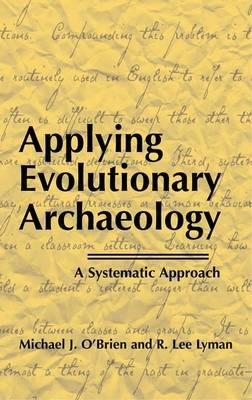
Applying Evolutionary Archaeology: A Systematic Approach
(0)
Cliccando su “Conferma” dichiari che il contenuto da te inserito è conforme alle Condizioni Generali d’Uso del Sito ed alle Linee Guida sui Contenuti Vietati. Puoi rileggere e modificare e successivamente confermare il tuo contenuto. Tra poche ore lo troverai online (in caso contrario verifica la conformità del contenuto alle policy del Sito).
Grazie per la tua recensione!
Tra poche ore la vedrai online (in caso contrario verifica la conformità del testo alle nostre linee guida). Dopo la pubblicazione per te +4 punti 

210,50 €
+2110
punti 
Venditore: IBS
Articolo acquistabile con Carta del Docente

Articolo acquistabile con Carta Cultura Giovani e Carta del Merito

Articolo acquistabile con Carta della Cultura

Paga con Klarna in 3 rate senza interessi per ordini superiori a 39 €

Dati e Statistiche
 Salvato in 0 liste dei desideri
Salvato in 0 liste dei desideri
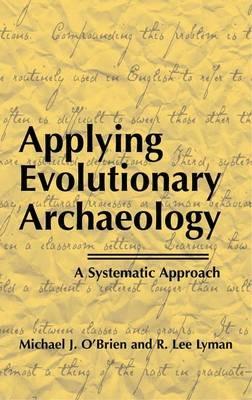
Applying Evolutionary Archaeology: A Systematic Approach
Disponibilità in 2 settimane
210,50 €
210,50 €
Disponibilità in 2 settimane
Altre offerte vendute e spedite dai nostri venditori
Libri in Inglese
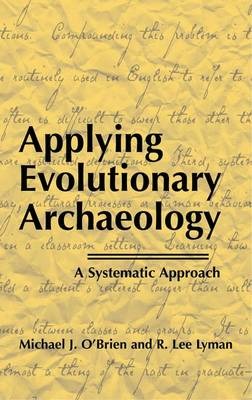
Applying Evolutionary Archaeology: A Systematic Approach
Altri venditori
Prezzo e spese di spedizione
LIBRO INGLESE
Disponibilità in 2 settimane

Venduto e spedito da
IBS
Spedizione Gratis
210,50 €
Altri venditori
Prezzo e spese di spedizione
LIBRO INGLESE
Disponibilità in 2 settimane
Venduto e spedito da
IBS
Spedizione Gratis
210,50 €
Altri venditori
Prezzo e spese di spedizione

Tutti i formati ed edizioni
Anthropology, and by extension archaeology, has had a long-standing interest in evolution in one or several of its various guises. Pick up any lengthy treatise on humankind written in the last quarter of the nineteenth century and the chances are good that the word evolution will appear somewhere in the text. If for some reason the word itself is absent, the odds are excellent that at least the concept of change over time will have a central role in the discussion. After one of the preeminent (and often vilified) social scientists of the nineteenth century, Herbert Spencer, popularized the term in the 1850s, evolution became more or less a household word, usually being used synonymously with change, albeit change over extended periods of time. Later, through the writings of Edward Burnett Tylor, Lewis Henry Morgan, and others, the notion of evolution as it applies to stages of social and political development assumed a prominent position in anthropological disc- sions. To those with only a passing knowledge of American anthropology, it often appears that evolutionism in the early twentieth century went into a decline at the hands of Franz Boas and those of similar outlook, often termed particularists. However, it was not evolutionism that was under attack but rather comparativism— an approach that used the ethnographic present as a key to understanding how and why past peoples lived the way they did (Boas 1896).
Leggi di più
Leggi di meno
Autore:
Editore:
Anno:
2000
Rilegatura:
Paperback / softback
Pagine:
471 p.
Testo in English
Dimensioni:
235 x 155 mm
EAN:
9780306462542

L'articolo è stato aggiunto al carrello
Informazioni e Contatti sulla Sicurezza dei Prodotti
Le schede prodotto sono aggiornate in conformità al Regolamento UE 988/2023. Laddove ci fossero taluni dati non disponibili per ragioni indipendenti da IBS, vi informiamo che stiamo compiendo ogni ragionevole sforzo per inserirli. Vi invitiamo a controllare periodicamente il sito www.ibs.it per eventuali novità e aggiornamenti.
Per le vendite di prodotti da terze parti, ciascun venditore si assume la piena e diretta responsabilità per la commercializzazione del prodotto e per la sua conformità al Regolamento UE 988/2023, nonché alle normative nazionali ed europee vigenti.
Per informazioni sulla sicurezza dei prodotti, contattare productsafetyibs@feltrinelli.it
L’articolo è stato aggiunto alla lista dei desideri
