

L’articolo è stato aggiunto alla lista dei desideri








LIBRO INGLESE
 E-mail
 Facebook
 LinkedIn
 Twitter
 WhatsApp
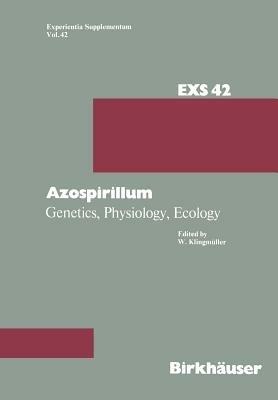
Azospirillum: Genetics, Physiology, Ecology Workshop held at the University of Bayreuth, Germany July 16–17, 1981
(0)
Cliccando su “Conferma” dichiari che il contenuto da te inserito è conforme alle Condizioni Generali d’Uso del Sito ed alle Linee Guida sui Contenuti Vietati. Puoi rileggere e modificare e successivamente confermare il tuo contenuto. Tra poche ore lo troverai online (in caso contrario verifica la conformità del contenuto alle policy del Sito).
Grazie per la tua recensione!
Tra poche ore la vedrai online (in caso contrario verifica la conformità del testo alle nostre linee guida). Dopo la pubblicazione per te +4 punti 
69,70 €
+700
punti 
Venditore: IBS
Articolo acquistabile con Carta del Docente

Articolo acquistabile con Carta Cultura Giovani e Carta del Merito

Articolo acquistabile con Carta della Cultura

Paga con Klarna in 3 rate senza interessi per ordini superiori a 39 €

Dati e Statistiche
 Salvato in 0 liste dei desideri
Salvato in 0 liste dei desideri
Azospirillum: Genetics, Physiology, Ecology Workshop held at the University of Bayreuth, Germany July 16–17, 1981
Disponibilità in 2 settimane
69,70 €
69,70 €
Disponibilità in 2 settimane
Altre offerte vendute e spedite dai nostri venditori

Libri in Inglese
Azospirillum: Genetics, Physiology, Ecology Workshop held at the University of Bayreuth, Germany July 16–17, 1981
Altri venditori
Prezzo e spese di spedizione
LIBRO INGLESE
Disponibilità in 2 settimane

Venduto e spedito da
IBS
Spedizione Gratis
69,70 €
Altri venditori
Prezzo e spese di spedizione
LIBRO INGLESE
Disponibilità in 2 settimane
Venduto e spedito da
IBS
Spedizione Gratis
69,70 €
Altri venditori
Prezzo e spese di spedizione

Tutti i formati ed edizioni
Promo attive (0)
W. Klingmuller Lehrstuhl fur Genetik, Universitat Bayreuth, UniversitatsstraBe 30, 8580 Bayreuth, FRG Growth of higher plants, particularly agricultural crops, de pends on combined nitrogen. To obtain high yields, combined nitrogen has to be supplied as fertilizer. However, the che- cal production of nitrogen fertilizers is very energy consuming and costly. In underdeveloped countries there is in addition the problem of how to get such fertilizer and how to distribute it. Efforts to replace chemical nitrogen fertilizers by other means of nitrogen fertilization are therefore important. Some bacteria have the capability to use molecular nitrogen from the atmosphere. Such nitrogen is thus transformed into a bound form. Responsible for this capability is a gene group they carry, the nif genes, and an enzyme system, they produce, nitrogenase. An example for such bacteria are rhizobia, which grow in symbioses with leguminous plants, and in their root nodules bind molecular nitrogen. The host plant takes advantage of this. Less well known, but being studied with increasing intensity, are the so called Azospirillum bacteria. They too bind molecular nitrogen. But, in contrast to rhizobia, they do not form nodules on the roots of legumes, but live in loose associations with the roots of other plants, for instance maize, wheat, rice or other grain crops. By exploiting the capabilities of these bacteria it can be hoped to find a way for supplying biologically bound nit- gen to grain crops.
Leggi di più
Leggi di meno
Autore:
Editore:
Collana:
Experientia Supplementum
Anno:
2011
Rilegatura:
Paperback / softback
Pagine:
150 p.
Testo in English
Dimensioni:
244 x 170 mm
EAN:
9783034893664

L'articolo è stato aggiunto al carrello
Informazioni e Contatti sulla Sicurezza dei Prodotti
Le schede prodotto sono aggiornate in conformità al Regolamento UE 988/2023. Laddove ci fossero taluni dati non disponibili per ragioni indipendenti da IBS, vi informiamo che stiamo compiendo ogni ragionevole sforzo per inserirli. Vi invitiamo a controllare periodicamente il sito www.ibs.it per eventuali novità e aggiornamenti.
Per le vendite di prodotti da terze parti, ciascun venditore si assume la piena e diretta responsabilità per la commercializzazione del prodotto e per la sua conformità al Regolamento UE 988/2023, nonché alle normative nazionali ed europee vigenti.
Per informazioni sulla sicurezza dei prodotti, contattare productsafetyibs@feltrinelli.it
L’articolo è stato aggiunto alla lista dei desideri
