

L’articolo è stato aggiunto alla lista dei desideri










EBOOK IN LINGUA STRANIERA
 E-mail
 Facebook
 LinkedIn
 Twitter
 WhatsApp
Capacity Geometry
(0)
Cliccando su “Conferma” dichiari che il contenuto da te inserito è conforme alle Condizioni Generali d’Uso del Sito ed alle Linee Guida sui Contenuti Vietati. Puoi rileggere e modificare e successivamente confermare il tuo contenuto. Tra poche ore lo troverai online (in caso contrario verifica la conformità del contenuto alle policy del Sito).
Grazie per la tua recensione!
Tra poche ore la vedrai online (in caso contrario verifica la conformità del testo alle nostre linee guida). Dopo la pubblicazione per te +4 punti 
34,49 €
+340
punti 
Venditore: IBS

Acquista online
Scaricabile subito
Articolo acquistabile con Carta del Docente

Articolo acquistabile con Carta Cultura Giovani e Carta del Merito

Articolo acquistabile con Carta della Cultura

Abbonati a Kobo plus per avere accesso illimitato a questo contenuto

Dati e Statistiche
 Salvato in 0 liste dei desideri
Salvato in 0 liste dei desideri
Capacity Geometry
Scaricabile subito
34,49 €
34,49 €
Scaricabile subito
Altre offerte vendute e spedite dai nostri venditori
Ebook in lingua straniera
Capacity Geometry
Altri venditori
Prezzo e spese di spedizione
EBOOK INGLESE
EPUB2 con DRMFREE
Scaricabile subito

Venduto e spedito da
IBS
Spedizione Gratis
34,49 €
Altri venditori
Prezzo e spese di spedizione
EBOOK INGLESE
EPUB2 con DRMFREE
Scaricabile subito
Venduto e spedito da
IBS
Spedizione Gratis
34,49 €
Altri venditori
Prezzo e spese di spedizione

Tutti i formati ed edizioni
Promo attive (0)
Capacity Geometry
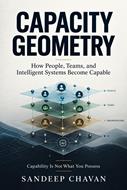
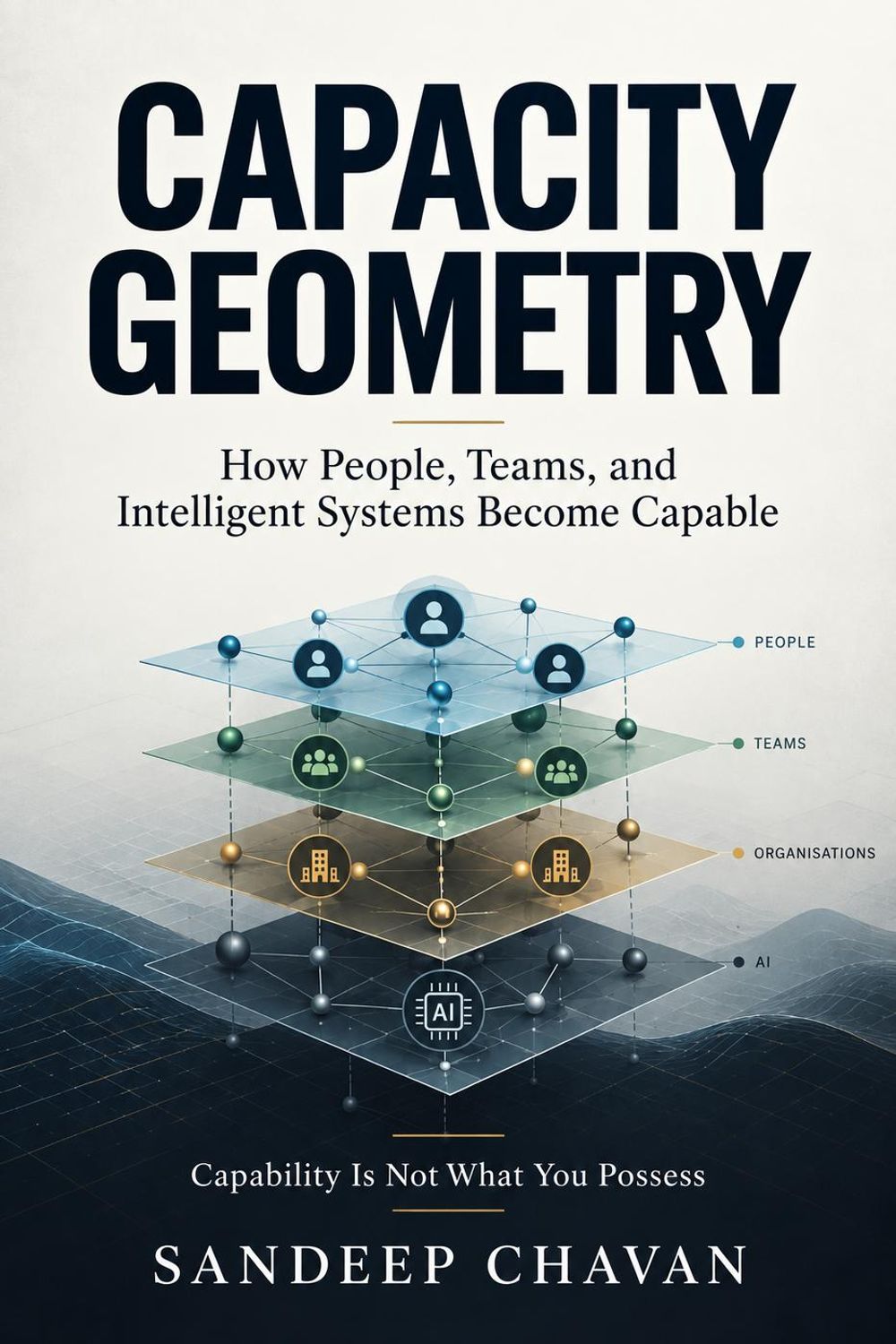
Why can two people with similar qualifications produce very different outcomes? Why do talented teams fail? Why can organisations possess people, capital, technology, and information yet remain unable to move? And why does a powerful AI model still fall short of becoming a capable operational agent? Capacity Geometry offers a new configurational interpretation of capability. Instead of asking only what a person, team, organisation, or intelligent system possesses, Sandeep Chavan asks a deeper operational question: What must be configured, accessible, coordinated, and sustainable for a particular consequence to become reliably possible? The book develops Capacity Geometry as a consequence-specific framework for examining the relation between Required Capacity Geometry and Available Capacity Geometry. It distinguishes possession from availability, access, activation, coordination, and deployment. It examines where capacity is carried, how dependencies form, why bottlenecks emerge, how strong and fragile geometries differ, and why resource abundance does not necessarily produce operational capability. Across education and work, the book reframes familiar assumptions: A degree is a signal, not the geometry itself. Skill is a component, not complete capacity. Experience matters when it changes what a system can reliably carry. Adaptability is reconfiguration rather than simple transfer. Training can add elements without creating usable capacity. Performance belongs partly to the person and partly to the surrounding field. Teams are geometries, not talent sums. Organisations can possess resources and still lack the configuration required to act. The framework then extends into artificial intelligence. AI can create real augmented capacity while making it difficult to see where capability actually resides. Human–AI performance increasingly belongs to a configuration involving judgment, machine resolution, memory, tools, verification, feedback, and task allocation. The same distinction becomes critical for AI agents: model capability is not agent capacity. An operational agent requires a wider geometry of memory, permissions, APIs, tools, execution, monitoring, recovery, and human supervision. The book culminates in two practical concepts: Operational Capacity Boundary (OCB) — the boundary separating consequences the present configuration can reliably carry from those requiring material reconfiguration. Viable Step — the next consequence close enough to present capacity to be carried while also extending the geometry. Designed for leaders, professionals, educators, researchers, students, organisational practitioners, and those building or working with intelligent systems, Capacity Geometry provides a language for diagnosing why apparently capable systems remain unable to move—and what must change before they can. Its governing question is simple: Given the present geometry, what consequence can this system reliably carry now—and what is the next viable step?
Leggi di più
Leggi di meno
Autore:
Anno edizione:
2026
Editore:
Formato:
Lingua:
Inglese
Compatibilità:
Tutti i dispositivi (eccetto Kindle) Scopri di più
Layout:
Reflowable
EAN:
9798235314412
L'articolo è stato aggiunto al carrello
Formato:
Gli eBook venduti da IBS.it sono in formato ePub e possono essere protetti da Adobe DRM. In caso di download di un file protetto da DRM si otterrà un file in formato .acs, (Adobe Content Server Message), che dovrà essere aperto tramite Adobe Digital Editions e autorizzato tramite un account Adobe, prima di poter essere letto su pc o trasferito su dispositivi compatibili.
Cloud:
Gli eBook venduti da IBS.it sono sincronizzati automaticamente su tutti i client di lettura Kobo successivamente all’acquisto. Grazie al Cloud Kobo i progressi di lettura, le note, le evidenziazioni vengono salvati e sincronizzati automaticamente su tutti i dispositivi e le APP di lettura Kobo utilizzati per la lettura.
Clicca qui per sapere come scaricare gli ebook utilizzando un pc con sistema operativo Windows
L’articolo è stato aggiunto alla lista dei desideri
