

L’articolo è stato aggiunto alla lista dei desideri









EBOOK IN LINGUA STRANIERA
 E-mail
 Facebook
 LinkedIn
 Twitter
 WhatsApp
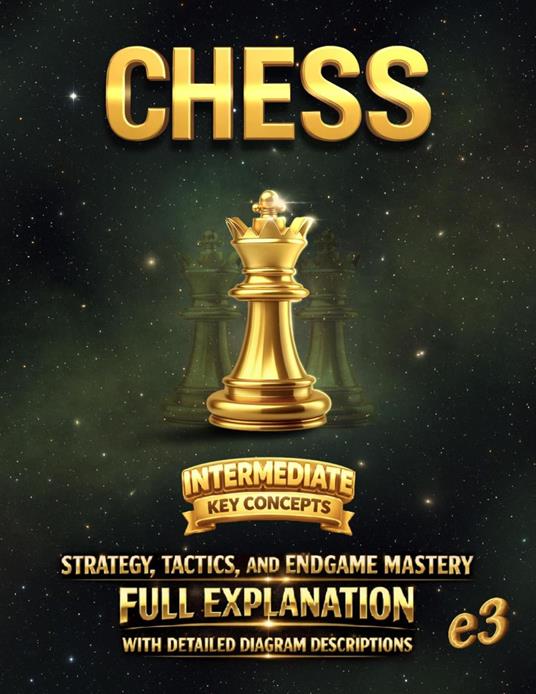
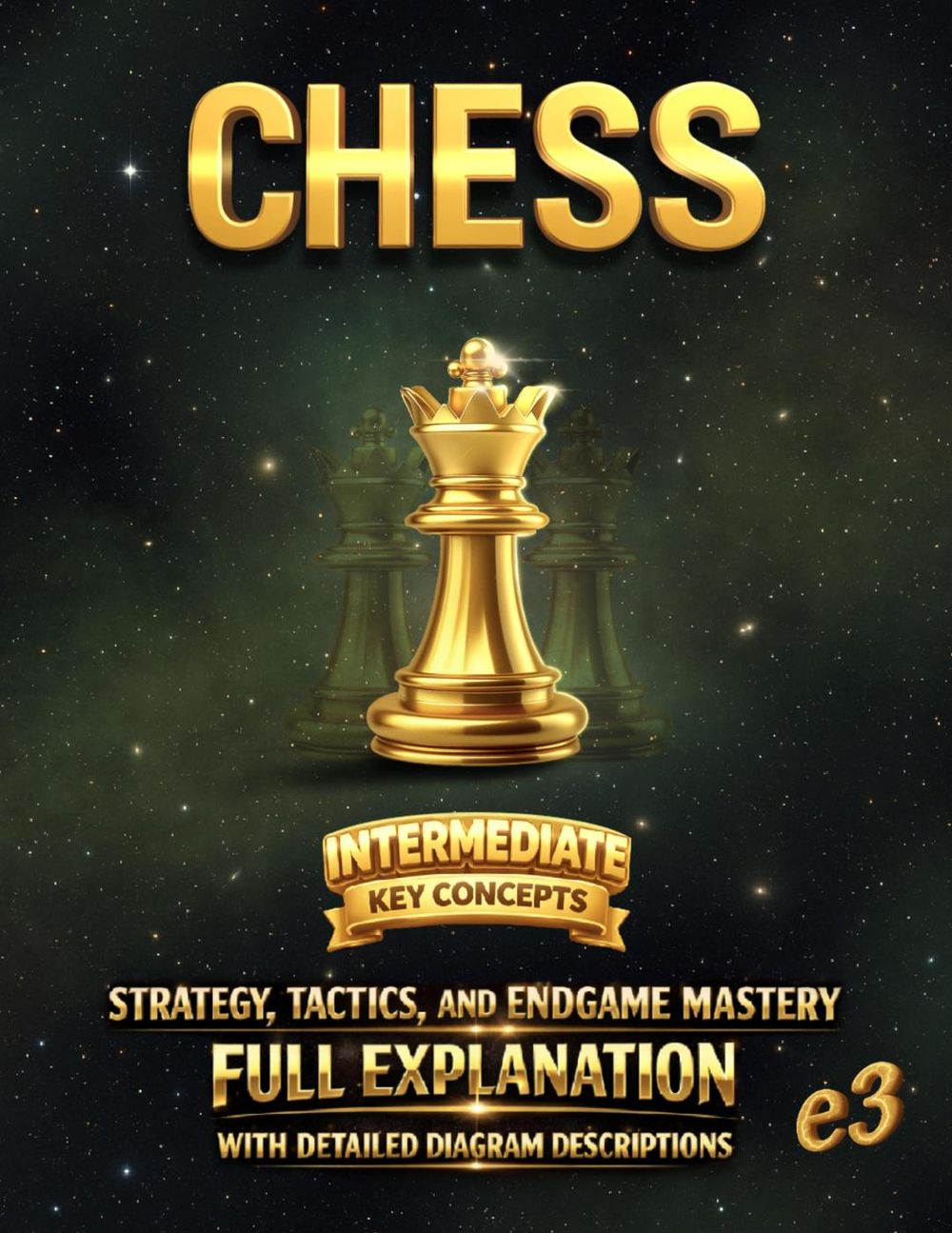
CHESS : Intermediate (Key Concepts) ; Strategy, Tactics, and Endgame Mastery; Full Explanation With Detailed Diagram Descriptions
(0)
Cliccando su “Conferma” dichiari che il contenuto da te inserito è conforme alle Condizioni Generali d’Uso del Sito ed alle Linee Guida sui Contenuti Vietati. Puoi rileggere e modificare e successivamente confermare il tuo contenuto. Tra poche ore lo troverai online (in caso contrario verifica la conformità del contenuto alle policy del Sito).
Grazie per la tua recensione!
Tra poche ore la vedrai online (in caso contrario verifica la conformità del testo alle nostre linee guida). Dopo la pubblicazione per te +4 punti 
34,99 €
+350
punti 
Venditore: IBS

Acquista online
Scaricabile subito
Articolo acquistabile con Carta del Docente

Articolo acquistabile con Carta Cultura Giovani e Carta del Merito

Articolo acquistabile con Carta della Cultura

Abbonati a Kobo plus per avere accesso illimitato a questo contenuto

Dati e Statistiche
 Salvato in 0 liste dei desideri
Salvato in 0 liste dei desideri
CHESS : Intermediate (Key Concepts) ; Strategy, Tactics, and Endgame Mastery; Full Explanation With Detailed Diagram Descriptions
Scaricabile subito
34,99 €
34,99 €
Scaricabile subito
Altre offerte vendute e spedite dai nostri venditori
Ebook in lingua straniera
CHESS : Intermediate (Key Concepts) ; Strategy, Tactics, and Endgame Mastery; Full Explanation With Detailed Diagram Descriptions
Altri venditori
Prezzo e spese di spedizione
Nuovo
Scaricabile subito

Venduto e spedito da
IBS
Spedizione Gratis
34,99 €
Altri venditori
Prezzo e spese di spedizione
Nuovo
Scaricabile subito
Venduto e spedito da
IBS
Spedizione Gratis
34,99 €
Altri venditori
Prezzo e spese di spedizione

Tutti i formati ed edizioni
Promo attive (0)
CHESS : Intermediate (Key Concepts) ; Strategy, Tactics, and Endgame Mastery; Full Explanation With Detailed Diagram Descriptions
Chess is often described as a game that takes minutes to learn but a lifetime to master. After learning the basic rules and fundamental ideas, every player eventually reaches a moment when simple knowledge is no longer enough. Winning games begins to depend on deeper understanding—how pieces work together, how positions evolve, and how small advantages can be turned into decisive victories. This book is written for players who have reached that stage and are ready to move beyond the basics. Intermediate (Key Concepts) is designed to bridge the gap between beginner knowledge and more advanced chess thinking*.* At this level, the player must start to see the board not as separate pieces moving independently, but as a dynamic system where coordination, planning, and calculation determine success. A knight on the right square can dominate the board, a well-placed rook can control entire files, and even a single pawn can become the decisive factor in the endgame. The first section of the book focuses on making the most of your pieces. Each chess piece has unique strengths and limitations, and learning how to use them effectively is a major step toward stronger play. You will explore practical ways to use knights, bishops, rooks, queens, kings, and pawns more efficiently, and learn how coordination between pieces often creates powerful attacking or defensive possibilities. From there, the book moves into the world of endgames, where precision and understanding become essential. Many games are decided not in the opening or middlegame, but in simplified positions where only a few pieces remain. Concepts such as passed pawns, pawn breakthroughs, exchanging into winning positions, and the famous rule of the square will help you convert advantages into victories with confidence. The next section introduces a wide range of tactical weapons. Chess tactics are the sharp tools that allow players to exploit weaknesses and turn opportunities into immediate gains. Themes such as discovered attacks, double checks, trapped pieces, smothered mates, deflections, and decoys will train your tactical awareness and improve your ability to recognize decisive moments in a game. Closely related to tactics are forcing moves, which include checks, captures, and threats that compel the opponent to respond in specific ways. Understanding powerful moves, combinations, queen sacrifices, and drawing techniques will help you calculate more effectively and recognize winning sequences. Finally, the book concludes with the essential skill of reading the board. Strong players constantly evaluate positions by examining pawn structures, space advantages, game types (open, closed, or semi-open), and the strategic decision of when to trade pieces. This section also introduces more advanced chess notation so that you can record, analyze, and study games with greater clarity. Throughout this book, the emphasis is on clarity, practical understanding, and structured learning. Each topic builds upon the previous one, gradually expanding your ability to analyze positions and make stronger decisions during play. The goal is not only to teach specific techniques, but also to develop the habits of thinking that characterize improving chess players. Chess rewards patience, curiosity, and consistent practice. By studying these intermediate concepts and applying them in your own games, you will begin to see the board more clearly, calculate more confidently, and recognize opportunities that once went unnoticed. This book is an invitation to continue your journey into the deeper layers of chess. Each chapter is a step toward stronger play—and toward a richer appreciation of one of the most fascinating strategy games ever created. The Author
Leggi di più
Leggi di meno
Compatibilità:
Tutti i dispositivi (eccetto Kindle) Scopri di più
Layout:
Reflowable
EAN:
9798233152184

L'articolo è stato aggiunto al carrello
Formato:
Gli eBook venduti da IBS.it sono in formato ePub e possono essere protetti da Adobe DRM. In caso di download di un file protetto da DRM si otterrà un file in formato .acs, (Adobe Content Server Message), che dovrà essere aperto tramite Adobe Digital Editions e autorizzato tramite un account Adobe, prima di poter essere letto su pc o trasferito su dispositivi compatibili.
Cloud:
Gli eBook venduti da IBS.it sono sincronizzati automaticamente su tutti i client di lettura Kobo successivamente all’acquisto. Grazie al Cloud Kobo i progressi di lettura, le note, le evidenziazioni vengono salvati e sincronizzati automaticamente su tutti i dispositivi e le APP di lettura Kobo utilizzati per la lettura.
Clicca qui per sapere come scaricare gli ebook utilizzando un pc con sistema operativo Windows
L’articolo è stato aggiunto alla lista dei desideri
