

L’articolo è stato aggiunto alla lista dei desideri









LIBRO INGLESE
 E-mail
 Facebook
 LinkedIn
 Twitter
 WhatsApp
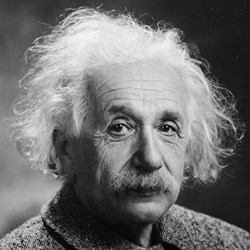
The Collected Papers of Albert Einstein, Volume 17 (Documentary Edition): The Berlin Years: Writings and Correspondence, June 1929–November 1930
(0)
Cliccando su “Conferma” dichiari che il contenuto da te inserito è conforme alle Condizioni Generali d’Uso del Sito ed alle Linee Guida sui Contenuti Vietati. Puoi rileggere e modificare e successivamente confermare il tuo contenuto. Tra poche ore lo troverai online (in caso contrario verifica la conformità del contenuto alle policy del Sito).
Grazie per la tua recensione!
Tra poche ore la vedrai online (in caso contrario verifica la conformità del testo alle nostre linee guida). Dopo la pubblicazione per te +4 punti 
198,31 €

-5%
208,75 €
+1980
punti
Venditore: IBS
Articolo acquistabile con Carta del Docente

Articolo acquistabile con Carta Cultura Giovani e Carta del Merito

Articolo acquistabile con Carta della Cultura

Paga con Klarna in 3 rate senza interessi per ordini superiori a 39 €

Dati e Statistiche
 Salvato in 0 liste dei desideri
Salvato in 0 liste dei desideri
The Collected Papers of Albert Einstein, Volume 17 (Documentary Edition): The Berlin Years: Writings and Correspondence, June 1929–November 1930
Disponibile in 5 gg lavorativi
198,31 €
-5%
208,75 €
198,31 €
208,75 €
-5%
Disponibile in 5 gg lavorativi
Altre offerte vendute e spedite dai nostri venditori

Libri in Inglese
The Collected Papers of Albert Einstein, Volume 17 (Documentary Edition): The Berlin Years: Writings and Correspondence, June 1929–November 1930
Altri venditori
Prezzo e spese di spedizione

LIBRO INGLESE
Disponibile in 5 gg lavorativi

Venduto e spedito da
IBS
Spedizione Gratis
-5%
208,75 €
198,31 €
Altri venditori
Prezzo e spese di spedizione
LIBRO INGLESE
Disponibile in 5 gg lavorativi
Venduto e spedito da
IBS
Spedizione Gratis
-5%
208,75 €
198,31 €
Altri venditori
Prezzo e spese di spedizione

Tutti i formati ed edizioni

Promo attive (0)
A definitive scholarly edition of the correspondence and papers of Albert Einstein This volume finds Einstein recovered and traveling again after a prolonged illness, to Paris, London, and Zurich to receive three honorary doctorates; to the Sixth Solvay Congress in Brussels and to Leyden; and to attend the Constituent Meeting of the Jewish Agency Council in Zurich and the twelfth session of the ICIC in Geneva. By the end of the volume, Einstein embarks on a transatlantic voyage for the first time in five years to spend an academic term at the California Institute of Technology in Pasadena. Einstein’s work focuses on the teleparallel approach to unified field theory, on which he engages in intensive correspondence with Élie Cartan and begins his collaboration with Walther Mayer. He also presents popular accounts of his work, surveying the historical progression from classical to twentieth-century physics leading up to the latest developments in unified field theory. He also engages in lively exchanges on both technical and foundational issues in quantum mechanics with W. Pauli, M. Born, M. Schlick, and others. His personal correspondence reflects eventful changes: the Einsteins realize their dream of owning a summer house outside Berlin, Einstein becomes a grandfather, his younger son Eduard commences his university studies and has his first serious mental health crisis, and his younger stepdaughter Margot gets married. Einstein’s ties to the Zionist movement are seriously tested in the wake of the violence that erupts in British Mandate Palestine in 1929, to which he reacts with forceful calls for a genuine symbiosis between Jews and Arabs, proposing the establishment of joint administrative, economic, and social organizations. He warns that without finding “the path to honest cooperation and honest negotiations with the Arabs,” “we [Jews] have learned nothing from our two-thousand-year ordeal and deserve the fate that will befall us.” In Germany, too, Einstein champions democracy in the face of rising support for the Nazi Party, is active on behalf of Jewish refugees, opposes the death penalty, and supports abortion rights and the decriminalization of homosexuality. Einstein promotes pacifism more vigorously. His efforts to promote peace follow three distinct transnational avenues: disarmament, conscientious objection, and apolitical pacifism, aimed “to find practical mechanisms to restrict the nation state.”
Leggi di più
Leggi di meno
Autore:
Curatore:
Editore:
Collana:
Collected Papers of Albert Einstein
Anno:
2024
Rilegatura:
Hardback
Pagine:
1240 p.
Testo in English
Dimensioni:
254 x 191 mm
EAN:
9780691246178

L'articolo è stato aggiunto al carrello
Informazioni e Contatti sulla Sicurezza dei Prodotti
Le schede prodotto sono aggiornate in conformità al Regolamento UE 988/2023. Laddove ci fossero taluni dati non disponibili per ragioni indipendenti da IBS, vi informiamo che stiamo compiendo ogni ragionevole sforzo per inserirli. Vi invitiamo a controllare periodicamente il sito www.ibs.it per eventuali novità e aggiornamenti.
Per le vendite di prodotti da terze parti, ciascun venditore si assume la piena e diretta responsabilità per la commercializzazione del prodotto e per la sua conformità al Regolamento UE 988/2023, nonché alle normative nazionali ed europee vigenti.
Per informazioni sulla sicurezza dei prodotti, contattare productsafetyibs@feltrinelli.it
L’articolo è stato aggiunto alla lista dei desideri
