

L’articolo è stato aggiunto alla lista dei desideri









LIBRO INGLESE
 E-mail
 Facebook
 LinkedIn
 Twitter
 WhatsApp
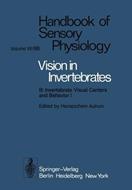
Comparative Physiology and Evolution of Vision in Invertebrates: B: Invertebrate Visual Centers and Behavior I
(0)
Cliccando su “Conferma” dichiari che il contenuto da te inserito è conforme alle Condizioni Generali d’Uso del Sito ed alle Linee Guida sui Contenuti Vietati. Puoi rileggere e modificare e successivamente confermare il tuo contenuto. Tra poche ore lo troverai online (in caso contrario verifica la conformità del contenuto alle policy del Sito).
Grazie per la tua recensione!
Tra poche ore la vedrai online (in caso contrario verifica la conformità del testo alle nostre linee guida). Dopo la pubblicazione per te +4 punti 

136,30 €
+1360
punti 
Venditore: IBS
Articolo acquistabile con Carta del Docente

Articolo acquistabile con Carta Cultura Giovani e Carta del Merito

Articolo acquistabile con Carta della Cultura

Paga con Klarna in 3 rate senza interessi per ordini superiori a 39 €

Dati e Statistiche
 Salvato in 0 liste dei desideri
Salvato in 0 liste dei desideri
Comparative Physiology and Evolution of Vision in Invertebrates: B: Invertebrate Visual Centers and Behavior I
Disponibilità in 2 settimane
136,30 €
136,30 €
Disponibilità in 2 settimane
Altre offerte vendute e spedite dai nostri venditori
Libri in Inglese
Comparative Physiology and Evolution of Vision in Invertebrates: B: Invertebrate Visual Centers and Behavior I
Altri venditori
Prezzo e spese di spedizione

LIBRO INGLESE
Disponibilità in 2 settimane

Venduto e spedito da
IBS
Spedizione Gratis
136,30 €
Altri venditori
Prezzo e spese di spedizione
LIBRO INGLESE
Disponibilità in 2 settimane
Venduto e spedito da
IBS
Spedizione Gratis
136,30 €
Altri venditori
Prezzo e spese di spedizione

Tutti i formati ed edizioni

Morphology and physiology are two fields which cannot be separated. This statement needs to be amplified: purely factual results of a morphological or physiological nature only have real value when they are gained in the context of certain guiding, embracing questions. By themselves they are mostly of little value, because only a guiding hypothesis or theory is of any importance. Equally, a physiological question will always raise questions as to the morphological substrate, and vice versa. Thus, Wiedemann's discovery, for instance, that the visual cells in each ommatidium of the dipterans have differing fields of vision has revived the question as to what the optical properties of individual visual cells, and the complete ommatidium, might be and how neighboring ommatidia interact. These questions in turn led to that of the morphological, neuronal wiring diagram of the visual cells in the optical ganglia. Within the realm of invertebrates, the morphological and physiological problems of visual perception have been resolved in very different ways on various levels, from the photo receptor to higher centers; despite many investigations, however, there remain unsolved problems. The first chapter of Vol. VII/6B deals with the neuroarchitecture in the visual system of two groups: crustaceans and insects. These systems are best known through recent investigations. The second chapter is devoted to the neural principles in the visual system of insects. It could not have been written without parallel research into morphology.
Leggi di più
Leggi di meno
Autore:
Collana:
Handbook of Sensory Physiology
Anno:
2012
Rilegatura:
Paperback / softback
Pagine:
635 p.
Testo in English
Dimensioni:
244 x 170 mm
EAN:
9783642669095

L'articolo è stato aggiunto al carrello
Informazioni e Contatti sulla Sicurezza dei Prodotti
Le schede prodotto sono aggiornate in conformità al Regolamento UE 988/2023. Laddove ci fossero taluni dati non disponibili per ragioni indipendenti da IBS, vi informiamo che stiamo compiendo ogni ragionevole sforzo per inserirli. Vi invitiamo a controllare periodicamente il sito www.ibs.it per eventuali novità e aggiornamenti.
Per le vendite di prodotti da terze parti, ciascun venditore si assume la piena e diretta responsabilità per la commercializzazione del prodotto e per la sua conformità al Regolamento UE 988/2023, nonché alle normative nazionali ed europee vigenti.
Per informazioni sulla sicurezza dei prodotti, contattare productsafetyibs@feltrinelli.it
L’articolo è stato aggiunto alla lista dei desideri
