

L’articolo è stato aggiunto alla lista dei desideri








LIBRO INGLESE
 E-mail
 Facebook
 LinkedIn
 Twitter
 WhatsApp
Concepts for Understanding Fruit Trees
(0)
Cliccando su “Conferma” dichiari che il contenuto da te inserito è conforme alle Condizioni Generali d’Uso del Sito ed alle Linee Guida sui Contenuti Vietati. Puoi rileggere e modificare e successivamente confermare il tuo contenuto. Tra poche ore lo troverai online (in caso contrario verifica la conformità del contenuto alle policy del Sito).
Grazie per la tua recensione!
Tra poche ore la vedrai online (in caso contrario verifica la conformità del testo alle nostre linee guida). Dopo la pubblicazione per te +4 punti 
30,11 €

-5%
31,69 €
+300
punti
Venditore: IBS
Articolo acquistabile con Carta del Docente

Articolo acquistabile con Carta Cultura Giovani e Carta del Merito

Articolo acquistabile con Carta della Cultura

Dati e Statistiche
 Salvato in 0 liste dei desideri
Salvato in 0 liste dei desideri
Concepts for Understanding Fruit Trees
Disponibile in 5 gg lavorativi
30,11 €
-5%
31,69 €
30,11 €
31,69 €
-5%
Disponibile in 5 gg lavorativi
Altre offerte vendute e spedite dai nostri venditori

Libri in Inglese
Concepts for Understanding Fruit Trees
Altri venditori
Prezzo e spese di spedizione
LIBRO INGLESE
Disponibile in 5 gg lavorativi

Venduto e spedito da
IBS
Spedizione Gratis
-5%
31,69 €
30,11 €
Altri venditori
Prezzo e spese di spedizione
LIBRO INGLESE
Disponibile in 5 gg lavorativi
Venduto e spedito da
IBS
Spedizione Gratis
-5%
31,69 €
30,11 €
Altri venditori
Prezzo e spese di spedizione

Tutti i formati ed edizioni
Promo attive (0)
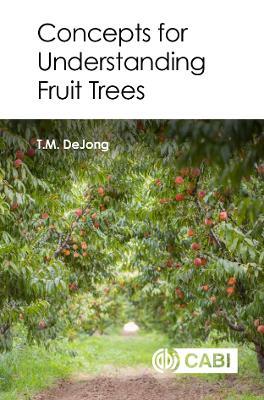
Anyone who observes fruit trees may wonder how or why they behave in specific ways. Some trees grow upright while others have a spreading habit. Some produce many flowers and small immature fruit only to drop most of the fruit later on; others grow more strongly on their sunny side than their shady side. It is common to ascribe such behavior to the tree as a whole and state that trees preferentially "allocate" resources to specific organs. However, this is the wrong approach to understanding tree functioning and behavior. Trees are not in control of what they do. What trees do and how they function is shaped by the individual organs that make up the tree, not by the tree as a whole. The genetic code only indirectly determines the habit, structure and behavior of a tree by defining the behavioral and functional limits of the component organs, tissues and cells. Unlike animals that have a mechanism for collective control of the whole organism - a central nervous system - trees (and plants in general) are more appropriately considered as collections of semi-autonomous organs. These organs are dependent on one another for resources, such as water, energy and nutrients, but control their own destiny. This book presents a clear set of integrative concepts for understanding the overall physiology and growth of temperate deciduous fruit trees. The emphasis is on overarching principles rather than detailed descriptions of tree physiology or differences among the numerous species of fruit trees. Although the focus is on deciduous fruit trees, many aspects apply to evergreen fruit trees and trees that grow naturally in unmanaged situations. Highly relevant for students and researchers in pomology, horticulture and plant sciences, the book is also suitable for practitioners, extension staff, and novice fruit tree growers.
Leggi di più
Leggi di meno
Autore:
Editore:
Collana:
CABI Concise
Anno:
2022
Rilegatura:
Paperback / softback
Pagine:
152 p.
Testo in English
Dimensioni:
234 x 156 mm
Peso:
333 gr.
EAN:
9781800620865

L'articolo è stato aggiunto al carrello
Informazioni e Contatti sulla Sicurezza dei Prodotti
Le schede prodotto sono aggiornate in conformità al Regolamento UE 988/2023. Laddove ci fossero taluni dati non disponibili per ragioni indipendenti da IBS, vi informiamo che stiamo compiendo ogni ragionevole sforzo per inserirli. Vi invitiamo a controllare periodicamente il sito www.ibs.it per eventuali novità e aggiornamenti.
Per le vendite di prodotti da terze parti, ciascun venditore si assume la piena e diretta responsabilità per la commercializzazione del prodotto e per la sua conformità al Regolamento UE 988/2023, nonché alle normative nazionali ed europee vigenti.
Per informazioni sulla sicurezza dei prodotti, contattare productsafetyibs@feltrinelli.it
L’articolo è stato aggiunto alla lista dei desideri
