

L’articolo è stato aggiunto alla lista dei desideri









LIBRO INGLESE
 E-mail
 Facebook
 LinkedIn
 Twitter
 WhatsApp
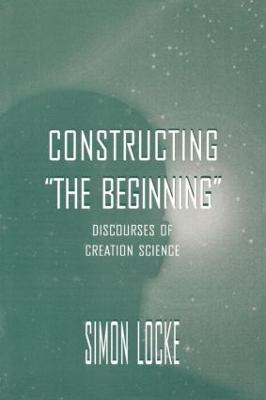
Constructing the Beginning: Discourses of Creation Science
(0)
Cliccando su “Conferma” dichiari che il contenuto da te inserito è conforme alle Condizioni Generali d’Uso del Sito ed alle Linee Guida sui Contenuti Vietati. Puoi rileggere e modificare e successivamente confermare il tuo contenuto. Tra poche ore lo troverai online (in caso contrario verifica la conformità del contenuto alle policy del Sito).
Grazie per la tua recensione!
Tra poche ore la vedrai online (in caso contrario verifica la conformità del testo alle nostre linee guida). Dopo la pubblicazione per te +4 punti 

33,00 €
+330
punti 
Venditore: IBS
Articolo acquistabile con Carta del Docente

Articolo acquistabile con Carta Cultura Giovani e Carta del Merito

Articolo acquistabile con Carta della Cultura

Dati e Statistiche
 Salvato in 0 liste dei desideri
Salvato in 0 liste dei desideri
Constructing the Beginning: Discourses of Creation Science
Disponibilità in 2 settimane
33,00 €
33,00 €
Disponibilità in 2 settimane
Altre offerte vendute e spedite dai nostri venditori

Libri in Inglese
Constructing the Beginning: Discourses of Creation Science
Altri venditori
Prezzo e spese di spedizione
Nuovo
Disponibilità in 2 settimane

Venduto e spedito da
IBS
Spedizione Gratis
33,00 €
Altri venditori
Prezzo e spese di spedizione
Nuovo
Disponibilità in 2 settimane
Venduto e spedito da
IBS
Spedizione Gratis
33,00 €
Altri venditori
Prezzo e spese di spedizione

Tutti i formati ed edizioni

Promo attive (1)
In Constructing the Beginning, Simon Locke offers a new approach to considering the enigma of creation science, using the perspective of discourse analysis. Using the publications of the British Creation Science Movement to perform a detailed analysis of the creationist case, Locke demonstrates that the discourses and rhetorics used by natural and social scientists are also employed by non-scientists. Out of this study, a view of science as a cultural resource develops, questioning the adequacy of perceived sociological wisdom that sees science as the source and emmbodiment of cultural "rationalization." As a case study of the use of science as a discursive resource in everyday life, Constructing the Beginning speaks to scholars of discourse analysis, constructionism, rhetorics, and the public understanding of science. It will also be of great interest to scholars in the areas of cultural studies, sociology of scientific knowledge and of religion, postmodernism, and sociological theory. Additional Copy Creation science is the target of much attack these days from both within and outside of the orthodox scientific community. This book, however, takes a different approach. It is not an attack on creationism; nor is it a defense. The author's interest is not in creationism at all, but rather, it is in the questions of the role and significance of science in modernity or the public understanding of science. Locke's approach to this issue is a discursive and rhetorical one. Creationism is treated as a case study of the argumentative engagement between science and non-science which--in his view--is as central to the commonsense lifeworld of modernity as much as it is to the lives of its intellectuals. An important dimension of the public meaning of science in modernity is its limits and its relations with other modes of thought and belief, which continue to survive as discourses in the wider culture. Creationism is merely one example of this general feature. The book begins with a discussion of the current issues in the public understanding of science in relation to traditional sociological views of the impact of science on modernity. This is examined through rationalization and the contrasting view derived from the sociology of scientific knowledge which points to the likelihood of a much more complex and variable relationship than rationalization proposes. It continues with an argument and detailed analysis that focuses on three main points: *the problem of a competing account of reality (the world), in the form of evolution; *the problem of competing accounts of the Bible (the Word), in the form of different versions of Christianity; and *the realization that both of these problems must be managed together in such a way that creationists' own version(s) of the world and of the Word are compatible--a compatibility achieved through a discursive syncretism. The final chapter brings together the strands of the argument to further develop the implications of the dilemma of science for the public understanding of science through the idea of science as a cultural resource and its possible relation to other such cultural resources within modernity--such as Christianity. It is suggested that much so-called "anti-science" could be made sense of in these terms and proposes further research in this direction.
Leggi di più
Leggi di meno
Autore:
Editore:
Collana:
Routledge Communication Series
Anno:
1998
Rilegatura:
Paperback / softback
Pagine:
248 p.
Testo in English
Dimensioni:
229 x 152 mm
Peso:
460 gr.
EAN:
9780805823479

L'articolo è stato aggiunto al carrello
Informazioni e Contatti sulla Sicurezza dei Prodotti
Le schede prodotto sono aggiornate in conformità al Regolamento UE 988/2023. Laddove ci fossero taluni dati non disponibili per ragioni indipendenti da IBS, vi informiamo che stiamo compiendo ogni ragionevole sforzo per inserirli. Vi invitiamo a controllare periodicamente il sito www.ibs.it per eventuali novità e aggiornamenti.
Per le vendite di prodotti da terze parti, ciascun venditore si assume la piena e diretta responsabilità per la commercializzazione del prodotto e per la sua conformità al Regolamento UE 988/2023, nonché alle normative nazionali ed europee vigenti.
Per informazioni sulla sicurezza dei prodotti, contattare productsafetyibs@feltrinelli.it
L’articolo è stato aggiunto alla lista dei desideri
