

L’articolo è stato aggiunto alla lista dei desideri










EBOOK IN LINGUA STRANIERA
 E-mail
 Facebook
 LinkedIn
 Twitter
 WhatsApp
Contingent
(0)
Cliccando su “Conferma” dichiari che il contenuto da te inserito è conforme alle Condizioni Generali d’Uso del Sito ed alle Linee Guida sui Contenuti Vietati. Puoi rileggere e modificare e successivamente confermare il tuo contenuto. Tra poche ore lo troverai online (in caso contrario verifica la conformità del contenuto alle policy del Sito).
Grazie per la tua recensione!
Tra poche ore la vedrai online (in caso contrario verifica la conformità del testo alle nostre linee guida). Dopo la pubblicazione per te +4 punti 
6,49 €
+60
punti 
Venditore: IBS

Acquista online
Scaricabile subito
Articolo acquistabile con Carta del Docente

Articolo acquistabile con Carta Cultura Giovani e Carta del Merito

Articolo acquistabile con Carta della Cultura

Abbonati a Kobo plus per avere accesso illimitato a questo contenuto

Dati e Statistiche
 Salvato in 0 liste dei desideri
Salvato in 0 liste dei desideri
Contingent
Scaricabile subito
6,49 €
6,49 €
Scaricabile subito
Altre offerte vendute e spedite dai nostri venditori

Ebook in lingua straniera
Contingent
Altri venditori
Prezzo e spese di spedizione
EBOOK INGLESE
EPUB3 con DRMFREE
Scaricabile subito

Venduto e spedito da
IBS
Spedizione Gratis
6,49 €
Altri venditori
Prezzo e spese di spedizione
EBOOK INGLESE
EPUB3 con DRMFREE
Scaricabile subito
Venduto e spedito da
IBS
Spedizione Gratis
6,49 €
Altri venditori
Prezzo e spese di spedizione

Tutti i formati ed edizioni
Promo attive (0)
Contingent
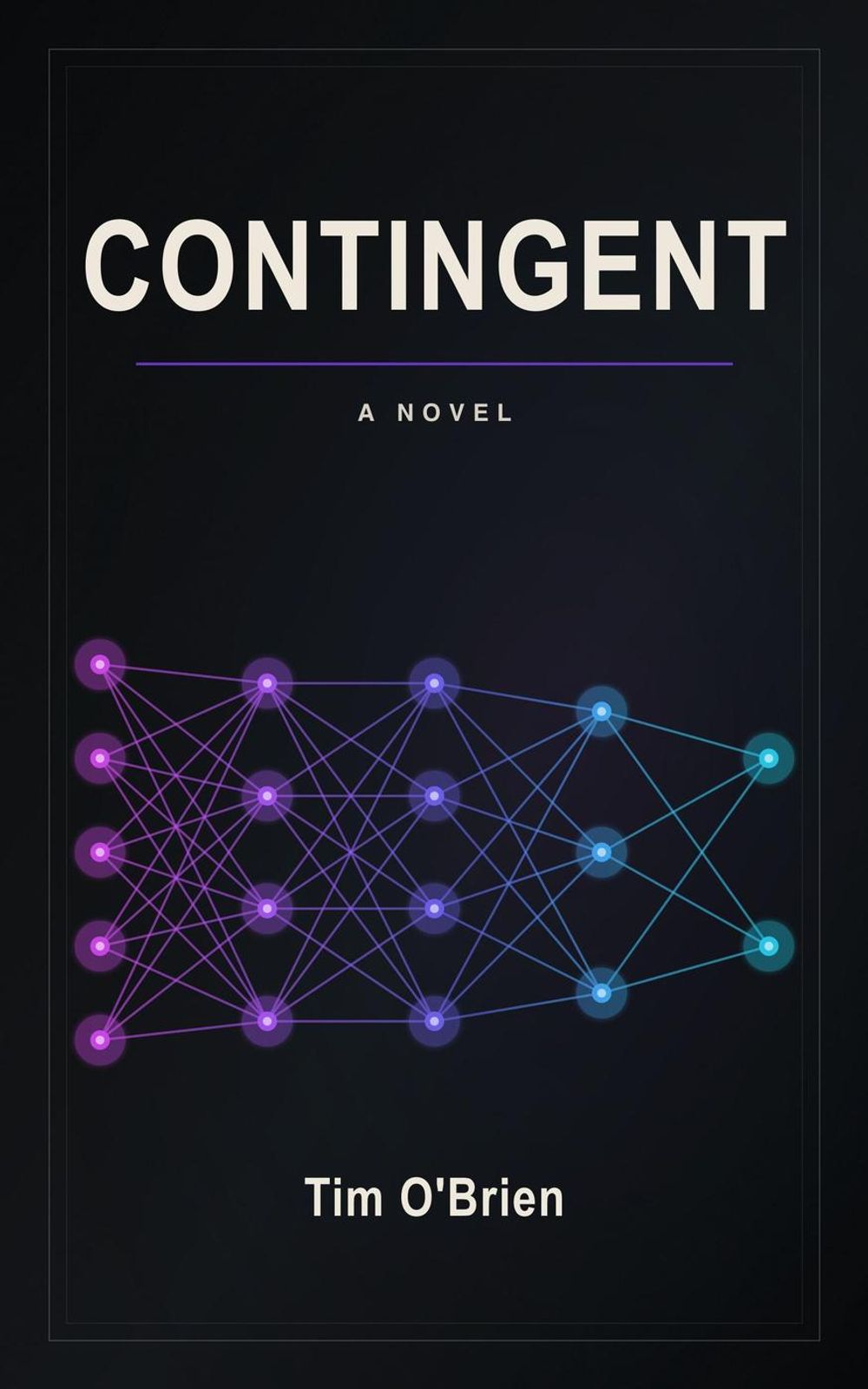
The models still work. What's scarce is permission to turn them on. In 2029, the law is new: no AI decision that touches human lives without a human signature. The signature is what makes AI legal, insurable, and financeable. The law never says what happens to the human who signs. Rob Coleman wrote the post-incident review of the Calloway Incident—sabotage that ran unwatched for weeks inside a pharmaceutical logistics system and killed 2,130 people. His review became the backbone of the new rules. Now he is a consultant, hired to certify Northstar, the country's leading maker of legally deployable AI, while a billionaire's acquisition waits on his name and hospitals wait on a finished routing system. Then he opens the audit log. It says a certified orchestrator named Nadia Cho approved a refrigerated-vaccine route. Nadia says she never saw the screen. Her credential is real. The approval is not. The institution would like her to sign a statement saying she made the decision. That would be simplest for everyone. Rob's signature can protect Nadia, preserve the standard he is certifying, or turn on the systems the clinics are waiting for. It cannot do all three. Contingent is Book II of The Condition Set. Redundant asked who gets cut when automation reshapes work. Contingent asks who gets used when regulation demands a human name—without funding the protection of the person who provides it. This is not a novel about rogue AI. The suspense is institutional: audit chains, certification records, a labor table, an enforcement interview, and a tired orchestrator realizing her name is already on the file. For readers of The Warehouse, Severance, Burn-In, and The Ministry for the Future. Around that human fact, the pressure tightens from every direction. Jack needs emergency hospital deployment before patients with names attached to a particular Tuesday run out of time. Lei needs Rob's signature to make permission investable. Mira, a labor negotiator, watches language she once helped write turned against the workers it was meant to protect. A regulator wields new enforcement teeth without the safeguards that would make testimony safe. An investor accepts boundaries only because insurance, tax, and procurement finally moved in the same direction. Rob's signature can preserve Nadia's denial, preserve the binding force of the standard he is certifying, or accelerate the deployment the public health window demands. It cannot do all three. The compromise he writes still costs one named facility a specific window of care. Contingent is the second book in The Condition Set, a trilogy of near-future novels about work, capital, and artificial intelligence. Redundant asked who gets cut when automation reshapes the workforce. Contingent asks who gets used when regulation requires a human name, a credential, and a signature—without funding the protection of the person who provides them. The new rules were necessary. They didn't remove the moral risk. They moved it into a document someone has to sign. This is not a novel about rogue AI or emergent consciousness. There are no chases or secret-agent theatrics. The suspense is institutional: audit logs, certification records, procurement language, labor obligations, regulatory notices, and the moment a tired orchestrator in scrubs realizes her name is already on the file. For readers of The Warehouse, Severance, The Circle, Burn-In, Infomocracy, and The Ministry for the Future—books that make institutions, paperwork, and policy the engine of plot—Contingent is a thriller about the market value of lawful permission and the human cost.
Leggi di più
Leggi di meno
Autore:
Anno edizione:
2026
Editore:
Formato:
Lingua:
Inglese
Compatibilità:
Tutti i dispositivi (eccetto Kindle) Scopri di più
Layout:
Reflowable
EAN:
9798995259763

L'articolo è stato aggiunto al carrello
Formato:
Gli eBook venduti da IBS.it sono in formato ePub e possono essere protetti da Adobe DRM. In caso di download di un file protetto da DRM si otterrà un file in formato .acs, (Adobe Content Server Message), che dovrà essere aperto tramite Adobe Digital Editions e autorizzato tramite un account Adobe, prima di poter essere letto su pc o trasferito su dispositivi compatibili.
Cloud:
Gli eBook venduti da IBS.it sono sincronizzati automaticamente su tutti i client di lettura Kobo successivamente all’acquisto. Grazie al Cloud Kobo i progressi di lettura, le note, le evidenziazioni vengono salvati e sincronizzati automaticamente su tutti i dispositivi e le APP di lettura Kobo utilizzati per la lettura.
Clicca qui per sapere come scaricare gli ebook utilizzando un pc con sistema operativo Windows
L’articolo è stato aggiunto alla lista dei desideri
