

L’articolo è stato aggiunto alla lista dei desideri








LIBRO INGLESE
 E-mail
 Facebook
 LinkedIn
 Twitter
 WhatsApp
Cosmopolis: Imagining Community in Late Classical Athens and the Early Roman Empire
(0)
Cliccando su “Conferma” dichiari che il contenuto da te inserito è conforme alle Condizioni Generali d’Uso del Sito ed alle Linee Guida sui Contenuti Vietati. Puoi rileggere e modificare e successivamente confermare il tuo contenuto. Tra poche ore lo troverai online (in caso contrario verifica la conformità del contenuto alle policy del Sito).
Grazie per la tua recensione!
Tra poche ore la vedrai online (in caso contrario verifica la conformità del testo alle nostre linee guida). Dopo la pubblicazione per te +4 punti 
221,40 €
+2210
punti 
Venditore: IBS
Articolo acquistabile con Carta del Docente

Articolo acquistabile con Carta Cultura Giovani e Carta del Merito

Articolo acquistabile con Carta della Cultura

Paga con Klarna in 3 rate senza interessi per ordini superiori a 39 €

Dati e Statistiche
 Salvato in 0 liste dei desideri
Salvato in 0 liste dei desideri
Cosmopolis: Imagining Community in Late Classical Athens and the Early Roman Empire
Disponibilità in 2 settimane
221,40 €
221,40 €
Disponibilità in 2 settimane
Altre offerte vendute e spedite dai nostri venditori
Libri in Inglese
Cosmopolis: Imagining Community in Late Classical Athens and the Early Roman Empire
Altri venditori
Prezzo e spese di spedizione
LIBRO INGLESE
Disponibilità in 2 settimane

Venduto e spedito da
IBS
Spedizione Gratis
221,40 €
Altri venditori
Prezzo e spese di spedizione
LIBRO INGLESE
Disponibilità in 2 settimane
Venduto e spedito da
IBS
Spedizione Gratis
221,40 €
Altri venditori
Prezzo e spese di spedizione

Tutti i formati ed edizioni
Promo attive (0)
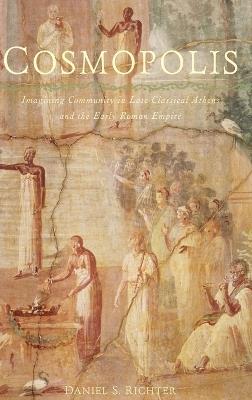
This is a book about the ways in which various intellectuals in the post-classical Mediterranean imagined the human community as a unified, homogenous whole composed of a diversity of parts. More specifically, it explores how authors of the second century CE adopted and adapted a particular ethnic and cultural discourse that had been elaborated by late fifth- and fourth-century BCE Athenian intellectuals. At the center of this book is a series of contests over the meaning of lineage and descent and the extent to which the political community is or ought to be coterminous with what we might call a biologically homogenous collectivity. The study suggests that early imperial intellectuals found in late classical and early Hellenistic thought a way of accommodating the claims of both ethnicity and culture in a single discourse of communal identity. The idea of the unity of humankind evolved in the fifth and fourth centuries as a response to and an engine for the creation of a rapidly shrinking and increasingly integrated oikoumenê . The increased presence of outsiders in the classical city-state as well as the creation of sources of authority that lay outside of the polis destabilized the idea of the polis as a kin group (natio). Beginning in the early fourth century and gaining great momentum in the wake of Alexander's conquest of the East, traditional dichotomies such as Greek and barbarian lost much of their explanatory power. In the second-century CE, by contrast, the empire of the Romans imposed a political space that was imagined by many to be coterminous with the oikoumenê itself. One of the central claims of this study is that the forms of cosmopolitan and ecumenical thought that emerged in both moments did so as responses to the idea that the natio - the kin group - is (or ought to be) the basis for any human collectivity.
Leggi di più
Leggi di meno
Autore:
Editore:
Anno:
2011
Rilegatura:
Hardback
Pagine:
304 p.
Testo in English
Dimensioni:
163 x 236 mm
Peso:
567 gr.
EAN:
9780199772681

L'articolo è stato aggiunto al carrello
Informazioni e Contatti sulla Sicurezza dei Prodotti
Le schede prodotto sono aggiornate in conformità al Regolamento UE 988/2023. Laddove ci fossero taluni dati non disponibili per ragioni indipendenti da IBS, vi informiamo che stiamo compiendo ogni ragionevole sforzo per inserirli. Vi invitiamo a controllare periodicamente il sito www.ibs.it per eventuali novità e aggiornamenti.
Per le vendite di prodotti da terze parti, ciascun venditore si assume la piena e diretta responsabilità per la commercializzazione del prodotto e per la sua conformità al Regolamento UE 988/2023, nonché alle normative nazionali ed europee vigenti.
Per informazioni sulla sicurezza dei prodotti, contattare productsafetyibs@feltrinelli.it
L’articolo è stato aggiunto alla lista dei desideri
