

L’articolo è stato aggiunto alla lista dei desideri








LIBRO INGLESE
 E-mail
 Facebook
 LinkedIn
 Twitter
 WhatsApp
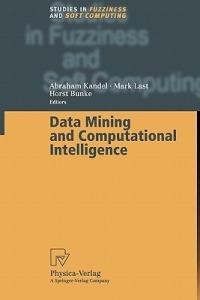
Data Mining and Computational Intelligence
(0)
Cliccando su “Conferma” dichiari che il contenuto da te inserito è conforme alle Condizioni Generali d’Uso del Sito ed alle Linee Guida sui Contenuti Vietati. Puoi rileggere e modificare e successivamente confermare il tuo contenuto. Tra poche ore lo troverai online (in caso contrario verifica la conformità del contenuto alle policy del Sito).
Grazie per la tua recensione!
Tra poche ore la vedrai online (in caso contrario verifica la conformità del testo alle nostre linee guida). Dopo la pubblicazione per te +4 punti 
211,40 €
+2110
punti 
Venditore: IBS
Articolo acquistabile con Carta del Docente

Articolo acquistabile con Carta Cultura Giovani e Carta del Merito

Articolo acquistabile con Carta della Cultura

Paga con Klarna in 3 rate senza interessi per ordini superiori a 39 €

Dati e Statistiche
 Salvato in 0 liste dei desideri
Salvato in 0 liste dei desideri
Data Mining and Computational Intelligence
Attualmente non disponibile
211,40 €
211,40 €
Attualmente non disponibile
Altre offerte vendute e spedite dai nostri venditori
Libri in Inglese
Data Mining and Computational Intelligence
Altri venditori
Prezzo e spese di spedizione
LIBRO INGLESE
Attualmente non disponibile

Venduto e spedito da
IBS
Spedizione Gratis
211,40 €
Altri venditori
Prezzo e spese di spedizione
LIBRO INGLESE
Attualmente non disponibile
Venduto e spedito da
IBS
Spedizione Gratis
211,40 €
Altri venditori
Prezzo e spese di spedizione

Tutti i formati ed edizioni
Promo attive (0)
Many business decisions are made in the absence of complete information about the decision consequences. Credit lines are approved without knowing the future behavior of the customers; stocks are bought and sold without knowing their future prices; parts are manufactured without knowing all the factors affecting their final quality; etc. All these cases can be categorized as decision making under uncertainty. Decision makers (human or automated) can handle uncertainty in different ways. Deferring the decision due to the lack of sufficient information may not be an option, especially in real-time systems. Sometimes expert rules, based on experience and intuition, are used. Decision tree is a popular form of representing a set of mutually exclusive rules. An example of a two-branch tree is: if a credit applicant is a student, approve; otherwise, decline. Expert rules are usually based on some hidden assumptions, which are trying to predict the decision consequences. A hidden assumption of the last rule set is: a student will be a profitable customer. Since the direct predictions of the future may not be accurate, a decision maker can consider using some information from the past. The idea is to utilize the potential similarity between the patterns of the past (e.g., "most students used to be profitable") and the patterns of the future (e.g., "students will be profitable").
Leggi di più
Leggi di meno
Curatore:
Collana:
Studies in Fuzziness and Soft Computing
Anno:
2010
Rilegatura:
Paperback / softback
Pagine:
356 p.
Testo in English
Dimensioni:
279 x 210 mm
EAN:
9783790824841

L'articolo è stato aggiunto al carrello
Informazioni e Contatti sulla Sicurezza dei Prodotti
Le schede prodotto sono aggiornate in conformità al Regolamento UE 988/2023. Laddove ci fossero taluni dati non disponibili per ragioni indipendenti da IBS, vi informiamo che stiamo compiendo ogni ragionevole sforzo per inserirli. Vi invitiamo a controllare periodicamente il sito www.ibs.it per eventuali novità e aggiornamenti.
Per le vendite di prodotti da terze parti, ciascun venditore si assume la piena e diretta responsabilità per la commercializzazione del prodotto e per la sua conformità al Regolamento UE 988/2023, nonché alle normative nazionali ed europee vigenti.
Per informazioni sulla sicurezza dei prodotti, contattare productsafetyibs@feltrinelli.it
L’articolo è stato aggiunto alla lista dei desideri
