

L’articolo è stato aggiunto alla lista dei desideri








LIBRO INGLESE
 E-mail
 Facebook
 LinkedIn
 Twitter
 WhatsApp
Desert Development: Man and Technology in Sparselands
(0)
Cliccando su “Conferma” dichiari che il contenuto da te inserito è conforme alle Condizioni Generali d’Uso del Sito ed alle Linee Guida sui Contenuti Vietati. Puoi rileggere e modificare e successivamente confermare il tuo contenuto. Tra poche ore lo troverai online (in caso contrario verifica la conformità del contenuto alle policy del Sito).
Grazie per la tua recensione!
Tra poche ore la vedrai online (in caso contrario verifica la conformità del testo alle nostre linee guida). Dopo la pubblicazione per te +4 punti 
134,20 €
+1340
punti 
Venditore: IBS
Articolo acquistabile con Carta del Docente

Articolo acquistabile con Carta Cultura Giovani e Carta del Merito

Articolo acquistabile con Carta della Cultura

Paga con Klarna in 3 rate senza interessi per ordini superiori a 39 €

Dati e Statistiche
 Salvato in 0 liste dei desideri
Salvato in 0 liste dei desideri
Desert Development: Man and Technology in Sparselands
Disponibilità in 2 settimane
134,20 €
134,20 €
Disponibilità in 2 settimane
Altre offerte vendute e spedite dai nostri venditori
Libri in Inglese
Desert Development: Man and Technology in Sparselands
Altri venditori
Prezzo e spese di spedizione
LIBRO INGLESE
Disponibilità in 2 settimane

Venduto e spedito da
IBS
Spedizione Gratis
134,20 €
Altri venditori
Prezzo e spese di spedizione
LIBRO INGLESE
Disponibilità in 2 settimane
Venduto e spedito da
IBS
Spedizione Gratis
134,20 €
Altri venditori
Prezzo e spese di spedizione

Tutti i formati ed edizioni
Promo attive (0)
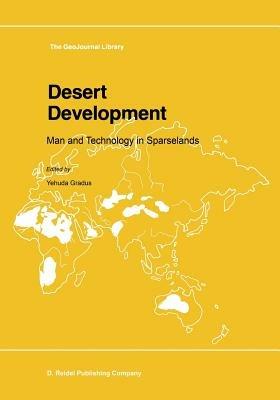
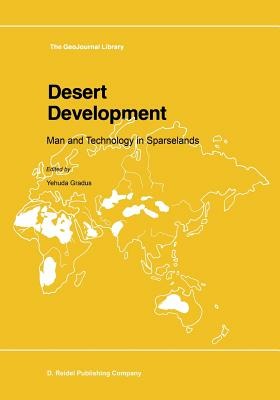
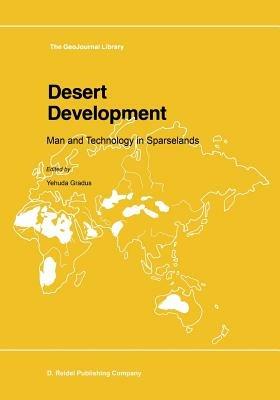
The fact that approximately one-third of the world's land mass is arid desert may be congenial for the camel and the cactus, but not for people. Nevertheless, well over half a billion people, or 15% of the world's population live in arid desert areas. If the world's population were distributed evenly over the land surface, we would expect to find about 30% of the population inhabiting arid desert areas. Does the fact that 'only' 15% of the world's population live in an arid desert environment reflect the harshness of the environment? Or is it a testimony to the adaptability and ingenuity of mankind? Do we view the glass as half-full? Or half-empty? The contributors to Desert Development: Man and Technology in Sparselands adopt the position that the cup is half-full and, in fact, could be filled much more. Indeed, many arid desert zones do thrive with life, and given appropriate technological develop ment, such areas could support even greater popUlations. While the dire Malthusian prediction that rapid world population growth exceeds the carrying capacity of existent resource systems has gained popularity (typified by the 1972 Club of Rome book, Limits to Growth), there is a growing body of serious work which rejects such pessimistic 'depletion' models, in favor of models which are mildly optimistic.
Leggi di più
Leggi di meno
Curatore:
Editore:
Collana:
GeoJournal Library
Anno:
2012
Rilegatura:
Paperback / softback
Pagine:
340 p.
Testo in English
Dimensioni:
254 x 178 mm
EAN:
9789401088824

L'articolo è stato aggiunto al carrello
Informazioni e Contatti sulla Sicurezza dei Prodotti
Le schede prodotto sono aggiornate in conformità al Regolamento UE 988/2023. Laddove ci fossero taluni dati non disponibili per ragioni indipendenti da IBS, vi informiamo che stiamo compiendo ogni ragionevole sforzo per inserirli. Vi invitiamo a controllare periodicamente il sito www.ibs.it per eventuali novità e aggiornamenti.
Per le vendite di prodotti da terze parti, ciascun venditore si assume la piena e diretta responsabilità per la commercializzazione del prodotto e per la sua conformità al Regolamento UE 988/2023, nonché alle normative nazionali ed europee vigenti.
Per informazioni sulla sicurezza dei prodotti, contattare productsafetyibs@feltrinelli.it
L’articolo è stato aggiunto alla lista dei desideri
