

L’articolo è stato aggiunto alla lista dei desideri









EBOOK IN LINGUA STRANIERA
 E-mail
 Facebook
 LinkedIn
 Twitter
 WhatsApp
Development, Democracy, and Dependency
(0)
Cliccando su “Conferma” dichiari che il contenuto da te inserito è conforme alle Condizioni Generali d’Uso del Sito ed alle Linee Guida sui Contenuti Vietati. Puoi rileggere e modificare e successivamente confermare il tuo contenuto. Tra poche ore lo troverai online (in caso contrario verifica la conformità del contenuto alle policy del Sito).
Grazie per la tua recensione!
Tra poche ore la vedrai online (in caso contrario verifica la conformità del testo alle nostre linee guida). Dopo la pubblicazione per te +4 punti 
2,99 €
+30
punti 
Venditore: IBS

Acquista online
Scaricabile subito
Articolo acquistabile con Carta del Docente

Articolo acquistabile con Carta Cultura Giovani e Carta del Merito

Articolo acquistabile con Carta della Cultura

Abbonati a Kobo plus per avere accesso illimitato a questo contenuto

Dati e Statistiche
 Salvato in 0 liste dei desideri
Salvato in 0 liste dei desideri
Development, Democracy, and Dependency
Scaricabile subito
2,99 €
2,99 €
Scaricabile subito
Altre offerte vendute e spedite dai nostri venditori
Ebook in lingua straniera
Development, Democracy, and Dependency
Altri venditori
Prezzo e spese di spedizione
EBOOK INGLESE
EPUB2 con DRMFREE
Scaricabile subito

Venduto e spedito da
IBS
Spedizione Gratis
2,99 €
Altri venditori
Prezzo e spese di spedizione
EBOOK INGLESE
EPUB2 con DRMFREE
Scaricabile subito
Venduto e spedito da
IBS
Spedizione Gratis
2,99 €
Altri venditori
Prezzo e spese di spedizione

Tutti i formati ed edizioni
Promo attive (0)
Development, Democracy, and Dependency
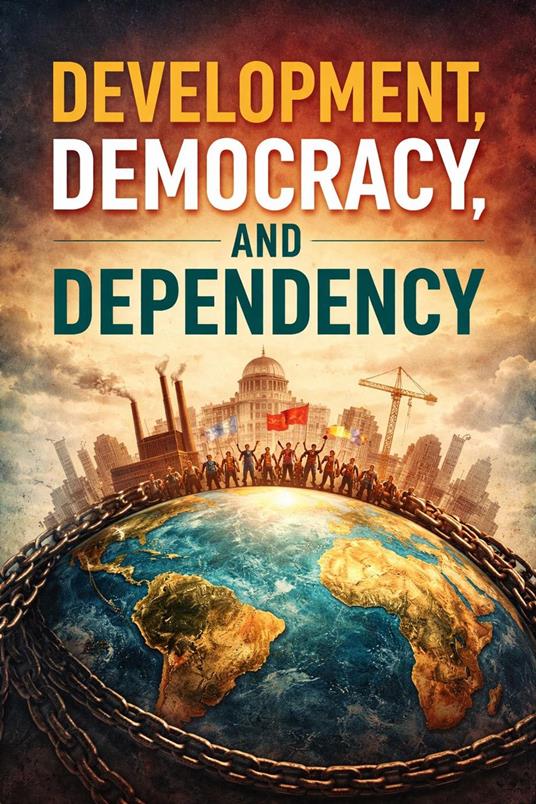
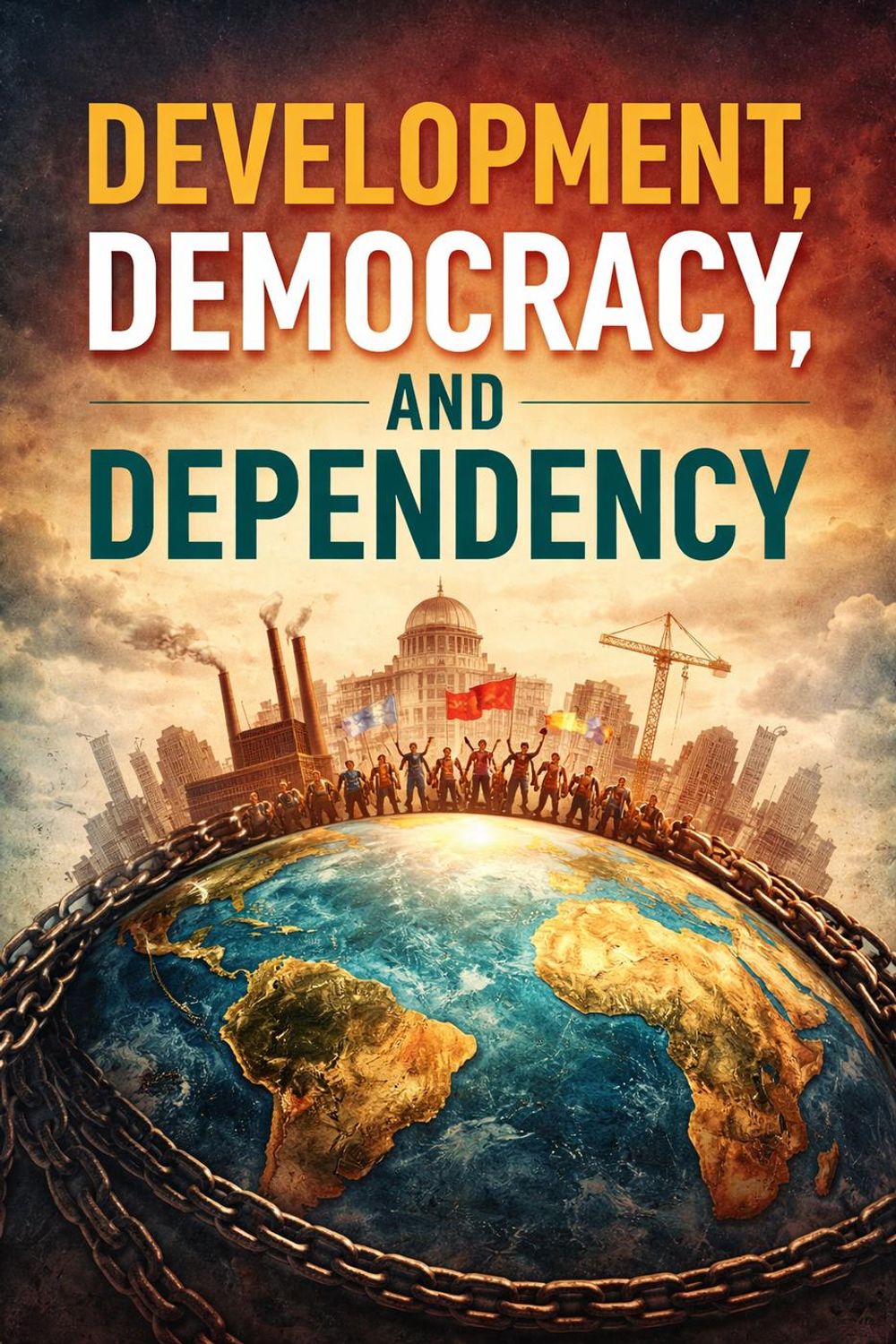
Development, Democracy, and Dependency is a sweeping and intellectually rigorous exploration of one of the most enduring questions in modern political economy: why do some nations achieve prosperity, institutional stability, and broad social progress, while others remain trapped in poverty, inequality, fragile democracy, and structural dependence? Written in a rich, analytical, and bookish style, this work examines the tangled relationship between economic transformation, political freedom, and global hierarchy across the modern world. At its heart, the book argues that development cannot be understood as a purely economic phenomenon. Growth rates, industrial output, trade expansion, and rising income matter, but they do not by themselves define progress. True development must also be measured by the expansion of human dignity: access to education, healthcare, land, work, political voice, and meaningful citizenship. In the same way, democracy is treated not merely as a system of elections, but as a broader struggle over accountability, participation, rights, and the distribution of power. Between these two stands dependency—the condition in which nations formally possess sovereignty yet remain constrained by unequal trade, debt, technological reliance, foreign capital, and inherited colonial structures. Structured across sixteen chapters, the book moves from theory to history and from institutions to lived social realities. It begins by defining development, democracy, and dependency before tracing the colonial legacies that distorted postcolonial societies and shaped their unequal insertion into the global economy. It then examines the role of Bretton Woods institutions, global finance, trade regimes, and multinational corporations in sustaining structural asymmetries between rich and poor nations. From there, the argument turns inward, exploring the domestic politics of development through class formation, agrarian inequality, industrialization, labor movements, social welfare, and the tensions between state-led and market-led strategies. The book also confronts one of the most debated issues in political thought: whether democracy promotes development or whether authoritarian systems are better suited to economic growth. Rather than offering simplistic answers, it presents a nuanced comparative analysis, drawing on East Asia, Latin America, Africa, and South Asia to show that development and democracy have followed diverse, uneven, and often contradictory paths. Some societies achieved rapid industrial growth under authoritarian rule; others sustained democratic life despite poverty and institutional weakness; still others remained caught between external dependence and internal oligarchic domination. A major strength of the book lies in its insistence that globalization, debt crises, and neoliberal restructuring cannot be treated as abstract economic processes. They are shown instead as deeply political forces that reshape sovereignty, weaken democratic choice, and often intensify the burden carried by workers, peasants, and the poor. Yet the book is not fatalistic. In its later chapters, it turns toward the future, considering whether new forms of regional cooperation, technological sovereignty, green development, and democratic renewal might offer pathways beyond dependency. Ambitious in scope and serious in moral purpose, Development, Democracy, and Dependency is both a work of political economy and a reflection on freedom in the modern world. It will appeal to readers of development studies, political science, history, international relations, and global justice, while also speaking to anyone concerned with the unfinished struggle to reconcile prosperity, equality, sovereignty, and democracy in an unequal world.
Leggi di più
Leggi di meno
Autore:
Anno edizione:
2026
Editore:
Formato:
Lingua:
Inglese
Compatibilità:
Tutti i dispositivi (eccetto Kindle) Scopri di più
Layout:
Reflowable
EAN:
9798224101818
L'articolo è stato aggiunto al carrello
Formato:
Gli eBook venduti da IBS.it sono in formato ePub e possono essere protetti da Adobe DRM. In caso di download di un file protetto da DRM si otterrà un file in formato .acs, (Adobe Content Server Message), che dovrà essere aperto tramite Adobe Digital Editions e autorizzato tramite un account Adobe, prima di poter essere letto su pc o trasferito su dispositivi compatibili.
Cloud:
Gli eBook venduti da IBS.it sono sincronizzati automaticamente su tutti i client di lettura Kobo successivamente all’acquisto. Grazie al Cloud Kobo i progressi di lettura, le note, le evidenziazioni vengono salvati e sincronizzati automaticamente su tutti i dispositivi e le APP di lettura Kobo utilizzati per la lettura.
Clicca qui per sapere come scaricare gli ebook utilizzando un pc con sistema operativo Windows
L’articolo è stato aggiunto alla lista dei desideri
