

L’articolo è stato aggiunto alla lista dei desideri








![[...] Dialogus. Qui inscribitur Timotheus, sive de Nilo. Colophon: Venetijs, Ioan. Gryphius excudebat. Ad instantiam Vincentij Valgrisij, MDLII - copertina](https://www.ibs.it/images/2570270147456_0_0_536_0_75.jpg)
LIBRO VINTAGE
 E-mail
 Facebook
 LinkedIn
 Twitter
 WhatsApp
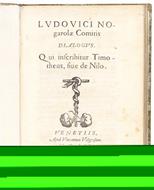
[...] Dialogus. Qui inscribitur Timotheus, sive de Nilo. Colophon: Venetijs, Ioan. Gryphius excudebat. Ad instantiam Vincentij Valgrisij, MDLII
(0)
Cliccando su “Conferma” dichiari che il contenuto da te inserito è conforme alle Condizioni Generali d’Uso del Sito ed alle Linee Guida sui Contenuti Vietati. Puoi rileggere e modificare e successivamente confermare il tuo contenuto. Tra poche ore lo troverai online (in caso contrario verifica la conformità del contenuto alle policy del Sito).
Grazie per la tua recensione!
Tra poche ore la vedrai online (in caso contrario verifica la conformità del testo alle nostre linee guida). Dopo la pubblicazione per te +4 punti 
Dati e Statistiche
 Salvato in 0 liste dei desideri
Salvato in 0 liste dei desideri
[...] Dialogus. Qui inscribitur Timotheus, sive de Nilo. Colophon: Venetijs, Ioan. Gryphius excudebat. Ad instantiam Vincentij Valgrisij, MDLII
Disponibilità immediata
1.380,00 €
1.380,00 €
Disponibilità immediata
Altre offerte vendute e spedite dai nostri venditori
Libri Vintage
[...] Dialogus. Qui inscribitur Timotheus, sive de Nilo. Colophon: Venetijs, Ioan. Gryphius excudebat. Ad instantiam Vincentij Valgrisij, MDLII
Altri venditori
Prezzo e spese di spedizione

LIBRO VINTAGE
Condizione accettabile
Disponibilità immediata

Venduto e spedito da
Libreria Alberto Govi
 5/
5
(5 opinioni)
5/
5
(5 opinioni)
Spedizione 5,00 €
1.380,00 €
Altri venditori
Prezzo e spese di spedizione
Altri venditori
Prezzo e spese di spedizione
LIBRO VINTAGE
Condizione accettabile
Disponibilità immediata
Venduto e spedito da
Libreria Alberto Govi
5/
5
(5 opinioni)
Spedizione 5,00 €
1.380,00 €

Tutti i formati ed edizioni
![[...] Dialogus. Qui inscribitur Timotheus, sive de Nilo. Colophon: Venetijs, Ioan. Gryphius excudebat. Ad instantiam Vincentij Valgrisij, MDLII - copertina](https://www.ibs.it/images/2570270147456_0_0_424_0_75.jpg)
Promo attive (0)
4to (210x145 mm). 39, [3] leaves. Collation: a-k4 [χ]². Colophon at l. k3v. Printer's device on title page and l. k4v. Errata on l. [χ]1r. The last leaf is a blank. Roman, Greek and italic types. Woodcut historiated initials. Modern quarter vellum. A very good, wide margined copy.
Rare first edition (the work was reprinted in Milan in 1626), dedicated to Cardinal Ercole Gonzaga, of this work written in the form of a dialogue between the author himself, the celebrated Verona physician Girolamo Fracastoro (1483-1553) and two other characters called Timotheus and Adamus (Adamo Righi, also known as Adamo Fumano, 1508-1587), who discuss the origin of the sources of the Nile and its yearly flooding. The four engage in a discussion on the problem, much debated at the time, of the flooding of the Nile, which was previously discussed between Fracastoro and Giovanni Battista Ramusio (1485-1557), who in the first volume of Delle Navigationi (1550) had included a detailed description of Egypt written shortly before by the Arab-Andalusian al-Hasan al-Wazzan, better known as the “African Lion”, as well as a speech of his own addressed to Fracastoro on the flooding of the Nile, followed by a response from the latter on the same topic.
Nogarola drew on the classical and modern sources that had dealt with the Nile and believed that the river originated in the snow-covered Mountains of the Moon in Ethiopia. In an attempt to explain the annual flooding, he provides an elaborate theory about the climate and geography of Ethiopia, drawing on classical authors such as Ptolemy as well as on the observations of recent Portuguese voyagers and the geographical compilation of Ramusio.
This edition is also notable for “its remarkable calligraphic quality, and it is also interesting because it employs italic capitals, and shows how far type-founders had departed from the Aldine character” (D.B. Updike, Printing Types, Cambridge, 1922, I, p. 162).
Lodovico Nogarola, a man of letters, a neo-Platonic philosopher and a translator, was the scion of a noble family of Verona, to which the famous scholar Isotta Nogarola (c. 1418–1466) also belonged. He studied in Padua and Bologna, and after 1525 he was based in Mantua at the court of Ercole Gonzaga. He corresponded with the cardinals Bernardo Clesio and Gasparo Contarini, as well as Gian Francesco Pico della Mirandola. In 1543, he had the opportunity to present his theory of the tides to Pope Paul III. Thanks to the intercession of Cardinal Madruzzo, he was permitted to deliver an oration at the Council of Trent in 1545, despite being a layman. He was also the author of Disputatio super Reginae Britannorum divortio (1532) and Oratio in adventu Petri Lippomani episcopi Veronensis (1544) (cf. H. Jedin, Un laico al Concilio di Trento, il Conte Lodovico Nogarola, in: “Il Concilio di Trento”, 1, 1942-43, pp. 25-33; see also P. Pellegrini, Nogarola, Ludovico, in: “Dizionario Biografico degli Italiani”, vol. 78, Rome, 2013, sv.).
Edit 16, CNCE36168; USTC, 844871; Mortimer, 321.
Leggi di più
Leggi di meno
Venditore:

Libreria Alberto Govi
Vedi tutti i prodotti
Informazioni:
<p>4to (210x145 mm). 39, [3] leaves. Collation: a-k<sup>4</sup> [&chi;]&sup2;. <em>Colophon</em> at l. k3v. Printer's device on title page and l. k4v. Errata on l. [&chi;]1r. The last leaf is a blank. Roman, Greek and italic types. Woodcut historiated initials. Modern quarter vellum. A very good, wide margined copy.</p> <p>Rare first edition (the work was reprinted in Milan in 1626), dedicated to Cardinal Ercole Gonzaga, of this work written in the form of a dialogue between the author himself, the celebrated Verona physician Girolamo Fracastoro (1483-1553) and two other characters called Timotheus and Adamus (Adamo Righi, also known as Adamo Fumano, 1508-1587), who discuss the origin of the sources of the Nile and its yearly flooding. The four engage in a discussion on the problem, much debated at the time, of the flooding of the Nile, which was previously discussed between Fracastoro and Giovanni Battista Ramusio (1485-1557), who in the first volume of <em>Delle Navigationi</em> (1550) had included a detailed description of Egypt written shortly before by the Arab-Andalusian al-Hasan al-Wazzan, better known as the &ldquo;African Lion&rdquo;, as well as a speech of his own addressed to Fracastoro on the flooding of the Nile, followed by a response from the latter on the same topic.</p> <p>Nogarola drew on the classical and modern sources that had dealt with the Nile and believed that the river originated in the snow-covered Mountains of the Moon in Ethiopia. In an attempt to explain the annual flooding, he provides an elaborate theory about the climate and geography of Ethiopia, drawing on classical authors such as Ptolemy as well as on the observations of recent Portuguese voyagers and the geographical compilation of Ramusio.</p> <p>This edition is also notable for &ldquo;its remarkable calligraphic quality, and it is also interesting because it employs italic cap
Immagini:
![[...] Dialogus. Qui inscribitur Timotheus, sive de Nilo. Colophon: Venetijs, Ioan. Gryphius excudebat. Ad instantiam Vincentij Valgrisij, MDLII](https://www.ibs.it/images/2570270147456_981689697_1_0_0_75.jpg)
![[...] Dialogus. Qui inscribitur Timotheus, sive de Nilo. Colophon: Venetijs, Ioan. Gryphius excudebat. Ad instantiam Vincentij Valgrisij, MDLII](https://www.ibs.it/images/2570270147456_981689697_2_0_0_75.jpg)
- Prodotto usato
- Condizioni: Usato - Condizione accettabile
EAN:
2570270147456

L'articolo è stato aggiunto al carrello
Informazioni e Contatti sulla Sicurezza dei Prodotti
Le schede prodotto sono aggiornate in conformità al Regolamento UE 988/2023. Laddove ci fossero taluni dati non disponibili per ragioni indipendenti da IBS, vi informiamo che stiamo compiendo ogni ragionevole sforzo per inserirli. Vi invitiamo a controllare periodicamente il sito www.ibs.it per eventuali novità e aggiornamenti.
Per le vendite di prodotti da terze parti, ciascun venditore si assume la piena e diretta responsabilità per la commercializzazione del prodotto e per la sua conformità al Regolamento UE 988/2023, nonché alle normative nazionali ed europee vigenti.
Per informazioni sulla sicurezza dei prodotti, contattare productsafetyibs@feltrinelli.it
L’articolo è stato aggiunto alla lista dei desideri
