

L’articolo è stato aggiunto alla lista dei desideri









LIBRO INGLESE
 E-mail
 Facebook
 LinkedIn
 Twitter
 WhatsApp
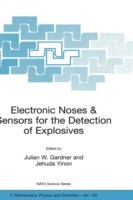
Electronic Noses & Sensors for the Detection of Explosives
(0)
Cliccando su “Conferma” dichiari che il contenuto da te inserito è conforme alle Condizioni Generali d’Uso del Sito ed alle Linee Guida sui Contenuti Vietati. Puoi rileggere e modificare e successivamente confermare il tuo contenuto. Tra poche ore lo troverai online (in caso contrario verifica la conformità del contenuto alle policy del Sito).
Grazie per la tua recensione!
Tra poche ore la vedrai online (in caso contrario verifica la conformità del testo alle nostre linee guida). Dopo la pubblicazione per te +4 punti 
412,00 €
+4120
punti 
Venditore: IBS
Articolo acquistabile con Carta del Docente

Articolo acquistabile con Carta Cultura Giovani e Carta del Merito

Articolo acquistabile con Carta della Cultura

Paga con Klarna in 3 rate senza interessi per ordini superiori a 39 €

Dati e Statistiche
 Salvato in 0 liste dei desideri
Salvato in 0 liste dei desideri
Electronic Noses & Sensors for the Detection of Explosives
Disponibilità in 2 settimane
412,00 €
412,00 €
Disponibilità in 2 settimane
Altre offerte vendute e spedite dai nostri venditori

Libri in Inglese
Electronic Noses & Sensors for the Detection of Explosives
Altri venditori
Prezzo e spese di spedizione
LIBRO INGLESE
Disponibilità in 2 settimane

Venduto e spedito da
IBS
Spedizione Gratis
412,00 €
Altri venditori
Prezzo e spese di spedizione
LIBRO INGLESE
Disponibilità in 2 settimane
Venduto e spedito da
IBS
Spedizione Gratis
412,00 €
Altri venditori
Prezzo e spese di spedizione

Tutti i formati ed edizioni

Promo attive (0)
This book examines both the potential application of electronic nose technology, and the current state of development of chemical sensors for the detection of vapours from explosives, such as those used in landmines. The two fields have developed, somewhat in parallel, over the past decade and so one of the purposes of this workshop, on which the book is based, was to bring together scientists from the two fields in order to challenge the two communities and, mutually, stimulate both fields. It begins with a review of the basic principles of an electronic nose and explores possible ways in which the detection limit of conventional electronic nose technology can be reduced to the level required for the trace levels observed for many explosive materials. Next are reviews of the use of several different types of solid-state chemical sensors: polymer-based sensors, i.e. chemiluminescent, fluorescent and optical, to detect explosive materials; metal oxide semiconducting resistive sensors; and then electrochemical sensors. Next, different pattern recognition techniques are presented to enhance the performance of chemical sensors. Then biological systems are considered as a possible blue-print for chemical sensing. The biology can be employed either to understand the way insects locate odorant sources, or to understand the signal processing neural pathways. Next is a discussion of some of the new types of electronic noses; namely, a fast GC column with a SAW detector and a micromechanical sensor. Finally, the important issues of sampling technologies and the design of the microfluidic systems are considered. In particular, the use of pre-concentrators and solid phase micro extractors to boost the vapour concentration before it is introduced to the chemical sensor or electronic nose.
Leggi di più
Leggi di meno
Curatore:
Editore:
Collana:
NATO Science Series II: Mathematics, Physics and Chemistry
Anno:
2004
Rilegatura:
Paperback / softback
Pagine:
308 p.
Testo in English
Dimensioni:
235 x 155 mm
EAN:
9781402023187

L'articolo è stato aggiunto al carrello
Informazioni e Contatti sulla Sicurezza dei Prodotti
Le schede prodotto sono aggiornate in conformità al Regolamento UE 988/2023. Laddove ci fossero taluni dati non disponibili per ragioni indipendenti da IBS, vi informiamo che stiamo compiendo ogni ragionevole sforzo per inserirli. Vi invitiamo a controllare periodicamente il sito www.ibs.it per eventuali novità e aggiornamenti.
Per le vendite di prodotti da terze parti, ciascun venditore si assume la piena e diretta responsabilità per la commercializzazione del prodotto e per la sua conformità al Regolamento UE 988/2023, nonché alle normative nazionali ed europee vigenti.
Per informazioni sulla sicurezza dei prodotti, contattare productsafetyibs@feltrinelli.it
L’articolo è stato aggiunto alla lista dei desideri
