

L’articolo è stato aggiunto alla lista dei desideri








LIBRO INGLESE
 E-mail
 Facebook
 LinkedIn
 Twitter
 WhatsApp
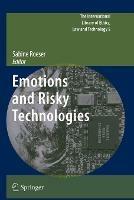
Emotions and Risky Technologies
(0)
Cliccando su “Conferma” dichiari che il contenuto da te inserito è conforme alle Condizioni Generali d’Uso del Sito ed alle Linee Guida sui Contenuti Vietati. Puoi rileggere e modificare e successivamente confermare il tuo contenuto. Tra poche ore lo troverai online (in caso contrario verifica la conformità del contenuto alle policy del Sito).
Grazie per la tua recensione!
Tra poche ore la vedrai online (in caso contrario verifica la conformità del testo alle nostre linee guida). Dopo la pubblicazione per te +4 punti 

135,10 €
+1350
punti 
Venditore: IBS
Articolo acquistabile con Carta del Docente

Articolo acquistabile con Carta Cultura Giovani e Carta del Merito

Articolo acquistabile con Carta della Cultura

Paga con Klarna in 3 rate senza interessi per ordini superiori a 39 €

Dati e Statistiche
 Salvato in 0 liste dei desideri
Salvato in 0 liste dei desideri
Emotions and Risky Technologies
Disponibilità in 2 settimane
135,10 €
135,10 €
Disponibilità in 2 settimane
Altre offerte vendute e spedite dai nostri venditori
Libri in Inglese
Emotions and Risky Technologies
Altri venditori
Prezzo e spese di spedizione
LIBRO INGLESE
Disponibilità in 2 settimane

Venduto e spedito da
IBS
Spedizione Gratis
135,10 €
Altri venditori
Prezzo e spese di spedizione
LIBRO INGLESE
Disponibilità in 2 settimane
Venduto e spedito da
IBS
Spedizione Gratis
135,10 €
Altri venditori
Prezzo e spese di spedizione

Tutti i formati ed edizioni
“Acceptable Risk” – On the Rationality (and Irrationality) of Emotional Evaluations of Risk What is “acceptable risk”? That question is appropriate in a number of different contexts, political, social, ethical, and scienti c. Thus the question might be whether the voting public will support a risky proposal or project, whether people will buy or accept a risky product, whether it is morally permissible to pursue this or that potentially harmful venture, or whether it is wise or prudent to test or try out some possibly dangerous hypothesis or product. But complicating all of these queries, the “sand in the machinery” of rational decision-making, are the emotions. It is often noted (but too rarely studied) that voters are swayed by their passions at least as much as they are convinced by rational arguments. And it is obvious to advertisers and retailers that people are seduced by all sorts of appeals to their vanities, their fears, their extravagant hopes, their insecurities. At least one major thread of ethical discourse, the one following Kant, minimizes the importance of the emotions (“the inclinations”) in favor of an emphatically rational decision-making process, and it is worth mulling over the fact that many of those who do not accept Kant’s ethical views more or less applaud his rejection of the “moral sentiment theory” of the time, promoted by such luminary philosophers as David Hume and Adam Smith.
Leggi di più
Leggi di meno
Curatore:
Editore:
Collana:
The International Library of Ethics, Law and Technology
Anno:
2012
Rilegatura:
Paperback / softback
Pagine:
262 p.
Testo in English
Dimensioni:
235 x 155 mm
EAN:
9789400732360

L'articolo è stato aggiunto al carrello
Informazioni e Contatti sulla Sicurezza dei Prodotti
Le schede prodotto sono aggiornate in conformità al Regolamento UE 988/2023. Laddove ci fossero taluni dati non disponibili per ragioni indipendenti da IBS, vi informiamo che stiamo compiendo ogni ragionevole sforzo per inserirli. Vi invitiamo a controllare periodicamente il sito www.ibs.it per eventuali novità e aggiornamenti.
Per le vendite di prodotti da terze parti, ciascun venditore si assume la piena e diretta responsabilità per la commercializzazione del prodotto e per la sua conformità al Regolamento UE 988/2023, nonché alle normative nazionali ed europee vigenti.
Per informazioni sulla sicurezza dei prodotti, contattare productsafetyibs@feltrinelli.it
L’articolo è stato aggiunto alla lista dei desideri
