

L’articolo è stato aggiunto alla lista dei desideri









LIBRO INGLESE
 E-mail
 Facebook
 LinkedIn
 Twitter
 WhatsApp
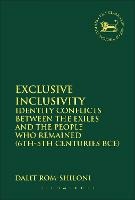
Exclusive Inclusivity: Identity Conflicts between the Exiles and the People who Remained (6th-5th Centuries BCE)
(0)
Cliccando su “Conferma” dichiari che il contenuto da te inserito è conforme alle Condizioni Generali d’Uso del Sito ed alle Linee Guida sui Contenuti Vietati. Puoi rileggere e modificare e successivamente confermare il tuo contenuto. Tra poche ore lo troverai online (in caso contrario verifica la conformità del contenuto alle policy del Sito).
Grazie per la tua recensione!
Tra poche ore la vedrai online (in caso contrario verifica la conformità del testo alle nostre linee guida). Dopo la pubblicazione per te +4 punti 
68,70 €
+690
punti 
Venditore: IBS
Articolo acquistabile con Carta del Docente

Articolo acquistabile con Carta Cultura Giovani e Carta del Merito

Articolo acquistabile con Carta della Cultura

Paga con Klarna in 3 rate senza interessi per ordini superiori a 39 €

Dati e Statistiche
 Salvato in 0 liste dei desideri
Salvato in 0 liste dei desideri
Exclusive Inclusivity: Identity Conflicts between the Exiles and the People who Remained (6th-5th Centuries BCE)
Disponibilità in 2 settimane
68,70 €
68,70 €
Disponibilità in 2 settimane
Altre offerte vendute e spedite dai nostri venditori

Libri in Inglese
Exclusive Inclusivity: Identity Conflicts between the Exiles and the People who Remained (6th-5th Centuries BCE)
Altri venditori
Prezzo e spese di spedizione
Nuovo
Disponibilità in 2 settimane

Venduto e spedito da
IBS
Spedizione Gratis
68,70 €
Altri venditori
Prezzo e spese di spedizione
Nuovo
Disponibilità in 2 settimane
Venduto e spedito da
IBS
Spedizione Gratis
68,70 €
Altri venditori
Prezzo e spese di spedizione

Tutti i formati ed edizioni

Promo attive (0)
The sixth and fifth centuries BCE were a time of constant re-identifications within Judean communities, both in exile and in the land; it was a time when Babylonian exilic ideologies captured a central position in Judean (Jewish) history and literature at the expense of silencing the voices of any other Judean communities. Proceeding from the later biblical evidence to the earlier, from the Persian period sources (Ezra–Nehemiah, Haggai, Zechariah, and Deutero-Isaiah) to the Neo-Babylonian prophecy of Ezekiel and Jeremiah, Exclusive Inclusivity explores the ideological transformations within these writings using the sociological rubric of exclusivity. Social psychology categories of ethnicity and group identity provide the analytical framework to clarify that Ezekiel, the prophet of the Jehoiachin Exiles, was the earliest constructor of these exclusive ideologies. Thus, already from the Neo-Babylonian period, definitions of otherness were being set to shape the self-understanding of each of the post-586 communities, in Judah (Yehud) and in the Babylonian Diaspora, as the exclusive People of God. As each community reidentified itself as the in-group, arguments of otherness were adduced to diregard and delegitimize the sister community. The polemics against “foreigners” in the Persian period literature are the ideological successors to the earlier ideological conflict.
Leggi di più
Leggi di meno
Autore:
Editore:
Collana:
The Library of Hebrew Bible/Old Testament Studies
Anno:
2015
Rilegatura:
Paperback / softback
Pagine:
256 p.
Testo in English
Dimensioni:
234 x 156 mm
Peso:
476 gr.
EAN:
9780567661500

L'articolo è stato aggiunto al carrello
Informazioni e Contatti sulla Sicurezza dei Prodotti
Le schede prodotto sono aggiornate in conformità al Regolamento UE 988/2023. Laddove ci fossero taluni dati non disponibili per ragioni indipendenti da IBS, vi informiamo che stiamo compiendo ogni ragionevole sforzo per inserirli. Vi invitiamo a controllare periodicamente il sito www.ibs.it per eventuali novità e aggiornamenti.
Per le vendite di prodotti da terze parti, ciascun venditore si assume la piena e diretta responsabilità per la commercializzazione del prodotto e per la sua conformità al Regolamento UE 988/2023, nonché alle normative nazionali ed europee vigenti.
Per informazioni sulla sicurezza dei prodotti, contattare productsafetyibs@feltrinelli.it
L’articolo è stato aggiunto alla lista dei desideri
