

L’articolo è stato aggiunto alla lista dei desideri









LIBRO INGLESE
 E-mail
 Facebook
 LinkedIn
 Twitter
 WhatsApp
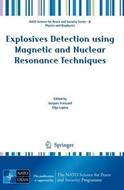
Explosives Detection using Magnetic and Nuclear Resonance Techniques
(0)
Cliccando su “Conferma” dichiari che il contenuto da te inserito è conforme alle Condizioni Generali d’Uso del Sito ed alle Linee Guida sui Contenuti Vietati. Puoi rileggere e modificare e successivamente confermare il tuo contenuto. Tra poche ore lo troverai online (in caso contrario verifica la conformità del contenuto alle policy del Sito).
Grazie per la tua recensione!
Tra poche ore la vedrai online (in caso contrario verifica la conformità del testo alle nostre linee guida). Dopo la pubblicazione per te +4 punti 
207,10 €
+2070
punti 
Venditore: IBS
Articolo acquistabile con Carta del Docente

Articolo acquistabile con Carta Cultura Giovani e Carta del Merito

Articolo acquistabile con Carta della Cultura

Paga con Klarna in 3 rate senza interessi per ordini superiori a 39 €

Dati e Statistiche
 Salvato in 0 liste dei desideri
Salvato in 0 liste dei desideri
Explosives Detection using Magnetic and Nuclear Resonance Techniques
Disponibilità in 2 settimane
207,10 €
207,10 €
Disponibilità in 2 settimane
Altre offerte vendute e spedite dai nostri venditori
Libri in Inglese
Explosives Detection using Magnetic and Nuclear Resonance Techniques
Altri venditori
Prezzo e spese di spedizione

LIBRO INGLESE
Disponibilità in 2 settimane

Venduto e spedito da
IBS
Spedizione Gratis
207,10 €
Altri venditori
Prezzo e spese di spedizione
LIBRO INGLESE
Disponibilità in 2 settimane
Venduto e spedito da
IBS
Spedizione Gratis
207,10 €
Altri venditori
Prezzo e spese di spedizione

Tutti i formati ed edizioni

Promo attive (0)
Nuclear quadrupole resonance (NQR) a highly promising new technique for bulk explosives detection: relatively inexpensive, more compact than NMR, but with considerable selectivity. Since the NQR frequency is insensitive to long-range variations in composition, mixing explosives with other materials, such as the plasticizers in plastic explosives, makes no difference. The NQR signal strength varies linearly with the amount of explosive, and is independent of its distribution within the volume monitored. NQR spots explosive types in configurations missed by the X-ray imaging method. But if NQR is so good, why it is not used everywhere? Its main limitation is the low signal-to-noise ratio, particularly with the radio-frequency interference that exists in a field environment, NQR polarization being much weaker than that from an external magnetic field. The distinctive signatures are there, but are difficult to extract from the noise. In addition, the high selectivity is partly a disadvantage, as it is hard to build a multichannel system necessary to cover a wide range of target substances. Moreover, substances fully screened by metallic enclosures, etc. are difficult to detect. A workshop was held at St Petersburg in July 2008 in an attempt to solve these problems and make NQR the universal technique for the detection of bombs regardless of type. This book presents the essentials of the papers given there.
Leggi di più
Leggi di meno
Curatore:
Editore:
Collana:
NATO Science for Peace and Security Series B: Physics and Biophysics
Anno:
2009
Rilegatura:
Hardback
Pagine:
292 p.
Testo in English
Dimensioni:
235 x 155 mm
EAN:
9789048130603

L'articolo è stato aggiunto al carrello
Informazioni e Contatti sulla Sicurezza dei Prodotti
Le schede prodotto sono aggiornate in conformità al Regolamento UE 988/2023. Laddove ci fossero taluni dati non disponibili per ragioni indipendenti da IBS, vi informiamo che stiamo compiendo ogni ragionevole sforzo per inserirli. Vi invitiamo a controllare periodicamente il sito www.ibs.it per eventuali novità e aggiornamenti.
Per le vendite di prodotti da terze parti, ciascun venditore si assume la piena e diretta responsabilità per la commercializzazione del prodotto e per la sua conformità al Regolamento UE 988/2023, nonché alle normative nazionali ed europee vigenti.
Per informazioni sulla sicurezza dei prodotti, contattare productsafetyibs@feltrinelli.it
L’articolo è stato aggiunto alla lista dei desideri
