

L’articolo è stato aggiunto alla lista dei desideri








LIBRO INGLESE
 E-mail
 Facebook
 LinkedIn
 Twitter
 WhatsApp
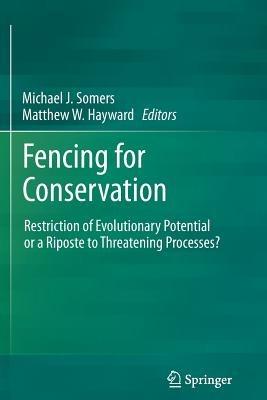
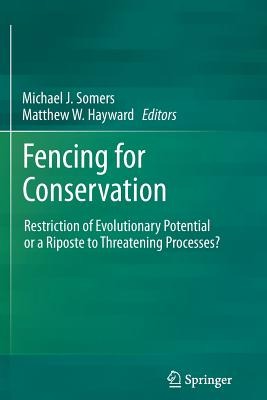
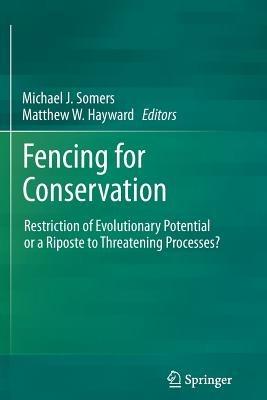
Fencing for Conservation: Restriction of Evolutionary Potential or a Riposte to Threatening Processes?
(0)
Cliccando su “Conferma” dichiari che il contenuto da te inserito è conforme alle Condizioni Generali d’Uso del Sito ed alle Linee Guida sui Contenuti Vietati. Puoi rileggere e modificare e successivamente confermare il tuo contenuto. Tra poche ore lo troverai online (in caso contrario verifica la conformità del contenuto alle policy del Sito).
Grazie per la tua recensione!
Tra poche ore la vedrai online (in caso contrario verifica la conformità del testo alle nostre linee guida). Dopo la pubblicazione per te +4 punti 
210,20 €
+2100
punti 
Venditore: IBS
Articolo acquistabile con Carta del Docente

Articolo acquistabile con Carta Cultura Giovani e Carta del Merito

Articolo acquistabile con Carta della Cultura

Paga con Klarna in 3 rate senza interessi per ordini superiori a 39 €

Dati e Statistiche
 Salvato in 0 liste dei desideri
Salvato in 0 liste dei desideri
Fencing for Conservation: Restriction of Evolutionary Potential or a Riposte to Threatening Processes?
Disponibilità in 2 settimane
210,20 €
210,20 €
Disponibilità in 2 settimane
Altre offerte vendute e spedite dai nostri venditori
Libri in Inglese
Fencing for Conservation: Restriction of Evolutionary Potential or a Riposte to Threatening Processes?
Altri venditori
Prezzo e spese di spedizione
LIBRO INGLESE
Disponibilità in 2 settimane

Venduto e spedito da
IBS
Spedizione Gratis
210,20 €
Altri venditori
Prezzo e spese di spedizione
LIBRO INGLESE
Disponibilità in 2 settimane
Venduto e spedito da
IBS
Spedizione Gratis
210,20 €
Altri venditori
Prezzo e spese di spedizione

Tutti i formati ed edizioni
Promo attive (0)
The conflict between increasing human population and biodiversity conservation is one of the IUCN’s key threatening processes. Conservation planning has received a great deal of coverage and research as a way of conserving biodiversity yet, while theoretically successful, it has never been tested. Simple lines on maps to illustrate conservation areas are unlikely to be successful in the light of human encroachment. It may be that some form of overt display is necessary to ensure the protection of reserves. This may be signage, presence of guards/rangers or physical fencing structures. The need for some form of barrier goes beyond restricting human access. The megafauna of Africa pose a genuine threat to human survival. In southern Africa, fences keep animals in and protect the abutting human population. Elsewhere, fencing is not considered important or viable. Where poverty is rife, it won’t take much to tip the balance from beneficial conservation areas to troublesome repositories of crop-raiders, diseases and killers. Conversely, in New Zealand fences are used to keep animals out. Introduced species have decimated New Zealand’s endemic birds, reptiles and invertebrates, and several sites have been entirely encapsulated in mouse-proof fencing to ensure their protection. Australia faces the same problems as New Zealand, however surrounds its national parks with cattle fences. Foxes and cats are free to enter and leave at will, resulting in rapid recolonisation following poisoning campaigns. How long will these poison campaigns work before tolerance, aversion or resistance evolves in the introduced predator populations?
Leggi di più
Leggi di meno
Curatore:
Editore:
Anno:
2014
Rilegatura:
Paperback / softback
Pagine:
320 p.
Testo in English
Dimensioni:
235 x 155 mm
EAN:
9781489999009

L'articolo è stato aggiunto al carrello
Informazioni e Contatti sulla Sicurezza dei Prodotti
Le schede prodotto sono aggiornate in conformità al Regolamento UE 988/2023. Laddove ci fossero taluni dati non disponibili per ragioni indipendenti da IBS, vi informiamo che stiamo compiendo ogni ragionevole sforzo per inserirli. Vi invitiamo a controllare periodicamente il sito www.ibs.it per eventuali novità e aggiornamenti.
Per le vendite di prodotti da terze parti, ciascun venditore si assume la piena e diretta responsabilità per la commercializzazione del prodotto e per la sua conformità al Regolamento UE 988/2023, nonché alle normative nazionali ed europee vigenti.
Per informazioni sulla sicurezza dei prodotti, contattare productsafetyibs@feltrinelli.it
L’articolo è stato aggiunto alla lista dei desideri
