

L’articolo è stato aggiunto alla lista dei desideri










EBOOK IN LINGUA STRANIERA
 E-mail
 Facebook
 LinkedIn
 Twitter
 WhatsApp
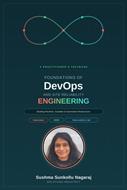
Foundations of DevOps and Site Reliability Engineering Building Resilient, Scalable, and Automated Infrastructure for the Modern Enterprise
(0)
Cliccando su “Conferma” dichiari che il contenuto da te inserito è conforme alle Condizioni Generali d’Uso del Sito ed alle Linee Guida sui Contenuti Vietati. Puoi rileggere e modificare e successivamente confermare il tuo contenuto. Tra poche ore lo troverai online (in caso contrario verifica la conformità del contenuto alle policy del Sito).
Grazie per la tua recensione!
Tra poche ore la vedrai online (in caso contrario verifica la conformità del testo alle nostre linee guida). Dopo la pubblicazione per te +4 punti 
8,99 €
+90
punti 
Venditore: IBS

Acquista online
Scaricabile subito
Articolo acquistabile con Carta del Docente

Articolo acquistabile con Carta Cultura Giovani e Carta del Merito

Articolo acquistabile con Carta della Cultura

Dati e Statistiche
 Salvato in 0 liste dei desideri
Salvato in 0 liste dei desideri
Foundations of DevOps and Site Reliability Engineering Building Resilient, Scalable, and Automated Infrastructure for the Modern Enterprise
Scaricabile subito
8,99 €
8,99 €
Scaricabile subito
Altre offerte vendute e spedite dai nostri venditori
Ebook in lingua straniera
Foundations of DevOps and Site Reliability Engineering Building Resilient, Scalable, and Automated Infrastructure for the Modern Enterprise
Altri venditori
Prezzo e spese di spedizione

EBOOK INGLESE
EPUB2 con DRMFREE
Scaricabile subito

Venduto e spedito da
IBS
Spedizione Gratis
8,99 €
Altri venditori
Prezzo e spese di spedizione
EBOOK INGLESE
EPUB2 con DRMFREE
Scaricabile subito
Venduto e spedito da
IBS
Spedizione Gratis
8,99 €
Altri venditori
Prezzo e spese di spedizione

Tutti i formati ed edizioni

Promo attive (0)
Foundations of DevOps and Site Reliability Engineering Building Resilient, Scalable, and Automated Infrastructure for the Modern Enterprise
Foundations of DevOps and Site Reliability Engineering — Summary Foundations of DevOps and Site Reliability Engineering by Sushma Sunkollu Nagaraj is a comprehensive textbook that equips readers to design, implement, and operate modern infrastructure across two complementary disciplines. Subtitled Building Resilient, Scalable, and Automated Infrastructure for the Modern Enterprise, it balances theoretical foundations with practical guidance, progressing in each chapter from fundamental concepts to implementation detail so readers understand both why approaches are recommended and how to apply them. It suits newcomers entering the field and practitioners deepening existing expertise. The book spans ten chapters. Chapter 1 traces the genesis of the DevOps movement—coined around 2008–2009 by Patrick Debois—and its core principles of collaboration, automation, continuous improvement, and systems thinking. It introduces the Three Ways (flow, feedback, and continual experimentation) and the key delivery metrics that distinguish high performers: deployment frequency, lead time for changes, change failure rate, and mean time to recovery. Chapter 2 covers Site Reliability Engineering, the Google-originated discipline of applying software engineering to operations. It explains Service Level Indicators, Objectives, and error budgets; eliminating toil; managing reliability trade-offs (where each additional "nine" costs exponentially more); and SRE team structures from centralized to embedded models. Chapter 3 addresses Infrastructure as Code, treating infrastructure as version-controlled software. It covers declarative principles, Terraform provisioning, Ansible configuration management, immutable infrastructure patterns that eliminate configuration drift, and GitOps with pull-based, reconciliation-driven operations. Chapter 4 presents Continuous Integration and Continuous Delivery—CI principles, building effective pipelines, delivery versus deployment, deployment strategies (blue-green, canary, rolling), and pipeline security. Chapter 5 explores containerization and Docker, including image and Dockerfile best practices, container networking, storage, and security. Chapter 6 covers Kubernetes architecture, application deployment, networking and services, scaling and resource management, and cluster security. Chapter 7 examines monitoring and observability through the three pillars—metrics, logs, and traces—plus visualization, log aggregation, distributed tracing, and alerting and incident response. Chapter 8 surveys cloud platforms: fundamentals, a comparison of major providers, managed Kubernetes services, serverless computing, and cloud cost management. Chapter 9 addresses security and compliance, covering DevSecOps principles, identity and access management, network security, compliance and governance, and incident response and recovery. Chapter 10 closes with future trends and career development—emerging technologies, skill-building, organizational transformation, building high-performing teams, and the future of both disciplines.
Leggi di più
Leggi di meno
Autore:
Anno edizione:
2026
Editore:
Formato:
Lingua:
Inglese
Compatibilità:
Tutti i dispositivi (eccetto Kindle) Scopri di più
Layout:
Reflowable
EAN:
9798235232914
L'articolo è stato aggiunto al carrello
Formato:
Gli eBook venduti da IBS.it sono in formato ePub e possono essere protetti da Adobe DRM. In caso di download di un file protetto da DRM si otterrà un file in formato .acs, (Adobe Content Server Message), che dovrà essere aperto tramite Adobe Digital Editions e autorizzato tramite un account Adobe, prima di poter essere letto su pc o trasferito su dispositivi compatibili.
Cloud:
Gli eBook venduti da IBS.it sono sincronizzati automaticamente su tutti i client di lettura Kobo successivamente all’acquisto. Grazie al Cloud Kobo i progressi di lettura, le note, le evidenziazioni vengono salvati e sincronizzati automaticamente su tutti i dispositivi e le APP di lettura Kobo utilizzati per la lettura.
Clicca qui per sapere come scaricare gli ebook utilizzando un pc con sistema operativo Windows
L’articolo è stato aggiunto alla lista dei desideri
