

L’articolo è stato aggiunto alla lista dei desideri









EBOOK IN LINGUA STRANIERA
 E-mail
 Facebook
 LinkedIn
 Twitter
 WhatsApp
Genetic Pathways for Multi-Planetary Sustainability: Synthetic Biology, Evolutionary Genetics, and Self-Sustaining Biospheres for Space Habitats
(0)
Cliccando su “Conferma” dichiari che il contenuto da te inserito è conforme alle Condizioni Generali d’Uso del Sito ed alle Linee Guida sui Contenuti Vietati. Puoi rileggere e modificare e successivamente confermare il tuo contenuto. Tra poche ore lo troverai online (in caso contrario verifica la conformità del contenuto alle policy del Sito).
Grazie per la tua recensione!
Tra poche ore la vedrai online (in caso contrario verifica la conformità del testo alle nostre linee guida). Dopo la pubblicazione per te +4 punti 
8,99 €
+90
punti 
Venditore: IBS

Acquista online
Scaricabile subito
Articolo acquistabile con Carta del Docente

Articolo acquistabile con Carta Cultura Giovani e Carta del Merito

Articolo acquistabile con Carta della Cultura

Abbonati a Kobo plus per avere accesso illimitato a questo contenuto

Dati e Statistiche
 Salvato in 0 liste dei desideri
Salvato in 0 liste dei desideri
Genetic Pathways for Multi-Planetary Sustainability: Synthetic Biology, Evolutionary Genetics, and Self-Sustaining Biospheres for Space Habitats
Scaricabile subito
8,99 €
8,99 €
Scaricabile subito
Altre offerte vendute e spedite dai nostri venditori

Ebook in lingua straniera
Genetic Pathways for Multi-Planetary Sustainability: Synthetic Biology, Evolutionary Genetics, and Self-Sustaining Biospheres for Space Habitats
Altri venditori
Prezzo e spese di spedizione
EBOOK INGLESE
EPUB2 con DRMFREE
Scaricabile subito

Venduto e spedito da
IBS
Spedizione Gratis
8,99 €
Altri venditori
Prezzo e spese di spedizione
EBOOK INGLESE
EPUB2 con DRMFREE
Scaricabile subito
Venduto e spedito da
IBS
Spedizione Gratis
8,99 €
Altri venditori
Prezzo e spese di spedizione

Tutti i formati ed edizioni
Promo attive (0)
Genetic Pathways for Multi-Planetary Sustainability: Synthetic Biology, Evolutionary Genetics, and Self-Sustaining Biospheres for Space Habitats
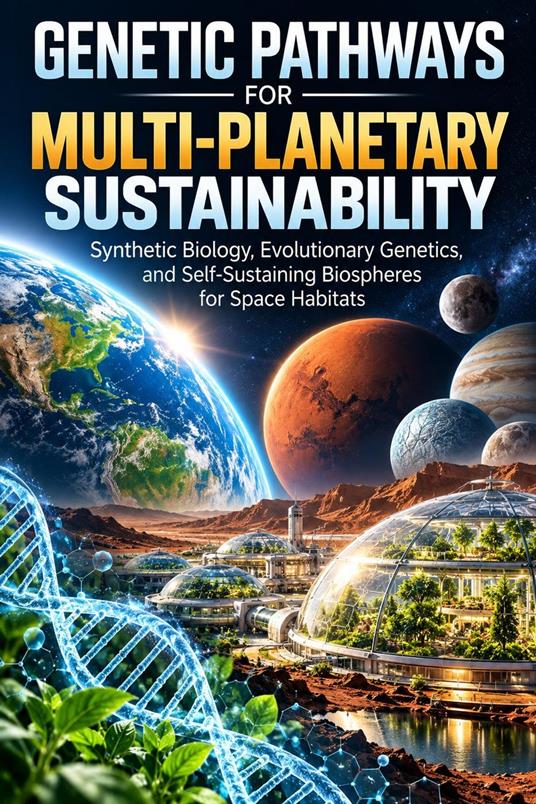
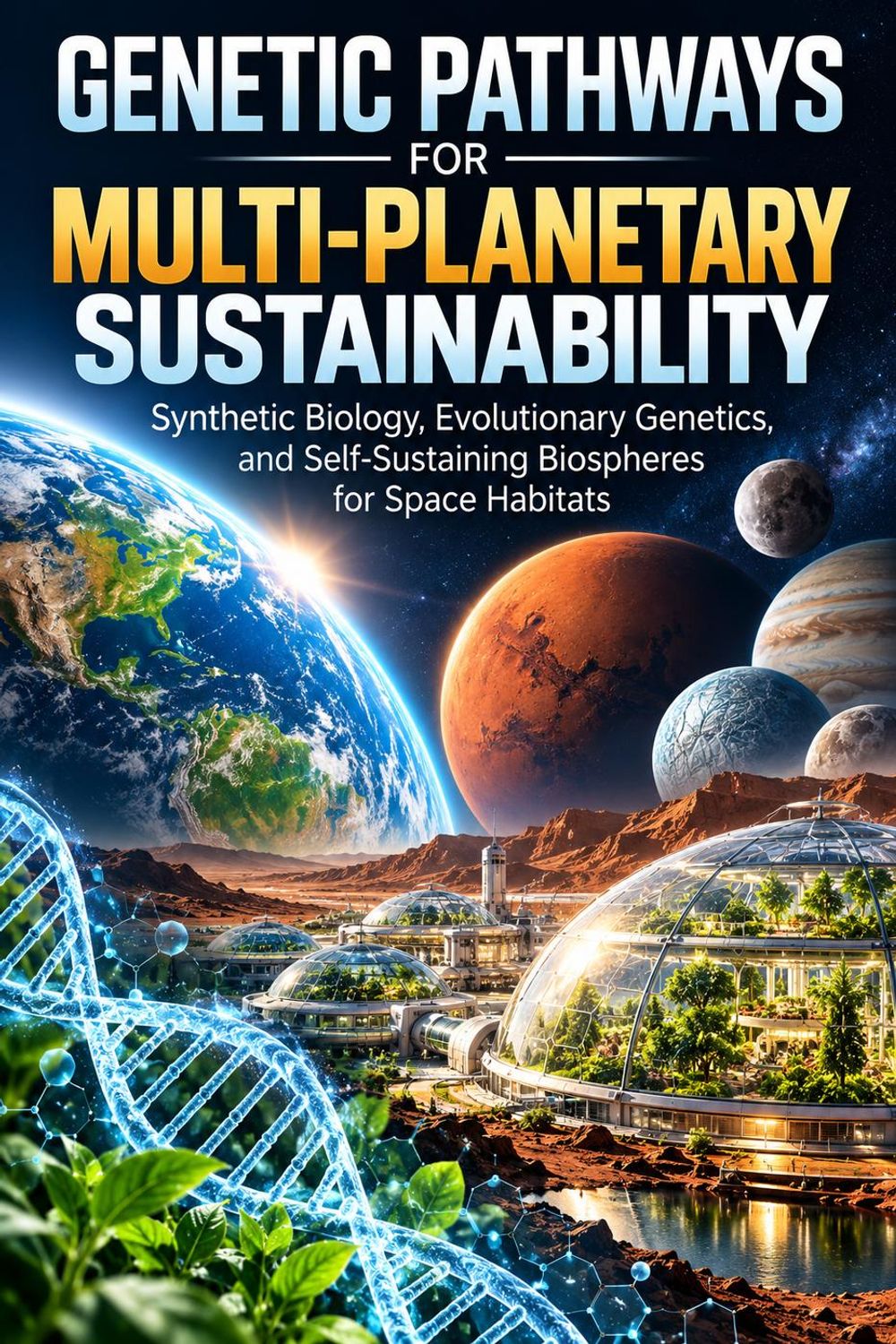
Unlock the science that could allow humanity to build thriving, self-sustaining ecosystems beyond Earth. As humanity prepares for permanent settlements on the Moon, Mars, and eventually distant worlds, one challenge stands above all others: creating biological systems capable of surviving, adapting, and evolving across generations. Long-term success in space depends not only on advanced engineering but on resilient ecosystems that can recycle resources, maintain biodiversity, and remain stable in changing environments. Genetic Pathways for Multi-Planetary Sustainability: Synthetic Biology, Evolutionary Genetics, and Self-Sustaining Biospheres for Space Habitats explores the cutting edge of synthetic biology, evolutionary genetics, systems ecology, astrobiology, and planetary science to examine how future biospheres may function beyond Earth. Combining current scientific understanding with forward-looking research, this comprehensive volume investigates the biological foundations of sustainable planetary civilizations while remaining firmly grounded in established scientific principles. From the genetic architecture of adaptation to the complex ecological networks that regulate entire biospheres, this book presents an in-depth exploration of how life maintains resilience across decades, centuries, and even millennia. Readers will discover how genetics, evolution, microbial communities, nutrient cycling, computational biology, and artificial intelligence may work together to support closed ecological systems capable of enduring the challenges of extraterrestrial environments. Inside you'll discover: Synthetic biology and genetic engineering concepts for resilient biospheres Evolutionary genetics, genome stability, and long-term biological adaptation Systems biology, ecological resilience, and self-regulating ecosystems Microbial ecology, fungal networks, plant communities, and symbiotic relationships Carbon, nitrogen, phosphorus, and water cycling in closed environmental systems Population genetics, biodiversity, and ecosystem stability across generations Mars, the Moon, Europa, Enceladus, Titan, and exoplanets as future biological frontiers Artificial intelligence, predictive ecology, computational biology, and digital biosphere modeling Environmental biosensors, genomic monitoring, and adaptive ecosystem management Planetary stewardship, sustainability science, and the future of multi-planetary civilization Drawing from genetics, ecology, biotechnology, environmental science, astrobiology, evolutionary biology, and systems science, this book connects multiple scientific disciplines into a unified framework for understanding how complex living systems can remain stable under the extreme conditions of space. Rather than focusing on speculative fiction or step-by-step engineering manuals, it presents a research-driven examination of the biological principles that may shape the future of long-duration space exploration and planetary settlement. Whether you're fascinated by synthetic biology, evolutionary genetics, space habitats, closed ecological systems, regenerative life support, computational ecology, or the future of sustainable civilizations beyond Earth, this book provides a comprehensive exploration of one of the most important scientific challenges facing humanity. If you're searching for an authoritative, accessible, and forward-looking examination of synthetic biology, planetary ecosystems, evolutionary adaptation, and sustainable biosphere design, Genetic Pathways for Multi-Planetary Sustainability offers an insightful journey
Leggi di più
Leggi di meno
Autore:
Anno edizione:
2026
Editore:
Formato:
Lingua:
Inglese
Compatibilità:
Tutti i dispositivi (eccetto Kindle) Scopri di più
Layout:
Reflowable
EAN:
9798237971118
L'articolo è stato aggiunto al carrello
Formato:
Gli eBook venduti da IBS.it sono in formato ePub e possono essere protetti da Adobe DRM. In caso di download di un file protetto da DRM si otterrà un file in formato .acs, (Adobe Content Server Message), che dovrà essere aperto tramite Adobe Digital Editions e autorizzato tramite un account Adobe, prima di poter essere letto su pc o trasferito su dispositivi compatibili.
Cloud:
Gli eBook venduti da IBS.it sono sincronizzati automaticamente su tutti i client di lettura Kobo successivamente all’acquisto. Grazie al Cloud Kobo i progressi di lettura, le note, le evidenziazioni vengono salvati e sincronizzati automaticamente su tutti i dispositivi e le APP di lettura Kobo utilizzati per la lettura.
Clicca qui per sapere come scaricare gli ebook utilizzando un pc con sistema operativo Windows
L’articolo è stato aggiunto alla lista dei desideri
