

L’articolo è stato aggiunto alla lista dei desideri









EBOOK IN LINGUA STRANIERA
 E-mail
 Facebook
 LinkedIn
 Twitter
 WhatsApp
Gospel Ghost Writers
(0)
Cliccando su “Conferma” dichiari che il contenuto da te inserito è conforme alle Condizioni Generali d’Uso del Sito ed alle Linee Guida sui Contenuti Vietati. Puoi rileggere e modificare e successivamente confermare il tuo contenuto. Tra poche ore lo troverai online (in caso contrario verifica la conformità del contenuto alle policy del Sito).
Grazie per la tua recensione!
Tra poche ore la vedrai online (in caso contrario verifica la conformità del testo alle nostre linee guida). Dopo la pubblicazione per te +4 punti 
1,99 €
+20
punti 
Venditore: IBS

Acquista online
Scaricabile subito
Articolo acquistabile con Carta del Docente

Articolo acquistabile con Carta Cultura Giovani e Carta del Merito

Articolo acquistabile con Carta della Cultura

Abbonati a Kobo plus per avere accesso illimitato a questo contenuto

Dati e Statistiche
 Salvato in 0 liste dei desideri
Salvato in 0 liste dei desideri
Gospel Ghost Writers
Scaricabile subito
1,99 €
1,99 €
Scaricabile subito
Altre offerte vendute e spedite dai nostri venditori
Ebook in lingua straniera
Gospel Ghost Writers
Altri venditori
Prezzo e spese di spedizione
EBOOK INGLESE
EPUB2 con DRMFREE
Scaricabile subito

Venduto e spedito da
IBS
Spedizione Gratis
1,99 €
Altri venditori
Prezzo e spese di spedizione
EBOOK INGLESE
EPUB2 con DRMFREE
Scaricabile subito
Venduto e spedito da
IBS
Spedizione Gratis
1,99 €
Altri venditori
Prezzo e spese di spedizione

Tutti i formati ed edizioni
Promo attive (0)
Gospel Ghost Writers
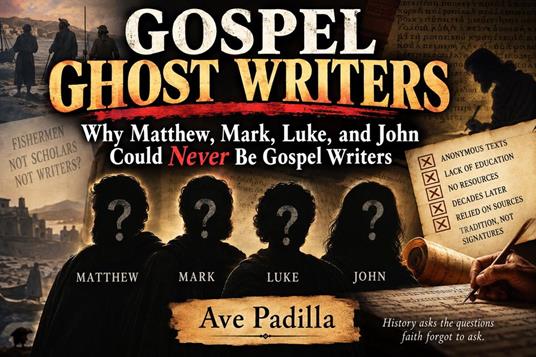
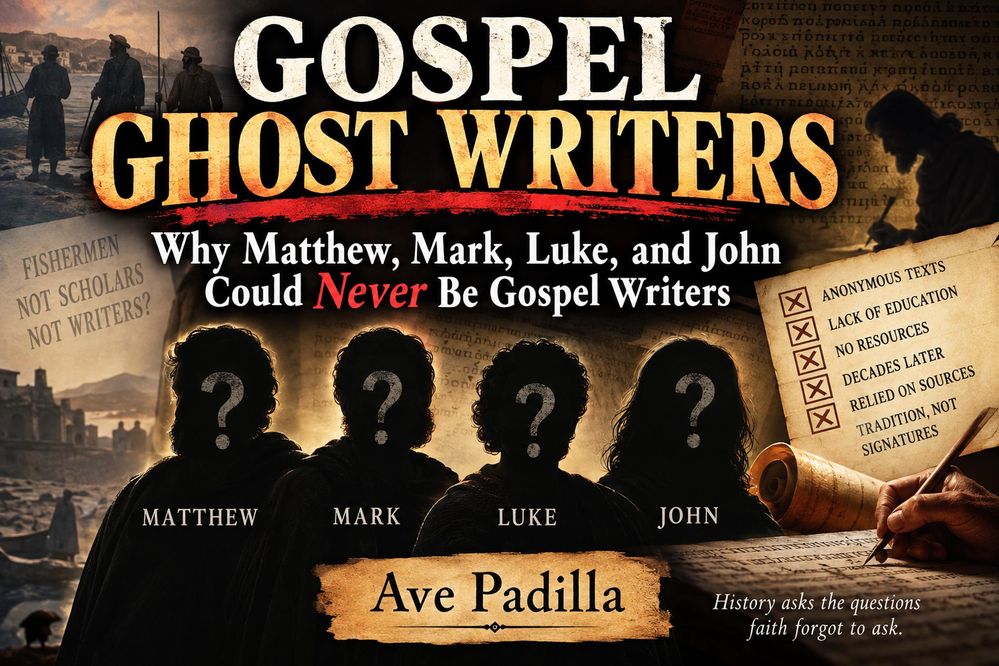
There is something almost invisible about the four names that stand above the first four books of the New Testament. We have seen them so often that we rarely stop to question them. Matthew. Mark. Luke. John. They appear on the pages of Bibles as naturally as the names of four eyewitness reporters whose credentials need no further examination. We are told that Matthew wrote Matthew, Mark wrote Mark, Luke wrote Luke, and John wrote John, and after hearing this repeatedly from childhood, the statement eventually ceases to sound like a claim and begins to sound like a fact. But history does not operate that way. A tradition repeated for centuries does not become an eyewitness signature simply because generations have accepted it. The first question any serious investigation must ask is surprisingly simple: Where do the four Gospels themselves tell us who wrote them? The answer is uncomfortable for anyone who has assumed that the names settle the matter. They do not. The four Gospels are formally anonymous. Matthew does not begin by identifying himself as the apostle Matthew. Mark does not introduce himself as Mark, the companion or interpreter of Peter. Luke does not identify himself as Paul's companion or as the author of the book. John does not begin by saying that he is John the apostle. The names by which the four Gospels are known come from the developing tradition of the early church, not from explicit authorial signatures inside the texts themselves. That distinction may appear technical, but it is actually the doorway into a much larger historical problem: Were Matthew, Mark, Luke, and John really the writers of the books that eventually came to bear their names? Before we even examine the literary evidence, there is another question that deserves to be asked: Were the people traditionally identified as these authors actually equipped for the task? Modern readers sometimes unconsciously project the world of modern education backward into the first century. We imagine the apostles as though they were university graduates carrying notebooks, fluent in several languages, familiar with literary composition, and capable of sitting down whenever they wished to write a sophisticated biography. That is not the world in which the Jesus movement began. First-century Galilee was overwhelmingly an oral culture, formal education was limited, books were expensive, writing materials were not casually available, and literary composition was largely the province of people with specialized education and access to scribal resources. This does not mean that ordinary people were necessarily incapable of reading or writing. It means that literacy and literary authorship were two very different things. The distinction becomes particularly important when we consider the testimony of Acts concerning Peter and John. When the Jerusalem authorities encountered them, they were astonished by their boldness because they recognized them as agrammatoi kai idiotai—men without formal education or literary training, ordinary people rather than members of the educated elite. The passage should not be abused to claim that Peter and John were absolutely illiterate. That would go beyond the evidence. But it certainly does not portray them as trained Greek literary authors. And if the earliest disciples were ordinary Galilean men whose education was limited, the historical question becomes unavoidable: What evidence do we possess that they later acquired the education necessary to compose sophisticated Greek literary works?
Leggi di più
Leggi di meno
Autore:
Anno edizione:
2026
Editore:
Formato:
Lingua:
Inglese
Compatibilità:
Tutti i dispositivi (eccetto Kindle) Scopri di più
Layout:
Reflowable
EAN:
9798237865271
L'articolo è stato aggiunto al carrello
Formato:
Gli eBook venduti da IBS.it sono in formato ePub e possono essere protetti da Adobe DRM. In caso di download di un file protetto da DRM si otterrà un file in formato .acs, (Adobe Content Server Message), che dovrà essere aperto tramite Adobe Digital Editions e autorizzato tramite un account Adobe, prima di poter essere letto su pc o trasferito su dispositivi compatibili.
Cloud:
Gli eBook venduti da IBS.it sono sincronizzati automaticamente su tutti i client di lettura Kobo successivamente all’acquisto. Grazie al Cloud Kobo i progressi di lettura, le note, le evidenziazioni vengono salvati e sincronizzati automaticamente su tutti i dispositivi e le APP di lettura Kobo utilizzati per la lettura.
Clicca qui per sapere come scaricare gli ebook utilizzando un pc con sistema operativo Windows
L’articolo è stato aggiunto alla lista dei desideri
