

L’articolo è stato aggiunto alla lista dei desideri








LIBRO INGLESE
 E-mail
 Facebook
 LinkedIn
 Twitter
 WhatsApp
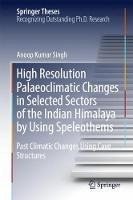
High Resolution Palaeoclimatic Changes in Selected Sectors of the Indian Himalaya by Using Speleothems: Past Climatic Changes Using Cave Structures
(0)
Cliccando su “Conferma” dichiari che il contenuto da te inserito è conforme alle Condizioni Generali d’Uso del Sito ed alle Linee Guida sui Contenuti Vietati. Puoi rileggere e modificare e successivamente confermare il tuo contenuto. Tra poche ore lo troverai online (in caso contrario verifica la conformità del contenuto alle policy del Sito).
Grazie per la tua recensione!
Tra poche ore la vedrai online (in caso contrario verifica la conformità del testo alle nostre linee guida). Dopo la pubblicazione per te +4 punti 
132,00 €
+1320
punti 
Venditore: IBS
Articolo acquistabile con Carta del Docente

Articolo acquistabile con Carta Cultura Giovani e Carta del Merito

Articolo acquistabile con Carta della Cultura

Paga con Klarna in 3 rate senza interessi per ordini superiori a 39 €

Dati e Statistiche
 Salvato in 0 liste dei desideri
Salvato in 0 liste dei desideri
High Resolution Palaeoclimatic Changes in Selected Sectors of the Indian Himalaya by Using Speleothems: Past Climatic Changes Using Cave Structures
Disponibilità in 2 settimane
132,00 €
132,00 €
Disponibilità in 2 settimane
Altre offerte vendute e spedite dai nostri venditori
Libri in Inglese
High Resolution Palaeoclimatic Changes in Selected Sectors of the Indian Himalaya by Using Speleothems: Past Climatic Changes Using Cave Structures
Altri venditori
Prezzo e spese di spedizione
LIBRO INGLESE
Disponibilità in 2 settimane

Venduto e spedito da
IBS
Spedizione Gratis
132,00 €
Altri venditori
Prezzo e spese di spedizione
LIBRO INGLESE
Disponibilità in 2 settimane
Venduto e spedito da
IBS
Spedizione Gratis
132,00 €
Altri venditori
Prezzo e spese di spedizione

Tutti i formati ed edizioni
Promo attive (0)
This thesis encompasses a study of past precipitation patterns based on six cave stalagmites from different parts of the Indian Himalaya. This is the first speleothem study in the Indian Himalaya that shows a direct relationship between past precipitation and the collapse of civilization. The stalagmites examined were KL-3 from Jammu and Kashmir; TCS and BR-1 from Himachal Pradesh; and DH-1, SA-1 and CH-1 from Uttarakhand. Based on the high-resolution palaeoclimatic reconstruction (35 U/th dates, 5 AMS dates, 1,500 samples for d18O and d13C values) obtained for the duration of the Pleistocene–Holocene transition (16.2–9.5 ka BP) and Mid-Holocene–Present (ca. 4.0 ka BP–Present), three major events were identified, namely the Older Dryas (OD), Bølling–Allerød (BA) period and Younger Dryas (YD) at ca. 14.3–13.9, 13.9–12.7 and 12.7–12.2 ka BP, respectively. The study showed a gradual reduction in the precipitation from 4 ka BP onwards for about a millennium with a peak arid period between3.2 and 3.1 ka BP. According to the findings, the LIA (Little Ice Age) covers a time span from 1622–1820 AD, during which the climate was wetter than that in the post-LIA period (1820–1950 AD). In addition, this thesis supports the assumption that the WDs (Western Disturbances) contribute significantly to the total rainfall in the Himalaya region.
Leggi di più
Leggi di meno
Autore:
Editore:
Collana:
Springer Theses
Anno:
2018
Rilegatura:
Hardback
Pagine:
146 p.
Testo in English
Dimensioni:
235 x 155 mm
EAN:
9783319735962

L'articolo è stato aggiunto al carrello
Informazioni e Contatti sulla Sicurezza dei Prodotti
Le schede prodotto sono aggiornate in conformità al Regolamento UE 988/2023. Laddove ci fossero taluni dati non disponibili per ragioni indipendenti da IBS, vi informiamo che stiamo compiendo ogni ragionevole sforzo per inserirli. Vi invitiamo a controllare periodicamente il sito www.ibs.it per eventuali novità e aggiornamenti.
Per le vendite di prodotti da terze parti, ciascun venditore si assume la piena e diretta responsabilità per la commercializzazione del prodotto e per la sua conformità al Regolamento UE 988/2023, nonché alle normative nazionali ed europee vigenti.
Per informazioni sulla sicurezza dei prodotti, contattare productsafetyibs@feltrinelli.it
L’articolo è stato aggiunto alla lista dei desideri
