

L’articolo è stato aggiunto alla lista dei desideri










EBOOK IN LINGUA STRANIERA
 E-mail
 Facebook
 LinkedIn
 Twitter
 WhatsApp
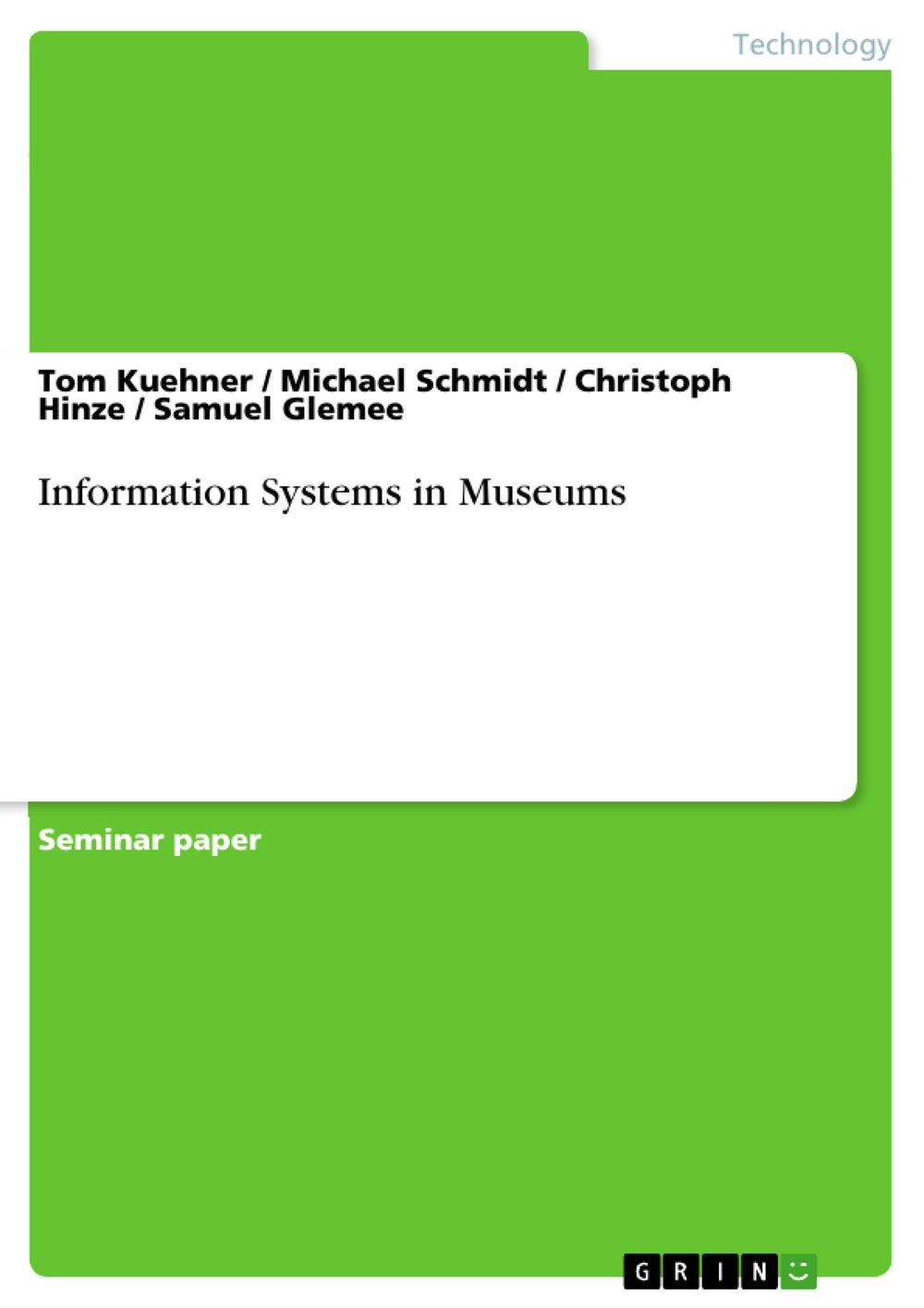
Information Systems in Museums
(0)
Cliccando su “Conferma” dichiari che il contenuto da te inserito è conforme alle Condizioni Generali d’Uso del Sito ed alle Linee Guida sui Contenuti Vietati. Puoi rileggere e modificare e successivamente confermare il tuo contenuto. Tra poche ore lo troverai online (in caso contrario verifica la conformità del contenuto alle policy del Sito).
Grazie per la tua recensione!
Tra poche ore la vedrai online (in caso contrario verifica la conformità del testo alle nostre linee guida). Dopo la pubblicazione per te +4 punti 
13,99 €
+140
punti 
Venditore: IBS

Acquista online
Scaricabile subito
Articolo acquistabile con Carta del Docente

Articolo acquistabile con Carta Cultura Giovani e Carta del Merito

Articolo acquistabile con Carta della Cultura

Dati e Statistiche
 Salvato in 0 liste dei desideri
Salvato in 0 liste dei desideri
Information Systems in Museums
Scaricabile subito
13,99 €
13,99 €
Scaricabile subito
Altre offerte vendute e spedite dai nostri venditori

Ebook in lingua straniera
Information Systems in Museums
Altri venditori
Prezzo e spese di spedizione
EBOOK INGLESE
EPUB2 con Adobe DRM
Scaricabile subito

Venduto e spedito da
IBS
Spedizione Gratis
13,99 €
Altri venditori
Prezzo e spese di spedizione
EBOOK INGLESE
EPUB2 con Adobe DRM
Scaricabile subito
Venduto e spedito da
IBS
Spedizione Gratis
13,99 €
Altri venditori
Prezzo e spese di spedizione

Tutti i formati ed edizioni

Promo attive (0)
Information Systems in Museums
Seminar paper from the year 2003 in the subject Engineering - Industrial Engineering and Management, grade: 1,0 (A), Linköping University (Institute for technology), course: Information Systems, language: English, abstract: In almost every part of modern life we have contact with different information systems. In the last few decades the computer became a more and more important medium for collecting, structuring and providing of information. A relative new invention is the possibility to locate a certain device in the physical space. It was originally developed for military purposes, but comes now to a broader application in the private and public sector. As a rather specific but never the less significant example we would like to present a connection of computing in one of its latest appearances and the possibility of locating devices connected to a totally new kind of information system. We would like to introduce the use of handheld computers for the use of a push/pull information system in the context of an exhibition or museum. Automation technologies were introduced to museums in the early 1960s. Projects like SELGEM (Self Generating Master) involved several museums and supported data entry to track collection information. Large scale computer use by museums was not feasible at that time because early computers were expensive and required space for installation. But that would change quickly. In 1968 Hewlett-Packard released its first programmable calculators. The early machines, such as the HP-9100, weighed 40 pounds and might be considered the first desktop computers. While Texas Instruments is credited with inventing the first pocket calculator in 1967, Hewlett-Packard developed the first programmable pocket calculator in 1974. After a NASA mission, the pocket HP-65 was promoted as having served "as a backup for Apollo's on-board computer." In ten years programmable computers had evolved from filling rooms to fitting in pockets. While pocket computers may have found immediate use in museum offices, evidence of pocket computers enhancing the visitor experience was not found. The use of hand helds in museum exhibitions seems to have been inspired by the early personal digital assistants (PDAs) such as the Zaurus, Psion, and Newton. In 1993 two young men formed a company, Visible Interactive, around their modification of the Apple Newton they called iGo. Promoting it as the “world’s first interactive audio tour” their idea was to provide museum visitors with an enhanced personal experience through the accessibility of multimedia, text, and audio while walking through an exhibit space. [...]
Leggi di più
Leggi di meno
Anno edizione:
2003
Editore:
Formato:
Lingua:
Inglese
Compatibilità:
Tutti i dispositivi (eccetto Kindle) Scopri di più
Layout:
Reflowable
EAN:
9783638224932
L'articolo è stato aggiunto al carrello
Formato:
Gli eBook venduti da IBS.it sono in formato ePub e possono essere protetti da Adobe DRM. In caso di download di un file protetto da DRM si otterrà un file in formato .acs, (Adobe Content Server Message), che dovrà essere aperto tramite Adobe Digital Editions e autorizzato tramite un account Adobe, prima di poter essere letto su pc o trasferito su dispositivi compatibili.
Cloud:
Gli eBook venduti da IBS.it sono sincronizzati automaticamente su tutti i client di lettura Kobo successivamente all’acquisto. Grazie al Cloud Kobo i progressi di lettura, le note, le evidenziazioni vengono salvati e sincronizzati automaticamente su tutti i dispositivi e le APP di lettura Kobo utilizzati per la lettura.
Clicca qui per sapere come scaricare gli ebook utilizzando un pc con sistema operativo Windows
L’articolo è stato aggiunto alla lista dei desideri
