

L’articolo è stato aggiunto alla lista dei desideri









LIBRO INGLESE
 E-mail
 Facebook
 LinkedIn
 Twitter
 WhatsApp
Iterative Learning Control for Electrical Stimulation and Stroke Rehabilitation
(0)
Cliccando su “Conferma” dichiari che il contenuto da te inserito è conforme alle Condizioni Generali d’Uso del Sito ed alle Linee Guida sui Contenuti Vietati. Puoi rileggere e modificare e successivamente confermare il tuo contenuto. Tra poche ore lo troverai online (in caso contrario verifica la conformità del contenuto alle policy del Sito).
Grazie per la tua recensione!
Tra poche ore la vedrai online (in caso contrario verifica la conformità del testo alle nostre linee guida). Dopo la pubblicazione per te +4 punti 
68,30 €
+680
punti 
Venditore: IBS
Articolo acquistabile con Carta del Docente

Articolo acquistabile con Carta Cultura Giovani e Carta del Merito

Articolo acquistabile con Carta della Cultura

Paga con Klarna in 3 rate senza interessi per ordini superiori a 39 €

Dati e Statistiche
 Salvato in 0 liste dei desideri
Salvato in 0 liste dei desideri
Iterative Learning Control for Electrical Stimulation and Stroke Rehabilitation
Disponibilità in 2 settimane
68,30 €
68,30 €
Disponibilità in 2 settimane
Altre offerte vendute e spedite dai nostri venditori

Libri in Inglese
Iterative Learning Control for Electrical Stimulation and Stroke Rehabilitation
Altri venditori
Prezzo e spese di spedizione
LIBRO INGLESE
Disponibilità in 2 settimane

Venduto e spedito da
IBS
Spedizione Gratis
68,30 €
Altri venditori
Prezzo e spese di spedizione
LIBRO INGLESE
Disponibilità in 2 settimane
Venduto e spedito da
IBS
Spedizione Gratis
68,30 €
Altri venditori
Prezzo e spese di spedizione

Tutti i formati ed edizioni

Promo attive (0)
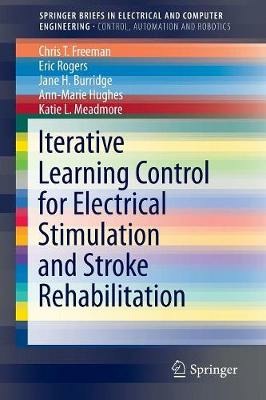
Iterative learning control (ILC) has its origins in the control of processes that perform a task repetitively with a view to improving accuracy from trial to trial by using information from previous executions of the task. This brief shows how a classic application of this technique – trajectory following in robots – can be extended to neurological rehabilitation after stroke. Regaining upper limb movement is an important step in a return to independence after stroke, but the prognosis for such recovery has remained poor. Rehabilitation robotics provides the opportunity for repetitive task-oriented movement practice reflecting the importance of such intense practice demonstrated by conventional therapeutic research and motor learning theory. Until now this technique has not allowed feedback from one practice repetition to influence the next, also implicated as an important factor in therapy. The authors demonstrate how ILC can be used to adjust external functional electrical stimulation of patients’ muscles while they are repeatedly performing a task in response to the known effects of stimulation in previous repetitions. As the motor nerves and muscles of the arm reaquire the ability to convert an intention to move into a motion of accurate trajectory, force and rapidity, initially intense external stimulation can now be scaled back progressively until the fullest possible independence of movement is achieved.
Leggi di più
Leggi di meno
Editore:
Collana:
SpringerBriefs in Electrical and Computer Engineering
Anno:
2015
Rilegatura:
Paperback / softback
Pagine:
124 p.
Testo in English
Dimensioni:
235 x 155 mm
EAN:
9781447167259

L'articolo è stato aggiunto al carrello
Informazioni e Contatti sulla Sicurezza dei Prodotti
Le schede prodotto sono aggiornate in conformità al Regolamento UE 988/2023. Laddove ci fossero taluni dati non disponibili per ragioni indipendenti da IBS, vi informiamo che stiamo compiendo ogni ragionevole sforzo per inserirli. Vi invitiamo a controllare periodicamente il sito www.ibs.it per eventuali novità e aggiornamenti.
Per le vendite di prodotti da terze parti, ciascun venditore si assume la piena e diretta responsabilità per la commercializzazione del prodotto e per la sua conformità al Regolamento UE 988/2023, nonché alle normative nazionali ed europee vigenti.
Per informazioni sulla sicurezza dei prodotti, contattare productsafetyibs@feltrinelli.it
L’articolo è stato aggiunto alla lista dei desideri
