

L’articolo è stato aggiunto alla lista dei desideri








LIBRO INGLESE
 E-mail
 Facebook
 LinkedIn
 Twitter
 WhatsApp
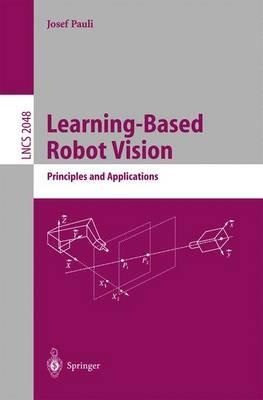
Learning-Based Robot Vision: Principles and Applications
(0)
Cliccando su “Conferma” dichiari che il contenuto da te inserito è conforme alle Condizioni Generali d’Uso del Sito ed alle Linee Guida sui Contenuti Vietati. Puoi rileggere e modificare e successivamente confermare il tuo contenuto. Tra poche ore lo troverai online (in caso contrario verifica la conformità del contenuto alle policy del Sito).
Grazie per la tua recensione!
Tra poche ore la vedrai online (in caso contrario verifica la conformità del testo alle nostre linee guida). Dopo la pubblicazione per te +4 punti 

68,40 €
+680
punti 
Venditore: IBS
Articolo acquistabile con Carta del Docente

Articolo acquistabile con Carta Cultura Giovani e Carta del Merito

Articolo acquistabile con Carta della Cultura

Paga con Klarna in 3 rate senza interessi per ordini superiori a 39 €

Dati e Statistiche
 Salvato in 0 liste dei desideri
Salvato in 0 liste dei desideri
Learning-Based Robot Vision: Principles and Applications
Disponibilità in 2 settimane
68,40 €
68,40 €
Disponibilità in 2 settimane
Altre offerte vendute e spedite dai nostri venditori
Libri in Inglese
Learning-Based Robot Vision: Principles and Applications
Altri venditori
Prezzo e spese di spedizione

LIBRO INGLESE
Disponibilità in 2 settimane

Venduto e spedito da
IBS
Spedizione Gratis
68,40 €
Altri venditori
Prezzo e spese di spedizione
LIBRO INGLESE
Disponibilità in 2 settimane
Venduto e spedito da
IBS
Spedizione Gratis
68,40 €
Altri venditori
Prezzo e spese di spedizione

Tutti i formati ed edizioni
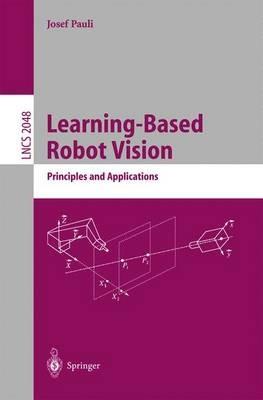
Industrial robots carry out simple tasks in customized environments for which it is typical that nearly all e?ector movements can be planned during an - line phase. A continual control based on sensory feedback is at most necessary at e?ector positions near target locations utilizing torque or haptic sensors. It is desirable to develop new-generation robots showing higher degrees of autonomy for solving high-level deliberate tasks in natural and dynamic en- ronments. Obviously, camera-equipped robot systems, which take and process images and make use of the visual data, can solve more sophisticated robotic tasks. The development of a (semi-) autonomous camera-equipped robot must be grounded on an infrastructure, based on which the system can acquire and/or adapt task-relevant competences autonomously. This infrastructure consists of technical equipment to support the presentation of real world training samples, various learning mechanisms for automatically acquiring function approximations, and testing methods for evaluating the quality of the learned functions. Accordingly, to develop autonomous camera-equipped robot systems one must ?rst demonstrate relevant objects, critical situations, and purposive situation-action pairs in an experimental phase prior to the application phase. Secondly, the learning mechanisms are responsible for - quiring image operators and mechanisms of visual feedback control based on supervised experiences in the task-relevant, real environment. This paradigm of learning-based development leads to the concepts of compatibilities and manifolds. Compatibilities are general constraints on the process of image formation which hold more or less under task-relevant or accidental variations of the imaging conditions.
Leggi di più
Leggi di meno
Autore:
Collana:
Lecture Notes in Computer Science
Anno:
2001
Rilegatura:
Paperback / softback
Pagine:
292 p.
Testo in English
Dimensioni:
233 x 155 mm
EAN:
9783540421085

L'articolo è stato aggiunto al carrello
Informazioni e Contatti sulla Sicurezza dei Prodotti
Le schede prodotto sono aggiornate in conformità al Regolamento UE 988/2023. Laddove ci fossero taluni dati non disponibili per ragioni indipendenti da IBS, vi informiamo che stiamo compiendo ogni ragionevole sforzo per inserirli. Vi invitiamo a controllare periodicamente il sito www.ibs.it per eventuali novità e aggiornamenti.
Per le vendite di prodotti da terze parti, ciascun venditore si assume la piena e diretta responsabilità per la commercializzazione del prodotto e per la sua conformità al Regolamento UE 988/2023, nonché alle normative nazionali ed europee vigenti.
Per informazioni sulla sicurezza dei prodotti, contattare productsafetyibs@feltrinelli.it
L’articolo è stato aggiunto alla lista dei desideri
